Shopping for a new 3D printer can feel overwhelming, especially when speed, print quality, setup time, and material support all matter at once.
This roundup narrows the field to 10 standout 3D printers for beginners, hobbyists, and makers who want a reliable machine that fits their workflow.
Best 10 3d Printers Picks for 2026
High-Speed Enclosed Pick

- Up to 16 colors with AMS support
- 500mm/s speed and 20,000 mm/s² acceleration
- Enclosed design with auto bed leveling
Best For: Users who want a fast, enclosed printer with easy setup
Multicolor CoreXY Pick

- Up to 16 colors with 4 x CFS units
- 600mm/s speed and 260 × 260 × 260 mm build volume
- 95% pre-assembled with AI camera and auto leveling
Best For: Users who want a fast multicolor printer with a large build area
Beginner-Friendly Color Pick

- 10,000 mm/s² acceleration for fast printing
- Full-auto calibration simplifies setup
- Multi-color support with AMS lite
Best For: Beginners and casual users who want easy, quiet printing
Toolhead Swap Power Pick

- 4-toolhead system with 5-second changes
- Up to 5X faster multi-color printing
- 270 × 270 × 270 mm CoreXY build volume
Best For: Advanced users who want efficient multi-material printing
High-Speed Multi-Color Pick
Bambu Lab P1S Combo 3D Printer
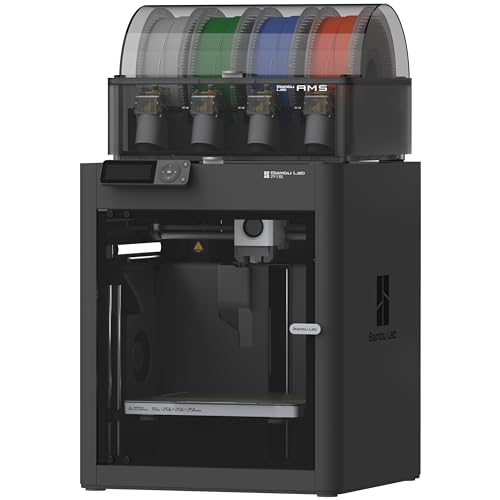
- Up to 16 colors with AMS
- 500 mm/s high-speed printing
- Fully enclosed with auto leveling
Best For: Creators who want a fast, enclosed printer with multi-color potential
Beginner Speed Pick
Creality Ender 3 V3 SE 3D Printer

- Up to 250 mm/s printing speed
- CR Touch auto leveling
- Sprite direct drive extruder
Best For: Beginners and practical users who want a fast, easy-to-assemble printer
Auto-Leveling Speed Pick

- Fully automatic one-click leveling
- Core XY all-metal structure for stable high-speed printing
- Quick-swap nozzles and power-loss resume
Best For: Beginners and experienced makers who want fast, easy-to-manage printing
Fast Setup Performer

- Automatic bed leveling for easier first layers
- CoreXY system with 600mm/s travel speed
- 3-second nozzle swaps and app monitoring
Best For: Makers who want fast printing with simple setup and remote monitoring
High-Speed Enclosed Pick – Bambu Lab P1S 3D Printer
If you want a 3d printers option that focuses on speed, easy setup, and cleaner results with advanced materials, the Bambu Lab P1S is built for that workflow. Its enclosed design, automatic bed leveling, and 15-minute setup make it a strong choice for users who want to spend more time printing and less time dialing in the machine.
Best For: Makers who want a fast, enclosed 3D printer with simple setup and multi-color support when paired with AMS.
Pros:
- Up to 16-color printing is available with an AMS connection.
- 500mm/s print speed and 20,000 mm/s² acceleration for rapid jobs.
- Fully enclosed body helps improve print performance with advanced filaments.
- Automatic bed leveling supports easier, more consistent prints.
Cons:
- AMS is required for multi-color and multi-material printing.
- Carbon/glass fiber reinforced polymer is not recommended.
Overall, the P1S is a practical pick if you value high speed, enclosure benefits, and a low-friction setup. It is especially appealing for users working with PLA, PETG, TPU, ABS, and ASA, while still leaving room for more advanced filament use.
Multicolor CoreXY Pick – Creality K2 Combo
The Creality K2 Combo is aimed at 3d printers buyers who want multicolor output, a large build area, and a mostly plug-and-play setup. With 95% pre-assembly, 600mm/s printing speed, and smart auto leveling, it is designed to get you printing quickly while also keeping quality and noise in check.
Best For: Makers who want a fast, multicolor 3D printer with a large build volume and smart monitoring.
Pros:
- Supports up to 16 colors with 4 x CFS units.
- 600mm/s printing speed and a 260 × 260 × 260 mm build volume.
- 95% pre-assembled for a simpler out-of-box experience.
- Smart auto leveling and AI camera add convenience and monitoring.
Cons:
- The combo includes only one CFS unit by default.
- It is a large, heavy printer at 65.9 pounds.
For buyers who want color flexibility without giving up speed or build space, the K2 Combo covers a lot of ground. Its support for multiple materials, plus quieter operation and real-time AI monitoring, makes it a strong all-around option.
Beginner-Friendly Color Pick – Bambu Lab A1 3D Printer
The Bambu Lab A1 is a strong 3d printers option for beginners who want fast printing without a complicated setup. It adds full-auto calibration, active flow rate compensation, and quiet operation, which makes it easier to get reliable results from the start.
Best For: Beginners, kids, and casual makers who want an easy-to-use 3D printer with optional multicolor printing.
Pros:
- High-speed printing with 10,000 mm/s² acceleration.
- Full-auto calibration handles Z-offset, bed leveling, and more.
- Supports multi-color printing with AMS lite.
- Quiet operation and a simple touchscreen improve day-to-day use.
Cons:
- AMS lite is required for multi-color printing and sold separately unless bundled.
- It is an open, not enclosed, design.
If your priority is a friendly, low-hassle machine that still prints quickly, the A1 fits well. It is especially appealing for homes, classrooms, or first-time users who want automation to reduce setup and calibration work.
Toolhead Swap Power Pick – Snapmaker U1 3D Printer
The Snapmaker U1 stands out in the 3d printers category because it uses a 4-toolhead system instead of traditional filament swapping. That approach is built for speed, lower waste, and true multi-material printing, making it a compelling choice for users who want more capability from a single machine.
Best For: Advanced makers and professionals who want fast multi-color, multi-material printing with minimal waste.
Pros:
- 4 independent toolheads with 5-second tool changes.
- Up to 5X faster multi-color printing with up to 5X less waste.
- Supports true multi-material and mixed-material prints.
- 500 mm/s CoreXY printing and a 270 × 270 × 270 mm build volume.
Cons:
- Likely more complex than a basic beginner printer.
- At 59 pounds, it is a substantial machine.
For users who care about production efficiency, material flexibility, and clean multi-color results, the U1 offers a very different workflow from AMS-style systems. Its smart calibration, app control, and model library help balance that power with a more approachable user experience.
Reliable Everyday Pick – ELEGOO Neptune 3 Pro 3D Printer
If you want a dependable option among 3d printers for everyday projects, the ELEGOO Neptune 3 Pro focuses on setup ease, stable motion, and practical features that reduce hassle. Its 225 x 225 x 280 mm build volume, quiet operation, and auto leveling make it a straightforward choice for hobbyists who want consistent results without constant tweaking.
Best For: Makers who want a dependable, easy-to-set-up printer for routine PLA, PETG, TPU, and ABS projects.
Pros:
- 36-point auto bed leveling helps simplify first-layer setup.
- Dual-gear direct drive extruder supports smoother filament feeding and fewer clogs.
- Silent stepper motors can keep noise as low as 47 dB.
- Power-loss resume and filament runout sensor add peace of mind on longer prints.
Cons:
- Build volume is standard rather than oversized.
- Not aimed at high-speed or multi-color workflows.
This is a practical all-around machine if you value reliability over flashy extras. The Neptune 3 Pro’s mix of auto leveling, direct drive extrusion, and stable Z-axis hardware makes it well suited to steady day-to-day printing.
High-Speed Multi-Color Pick – Bambu Lab P1S Combo 3D Printer
For buyers comparing 3d printers that prioritize speed and advanced features, the Bambu Lab P1S Combo stands out with its enclosed design, automatic bed leveling, and multi-color capability. With the AMS connected, it can handle up to 16 colors, while the claimed 500 mm/s print speed makes it a strong fit for creators who want faster turnaround.
Best For: Creators who want a fast, enclosed printer with multi-color printing potential.
Pros:
- Supports up to 16 colors when paired with the AMS.
- 500 mm/s speed and 20,000 mm/s² acceleration for quick jobs.
- Fully enclosed body helps with advanced filaments.
- Automatic bed leveling and 15-minute setup reduce friction.
Cons:
- Multi-color printing requires the AMS connection.
- Carbon/glass fiber reinforced polymers are not recommended.
This model is best viewed as a performance-first option for users who want speed and versatility in one package. The enclosure, auto leveling, and fast setup make it especially appealing if you want to spend more time printing and less time adjusting.
Beginner Speed Pick – Creality Ender 3 V3 SE 3D Printer
If you’re shopping 3d printers as a beginner-friendly upgrade, the Creality Ender 3 V3 SE offers a simple setup, automatic calibration, and faster-than-basic print speeds. It combines CR Touch auto leveling, automatic Z-offset calibration, and a Sprite direct drive extruder to make everyday printing more approachable.
Best For: Beginners and practical users who want a fast, easy-to-assemble printer for common materials.
Pros:
- Prints up to 250 mm/s with 2500 mm/s² acceleration.
- CR Touch auto leveling and automatic Z-offset calibration simplify setup.
- Sprite direct drive extruder supports PLA, PETG, and TPU.
- Quiet 32-bit mainboard and flexible steel build plate improve usability.
Cons:
- Focused on common materials rather than specialty filament types.
- Speed is a key feature, but real-world results still depend on settings.
Overall, the Ender 3 V3 SE is a sensible pick if you want a beginner-friendly machine that still offers strong speed and solid core features. Its auto leveling and straightforward assembly make it a low-friction entry point for everyday printing.
Auto-Leveling Speed Pick – FLASHFORGE AD5M
If you want a 3d printer that keeps setup simple while still moving fast, the FLASHFORGE AD5M is built for that balance. Its fully automatic one-click leveling, Core XY all-metal motion system, and quick-swap nozzle make it a practical choice for users who want reliable prints without a lot of manual tuning.
Best For: Beginners and experienced makers who want fast printing, easy maintenance, and low-friction setup.
Pros:
- Fully automatic one-click leveling helps deliver consistent first layers without manual calibration.
- Core XY all-metal structure is designed for high-speed printing with stable, low-noise motion.
- Quick-release nozzles swap in about 3 seconds and support multiple diameters for different print needs.
- Power-loss resume and flexible PEI steel plate add convenience for everyday use.
Cons:
- Build volume is limited to 220 x 220 x 220 mm, so very large models will not fit.
- PETG printing is specifically tied to the reverse side of the build plate.
Overall, the AD5M is a strong fit if you value fast, straightforward 3d printers that reduce setup hassle and make maintenance easy. It focuses on dependable performance and practical workflow features rather than oversized capacity.
Upgradeable Multicolor Choice – Creality K2 SE
The Creality K2 SE is aimed at buyers who want a fast, stable 3d printer with room to grow into multicolor printing later. It combines a lightweight CoreXY system, fully automatic leveling, and a solid metal frame with support for Creality CFS when you want to expand into more advanced workflows.
Best For: Users who want high-speed printing now and the option to add multicolor capability later.
Pros:
- Up to 500mm/s printing with vibration reduction features for smoother walls and sharper details.
- Solid metal frame and dual-side crossbeams improve rigidity and dimensional accuracy.
- Compatible with Creality CFS for expandable multicolor printing and filament management.
- Direct drive extruder, quick-swap nozzle, and run-out sensor support reliable day-to-day printing.
Cons:
- CFS multicolor capability requires a separate purchase.
- Assembly is described as quick, but it still needs about 5 minutes before first use.
The K2 SE stands out among 3d printers for buyers who want speed and stability first, with a path to multicolor printing if their needs grow. It is a flexible option for both functional parts and creative projects.
Fast Setup Performer – FLASHFORGE Adventurer 5M
The FLASHFORGE Adventurer 5M is a practical pick if you want a 3d printer that starts fast and keeps the workflow simple. With automatic bed leveling, a CoreXY all-metal structure, a 280°C direct extruder, and 3-second nozzle changes, it is designed for quick turnarounds and dependable everyday printing.
Best For: Makers who want fast production, easy first-layer setup, and app-based monitoring.
Pros:
- Automatic bed leveling helps ensure consistent first layers with less setup effort.
- CoreXY design and 600mm/s travel speed are built for fast, efficient printing.
- 3-second detachable nozzle changes and a high-flow nozzle support flexible workflow.
- App monitoring lets you check progress and adjust settings remotely.
Cons:
- Build size is limited to 220 x 220 x 220 mm.
- The included standard nozzle is 0.4mm, so finer or larger nozzle sizes are optional.
For shoppers comparing 3d printers on speed and ease of use, the Adventurer 5M delivers a streamlined package with useful smart controls. It is especially appealing if you want a fast printer that minimizes routine setup work.
How We Picked These 3d Printers
We focused on machines that deliver a strong mix of reliability, ease of setup, print speed, and value. For this roundup, we prioritized models with dependable leveling systems, solid build quality, and features that matter in real-world use, such as enclosed designs, multi-color capability, and beginner-friendly operation.
We also considered how well each printer fits a specific buyer profile. Some of these 3d Printers are built for first-time users who want simple setup, while others are better for faster production, larger projects, or more advanced material handling.
Quick Comparison
If you want the easiest entry point, look for a printer with automatic leveling and a straightforward app or touchscreen experience. If speed matters most, choose a model designed for high-flow or CoreXY-style printing. If you want colorful models without frequent filament swaps, a printer with a multi-material system is the better choice.
In general, the best all-around options balance speed, consistency, and low-maintenance operation, while budget models tend to trade advanced features for a lower price and simpler hardware.
Key Buying Factors for 3d Printers
Setup and Ease of Use
Ready-to-use or partially assembled printers can save time and reduce frustration. Automatic bed leveling, guided calibration, and a clear interface are especially helpful for beginners.
Print Speed and Quality
Advertised maximum speeds are useful, but consistent print quality matters more. Look for stable motion systems, reliable extrusion, and good cooling if you plan to print quickly.
Build Volume and Enclosure
Bigger build space helps with large models and functional parts. An enclosed printer can improve temperature stability and is often preferable for materials that benefit from controlled conditions.
Multi-Color and Material Support
Not every buyer needs multi-color printing, but it can be valuable for display pieces, prototypes, and streamlined workflow. Check whether the system supports your preferred filament types and how complex the loading process is.
Noise, Maintenance, and Ecosystem
Think about where the printer will live and how often you want to tinker. Some 3d Printers are designed for plug-and-play convenience, while others reward users who enjoy tuning and hands-on maintenance.
Who Should Buy Which 3d Printers?
Beginners and families: Choose a model with auto leveling, simple controls, and minimal assembly. These are the easiest 3d Printers to get printing quickly.
Speed-focused makers: Pick a high-speed machine if you value rapid prototyping and shorter wait times, but make sure it still has a reputation for consistent quality.
Multi-color users: If you want decorative prints or efficient color changes, prioritize printers with a dedicated multi-material system rather than relying on manual swaps.
Budget-conscious buyers: Look for a dependable, no-frills printer that handles the basics well. A lower-cost model can be a smart choice if you care more about learning and printing than advanced features.
For most shoppers, the best choice is the printer that matches your experience level, material needs, and willingness to manage setup or maintenance. That balance matters more than any single spec sheet claim.