The best compact network switches add wired ports without taking over your desk, media cabinet, or network closet. They are useful for connecting PCs, smart TVs, access points, cameras, game consoles, and other Ethernet devices.
This roundup covers simple unmanaged models, smart managed options, PoE switches, multi-gigabit hardware, and larger 16-port choices. Use the guide below to match port count, speed, power delivery, and management features to your setup.
Best 10 Compact Network Switches Picks for 2026
Quiet Network Expansion
TP-Link TL-SG105 5-Port Gigabit Switch
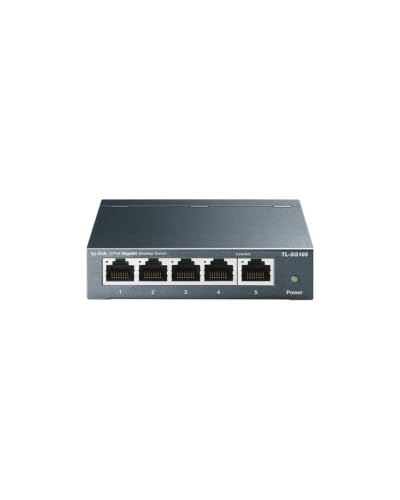
- Five gigabit RJ45 ports
- Fanless metal design
- Desktop or wall mounting
Best For: Quiet, simple expansion for small wired networks
Simple Silent Connectivity
NETGEAR GS305 5-Port Gigabit Switch

- Five 1Gbps Ethernet ports
- Plug-and-play installation
- Silent metal design
Best For: Quiet, uncomplicated home or office networking
Managed Network Growth
TP-Link TL-SG108E 8-Port Smart Switch
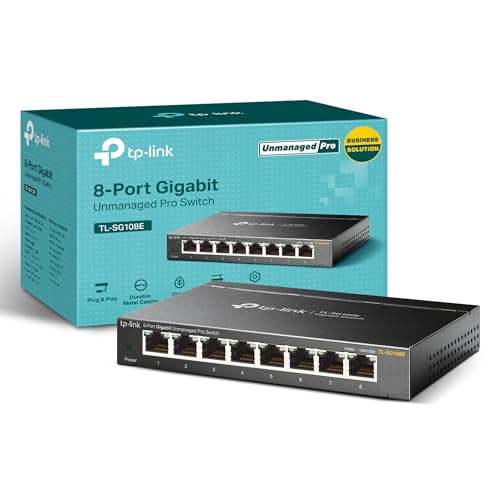
- Eight gigabit Ethernet ports
- VLAN, QoS, and IGMP support
- Desktop or wall-mount metal design
Best For: Small networks needing extra ports and management features
Best Multi-Gig Upgrade

- Eight 2.5Gbps ports
- Up to 40Gbps switching capacity
- Fanless plug-and-play design
Best For: Home and small-office multi-gig networks
Best Compact PoE Pick

- Four PoE+ ports
- 65W total power budget
- Fanless metal enclosure
Best For: Small PoE device installations
Best Port-Capacity Option
16-Port Gigabit Unmanaged Switch
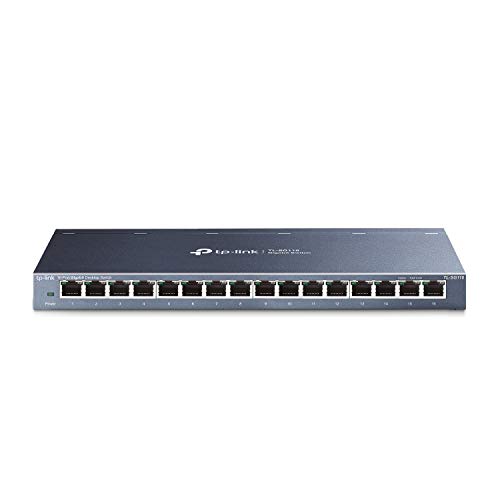
- Sixteen Gigabit ports
- Fanless metal design
- Desktop or wall mounting
Best For: Expanding busy home-office wired networks
Best All-Around Expansion
TP-Link TL-SG108 8-Port Gigabit Switch

- Eight Gigabit ports for flexible wired expansion
- Fanless metal housing operates quietly
- Plug-and-play setup with automatic energy savings
Best For: Home offices and small networks needing extra ports
Best Mini Budget Pick
TP-Link LiteWave LS1005G 5-Port Switch

- Five Gigabit ports in a tiny enclosure
- Fanless, plug-and-play operation
- Energy-efficient design for simple expansion
Best For: Small spaces needing a few extra wired connections
Best Feature-Rich 5-Port Option

- QoS and IGMP snooping support smoother media traffic
- Metal fanless housing supports desktop or wall mounting
- Jumbo frames and surge protection add useful extras
Best For: Gaming, streaming, NAS transfers, and small offices
Quiet Network Expansion – TP-Link TL-SG105 5-Port Gigabit Switch
The TP-Link TL-SG105 is a practical choice for compact network switches when you need five wired connections without software setup. Its gigabit ports, fanless metal housing, and desktop or wall-mount design suit home offices, entertainment areas, and small workspaces.
Best For: Quiet, straightforward expansion of a small wired network.
Pros:
- Five 10/100/1000Mbps RJ45 ports with auto-negotiation and Auto MDI/MDIX.
- Fanless operation keeps noise low.
- Metal casing supports desktop or wall-mounted installation.
- Includes QoS and IGMP Snooping features for traffic handling.
Cons:
- Unmanaged operation does not provide advanced configuration.
- Only five ports are available for expansion.
The TL-SG105 balances simple installation with useful traffic-management features. It is a strong fit when reliable gigabit connectivity and quiet operation matter more than extensive network administration.
Compact PoE Flexibility – Ubiquiti Compact 5-Port Gigabit Switch
The Ubiquiti Compact 5-Port Gigabit Switch stands out among compact network switches for its flexible power options. It can draw power through 802.3af/at PoE or USB Type-C, while its small desktop footprint helps conserve workspace.
Best For: Compact installations that benefit from PoE or USB Type-C power.
Pros:
- Five-port Layer 2 switch in a compact 2.8-by-4.2-inch footprint.
- Supports 802.3af/at PoE or USB Type-C power.
- Designed for energy-efficient desktop use.
Cons:
- Plastic case may be less rugged than metal alternatives.
- Warranty coverage is listed as one year.
This switch is a convenient option where placement and power flexibility are priorities. Its five-port design keeps expansion modest, but PoE and USB Type-C support can simplify installation in suitable setups.
Simple Silent Connectivity – NETGEAR GS305 5-Port Gigabit Switch
The NETGEAR GS305 is a straightforward option among compact network switches, offering five gigabit ports with automatic speed negotiation. Its fanless metal design supports silent operation, while desktop and wall mounting make it easy to place in a home or office network.
Best For: Plug-and-play gigabit connectivity in a quiet home or office setup.
Pros:
- Five 1Gbps Ethernet ports work with existing Cat5e or Cat6 cables.
- No software or configuration is required.
- Fanless design provides silent operation.
- Supports desktop or wall-mount placement.
Cons:
- Listed for use in the U.S. and Canada only.
- Unmanaged design limits network configuration options.
The GS305 focuses on dependable essentials rather than advanced management. It is a sensible pick for users who want quick installation, quiet performance, and a sturdy compact switch for basic wired connections.
Managed Network Growth – TP-Link TL-SG108E 8-Port Smart Switch
The TP-Link TL-SG108E adds smart-management features to the compact network switches category. Its eight gigabit ports provide more room for devices, while VLAN support, QoS, IGMP Snooping, monitoring, and link aggregation help organize and optimize a growing wired network.
Best For: Small networks that need more ports and practical Layer 2 management.
Pros:
- Eight 10/100/1000Mbps RJ45 ports expand wired capacity.
- Supports VLANs, QoS, IGMP Snooping, and link aggregation.
- Includes port mirroring, loop prevention, and cable diagnostics.
- Sturdy metal housing supports desktop or wall mounting.
Cons:
- Management features require more setup than an unmanaged switch.
- Larger and heavier than five-port compact models.
The TL-SG108E is the most capable choice here for users who need control over traffic and network segmentation. It remains compact enough for desktop or wall installation while providing room for additional wired devices.
Best Multi-Gig Upgrade – 8-Port 2.5G Unmanaged Switch
The TP-Link TL-SG108S-M2 is a practical choice when compact network switches need to support faster-than-Gigabit connections. Its eight 2.5Gbps ports, automatic speed negotiation, and fanless design make it easy to add multi-gig connectivity to a home, office, workstation, or entertainment setup.
Best For: Home networks, small offices, NAS devices, Wi-Fi 6 access points, gaming PCs, and other multi-gigabit equipment.
Pros:
- Eight 2.5Gbps ports provide up to 40Gbps of switching capacity.
- Auto-negotiation supports 100Mbps, 1Gbps, and 2.5Gbps devices.
- Fanless operation keeps the switch quiet.
- Desktop or wall mounting and plug-and-play setup simplify installation.
Cons:
- It is an unmanaged switch, so advanced network configuration is not available.
- It has no PoE ports for powering connected devices.
For buyers moving beyond standard Gigabit Ethernet, this model offers a straightforward multi-gig upgrade without requiring Cat6 wiring. Its compact, silent design is especially well suited to visible desktop or home-office installations.
Best Compact PoE Pick – 5-Port Gigabit PoE+ Switch
The TP-Link TL-SG1005P stands out among compact network switches for setups that need both wired Gigabit connectivity and power over Ethernet. Four PoE+ ports provide up to 65W of total power, while the fifth port offers a dedicated non-PoE Gigabit connection.
Best For: Small installations with IEEE 802.3af/at-compatible powered devices and a limited number of network connections.
Pros:
- Four PoE+ ports support up to 30W per port.
- A 65W total PoE budget supports multiple connected devices.
- Plug-and-play operation requires no software or configuration.
- Metal housing, fanless cooling, and desktop or wall mounting suit varied installations.
Cons:
- Only five total ports are available.
- Four ports are PoE+, leaving just one non-PoE port.
- It provides standard Gigabit speeds rather than multi-gigabit connectivity.
This is a strong fit when powering compatible network devices is more important than having a larger port count. QoS and IGMP Snooping add useful traffic-management features, while the fanless metal chassis keeps operation quiet.
Best Port-Capacity Option – 16-Port Gigabit Unmanaged Switch
The TP-Link TL-SG116 is designed for expanding a wired network without adding configuration work. Its 16 Gigabit RJ45 ports make it one of the more practical compact network switches for offices, media areas, and other locations with many wired devices.
Best For: Home offices, small businesses, and workspaces that need numerous quiet Gigabit connections.
Pros:
- Sixteen 10/100/1000Mbps ports provide substantial expansion capacity.
- Auto-negotiation and Auto MDI/MDIX simplify connections.
- Fanless operation supports quiet use.
- Metal construction and desktop or wall mounting offer installation flexibility.
Cons:
- It does not provide PoE power.
- It is limited to Gigabit Ethernet rather than 2.5Gbps networking.
- The 16-port design is longer than smaller five- or eight-port alternatives.
If your priority is adding many reliable wired connections, the TL-SG116 offers more capacity than typical compact switches while retaining plug-and-play simplicity. QoS, IGMP Snooping, and energy-efficient operation add practical value for busy home or small-office networks.
Best All-Around Expansion – TP-Link TL-SG108 8-Port Gigabit Switch
The TP-Link TL-SG108 is a practical choice when you need more wired connections without adding configuration work. With eight Gigabit ports, a quiet fanless design, sturdy metal housing, and automatic energy savings, it fits home offices, entertainment setups, and small workspaces well. For anyone comparing compact network switches, its extra ports make it more flexible than five-port models.
Best For: Expanding a home or small-office network with several wired devices.
Pros:
- Eight 10/100/1000 Mbps RJ45 ports provide room for computers, printers, consoles, and other devices.
- Plug-and-play setup requires no software or configuration.
- Fanless metal construction supports quiet operation and heat dissipation.
- Automatic power adjustment helps reduce energy use based on link status and cable length.
Cons:
- Its larger footprint is less compact than the TP-Link five-port option.
- As an unmanaged switch, it does not provide advanced network configuration.
The TL-SG108 is a strong general-purpose pick when port count matters more than the smallest possible enclosure. Its metal build, silent operation, and lifetime protection add useful reassurance for long-term everyday use.
Best Mini Budget Pick – TP-Link LiteWave LS1005G 5-Port Switch
The TP-Link LiteWave LS1005G is designed for simple, space-conscious network expansion. Its five Gigabit ports, fanless operation, and very small plastic enclosure make it easy to tuck behind a desk or entertainment center. Among compact network switches, it is particularly suited to setups that need a few additional wired connections at minimal size.
Best For: Small home setups, desks, and entertainment centers with limited space.
Pros:
- Five 10/100/1000 Mbps ports support computers, consoles, printers, and similar devices.
- Exceptionally compact and lightweight design is easy to hide or relocate.
- Plug-and-play installation requires no software or configuration.
- Fanless operation and energy-efficient technology help keep operation quiet and economical.
Cons:
- The plastic housing is less robust than the metal enclosures on the other listed models.
- Five ports provide less expansion room than an eight-port switch.
The LS1005G keeps things simple and unobtrusive. Choose it when four additional connections are enough and compact dimensions are more important than a sturdier metal chassis or extra capacity.
Best Feature-Rich 5-Port Option – D-Link DGS-105 Gigabit Switch
The D-Link DGS-105 adds useful traffic-handling features to a compact five-port unmanaged switch. Its metal, fanless housing supports quiet desktop operation, while QoS prioritization, IGMP snooping, jumbo-frame support, and wall-mount flexibility make it appealing for media, gaming, and small-office networks. It is a strong option for shoppers seeking compact network switches with more built-in traffic optimization.
Best For: Gaming, media streaming, NAS transfers, and small offices needing traffic-management features.
Pros:
- Five auto-negotiating Gigabit ports support PCs, consoles, NAS devices, printers, cameras, and mesh nodes.
- 802.1p QoS prioritization helps keep voice, video, and gaming traffic smooth.
- IGMP snooping and 9 KB jumbo-frame support benefit multicast video and large transfers.
- Fanless metal housing supports quiet operation and offers desktop or wall-mount placement.
Cons:
- It has fewer ports than the TP-Link TL-SG108.
- Its advanced features may be unnecessary for a basic connection-expansion task.
The DGS-105 is the best fit when a five-port switch needs to do more than simply add Ethernet jacks. Its traffic optimization, mounting flexibility, energy-saving operation, and limited lifetime coverage make it a well-rounded choice for demanding home and office setups.
How We Picked the Best Compact Network Switches
We focused on switches that provide a practical balance of size, reliability, setup simplicity, and value. The selection includes five- and eight-port models for everyday expansion, a 16-port option for growing networks, a multi-gigabit switch for faster local transfers, and a PoE model for compatible cameras, access points, and other powered devices.
We also considered port speed, enclosure design, cooling, mounting flexibility, traffic features, and the difference between unmanaged and managed operation. Because requirements vary, no single switch is ideal for every home or small office.
Quick Comparison
| Best For | Recommended Type | What to Look For |
|---|---|---|
| Basic wired expansion | Five-port unmanaged switch | Gigabit Ethernet, fanless operation, compact housing |
| Several wired devices | Eight-port switch | Metal enclosure, wall mounting, shielded ports |
| Fast file transfers | Multi-gigabit switch | 2.5Gbps ports and compatible cabling |
| Cameras or access points | PoE switch | PoE+ support and sufficient total power budget |
| Network growth | 16-port switch | Extra capacity and reliable thermal design |
Key Buying Factors for Compact Network Switches
Port Count and Placement
Count the devices you need to connect, then leave room for expansion. A five-port switch is suitable for a small desk or entertainment center, while eight or 16 ports are better for offices, labs, and setups with several wired endpoints. Check whether the LEDs and cable connections fit your intended placement.
Speed and Cabling
Gigabit Ethernet is sufficient for most internet connections and everyday streaming, gaming, and office work. Choose a 2.5Gbps model when your computers, storage devices, broadband service, and cabling can use multi-gigabit speeds. A faster switch does not automatically increase an older device’s link speed.
Management, PoE, and Traffic Features
Unmanaged switches are the simplest option: connect the cables and start using them. Smart managed models add tools such as VLAN and QoS configuration, which can help separate devices or prioritize traffic. PoE models deliver power and data over one Ethernet cable, but verify the required PoE standard and total wattage before buying.
Build and Cooling
Fanless designs are quiet and well suited to desks, bedrooms, and media cabinets. Metal housings can improve durability and heat handling, while shielded ports may help in installations with electrical interference. For enclosed spaces, allow ventilation around the switch and power adapter.
Who Should Buy Which Compact Network Switches?
Choose a five-port unmanaged model for a straightforward home-office, gaming, or TV setup. An eight-port switch is the better all-around choice when you expect to add devices or want more placement flexibility. Select a smart managed model if you need VLANs, QoS, or more control over network traffic.
For security cameras, wireless access points, or other compatible hardware, choose the PoE switch and confirm its power budget. Pick the 2.5Gbps option for a modern workstation or NAS that can take advantage of faster local networking. If your installation already has many wired devices or is likely to grow, the 16-port model offers the most expansion room.