The best camera monopods for DSLR cameras give photographers extra stability without the bulk of a full tripod. They are especially useful for wildlife, sports, travel, events, and fast-moving shoots where mobility matters.
Our roundup compares 10 portable monopods by load capacity, height, materials, locking systems, foot design, and overall versatility, so you can choose a model that fits your camera and shooting style.
Best 10 Camera Monopods for Dslr Cameras Picks for 2026
Best Budget Pick
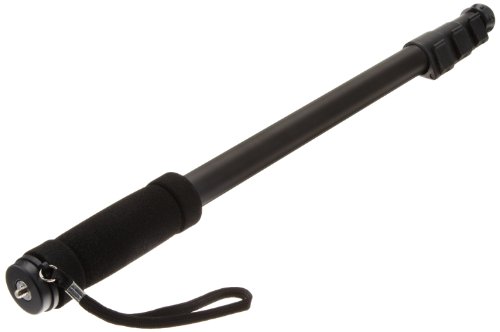
- 67-inch, four-section aluminum design
- Supports cameras and scopes up to 6.6 pounds
- Includes rubber foot, spikes, bag, and wrist strap
Best For: Affordable everyday camera support and travel
Best for Video Panning
Manfrotto Element MII Fluid Monopod

- Integrated fluid base for smoother panning
- Supports loads up to 16 kg
- Foldable feet and twist locks aid portability
Best For: Video shooters using DSLR or mirrorless cameras
Best Versatile Outdoor Pick

- 17.6-pound capacity in a 0.88-pound design
- Interchangeable rubber and spike feet
- Includes 1/4-inch and 3/8-inch mounting adapter
Best For: Outdoor photography, travel, and multipurpose use
Best Travel Carbon Fiber Pick
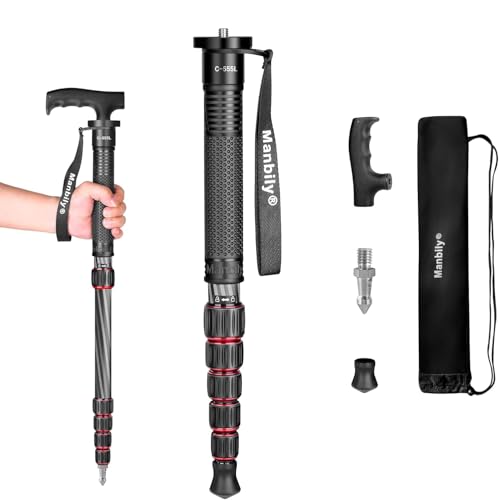
- Carbon fiber design supports up to 15.4 pounds
- Folds to 15.7 inches and weighs 0.93 pound
- Includes reversible screw, convertible feet, and handle
Best For: Compact travel, sports, and wildlife photography
Best Overall Stability
NEEWER Extendable Monopod with Stand Base
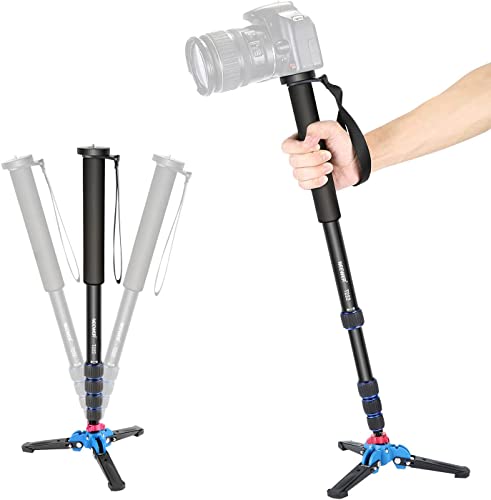
- 66-inch maximum height and 11-pound load rating
- Includes detachable three-leg support base
- Five-section adjustment with foam grip
Best For: DSLR users seeking extra stability and reach
Best Lightweight Travel Pick
ULANZI TB12 61-Inch Camera Monopod

- Weighs about 0.83 pounds
- Folds to 16.9 inches for travel
- Supports up to 11.02 pounds with five height settings
Best For: Traveling DSLR photographers and outdoor shooters
Best Budget-Friendly Compact Option

- weighs 9.44 ounces and folds to 16.75 inches
- Supports cameras and scopes up to 5 pounds
- Includes carry pouch and 3/8-inch adapter
Best For: Light DSLR setups and highly portable shooting
Best Hybrid Support

- Converts between tripod and monopod
- 34-pound vertical load capacity
- 360-degree ball head and 19-inch fold
Best For: DSLR photographers wanting one versatile support system
Best Heavy-Duty Pick

- Weighs 1.1 pounds and folds to 15.7 inches
- Supports up to 15.4 pounds
- Includes walking-stick handle and dual feet
Best For: Travel, sports, wildlife, and outdoor photography
Best Stability-Boosting Design

- 67-inch aluminum monopod with quick locks
- Removable three-foot stability base
- 15.5-pound load rating and dual feet
Best For: Photographers wanting extra support without carrying a full tripod
Best Budget Pick – Amazon Basics 67-Inch Monopod
For shoppers comparing camera monopods for DSLR cameras, the Amazon Basics 67-Inch Monopod is a straightforward, lightweight option for everyday photography. Its four-section aluminum design extends to 67 inches, supports equipment up to 6.6 pounds, and includes a universal 1/4-inch thread mount.
Best For: Budget-conscious photographers who want a tall, portable monopod for still cameras, video cameras, or scopes.
Pros:
- Extends to 67 inches for flexible shooting heights.
- Lightweight aluminum construction weighs less than 1 pound.
- Rubber foot and retractable spikes help provide grip on different surfaces.
- Includes a carrying bag, cushion grip, and adjustable wrist strap.
Cons:
- Its 6.6-pound capacity is lower than several heavier-duty alternatives.
- It is not water resistant.
This monopod covers the basics well: useful height, simple adjustments, and easy transport. It is a practical choice for lighter DSLR setups, though photographers using heavier rigs may prefer a higher load rating.
Best for Video Panning – Manfrotto Element MII Fluid Monopod
Among camera monopods for DSLR cameras, the Manfrotto Element MII Video Aluminium Fluid Monopod stands out for filming. Its integrated fluid cartridge is designed for smoother panning, while the foldable base and twist locks make the monopod practical to set up and carry.
Best For: DSLR and mirrorless shooters who prioritize smoother video movement and a high load capacity.
Pros:
- Integrated fluid base supports smoother, more controlled panning.
- Aluminum construction supports loads up to 16 kg.
- Foldable base feet make it easier to pack and transport.
- Ergonomic twist locks allow quick height adjustments.
Cons:
- At 0.67 kg, it is heavier than the lightest travel monopods in this roundup.
- Its video-focused features may be more than still photographers need.
The Element MII is the specialized option here for video work. The fluid base adds useful pan control, and the strong aluminum structure gives it the capacity for heavier camera setups without giving up a foldable design.
Best Versatile Outdoor Pick – NEEWER TP41 Camera Monopod
The NEEWER TP41 is a versatile choice for anyone comparing camera monopods for DSLR cameras and outdoor shooting. It supports up to 17.6 pounds, folds to 17.3 inches, and combines quick-release height adjustment with interchangeable rubber and spike feet.
Best For: Travelers, outdoor photographers, and content creators who need adaptable footing and broad mounting compatibility.
Pros:
- Supports DSLR cameras and other equipment up to 17.6 pounds.
- Interchangeable rubber and steel spike feet suit hard or soft surfaces.
- Dual 1/4-inch and 3/8-inch screw adapter supports varied gear.
- Weighs about 0.88 pound and folds to 17.3 inches.
Cons:
- Maximum height is 61 inches, shorter than some full-height monopods.
- It is not water resistant.
With its strong load rating, compact folded size, and convertible feet, the TP41 is especially flexible outside the studio. It can also serve as a selfie stick, hiking handle, or trekking pole, making it useful for multipurpose travel kits.
Best Travel Carbon Fiber Pick – Manbily C-555L Monopod
For photographers seeking lightweight camera monopods for DSLR cameras, the Manbily C-555L combines carbon fiber construction with a compact six-section design. It reaches 61 inches, folds to 15.7 inches, and supports up to 15.4 pounds while adding a removable handle for trekking-pole use.
Best For: Travel, sports, and wildlife photographers who want a compact carbon fiber monopod with adaptable feet.
Pros:
- Eight-layer carbon fiber construction supports up to 15.4 pounds.
- Weighs 0.93 pound and folds to a compact 15.7 inches.
- Reversible 1/4-inch and 3/8-inch screw supports cameras and accessories.
- Rubber and metal feet, plus the included handle, expand its outdoor utility.
Cons:
- Its 61-inch maximum height is lower than some taller models.
- Six twist-lock sections require more adjustments than a simpler four-section design.
The C-555L is a strong fit when packability matters. Carbon fiber keeps the weight low while maintaining a substantial load rating, and the walking-stick handle and convertible feet make it particularly suited to active outdoor use.
Best Overall Stability – NEEWER Extendable Monopod with Stand Base
For photographers comparing camera monopods for dslr cameras, the NEEWER T222 stands out for its included three-leg support base, generous 66-inch maximum height, and 11-pound load rating. Its aluminum construction and adjustable tilt base provide added flexibility for outdoor shooting and panoramic movement.
Best For: DSLR users who want a tall monopod with a detachable support base for added stability.
Pros:
- Extends from 20.5 to 66 inches with five-section height adjustment.
- Supports up to 11 pounds when used within its recommended limit.
- Included three-leg base offers support and a 15-degree tilt with 360-degree rotation.
- Foam handle and aluminum-alloy construction balance comfort with durability.
Cons:
- The camera must be held or supported when mounted because the monopod can fall.
- At 1.3 pounds, it is heavier than some compact alternatives.
- It is not water resistant.
The NEEWER T222 is a versatile choice when stability and reach matter more than the lightest possible carry weight. The detachable base expands its usefulness, but users should remain attentive whenever a camera is mounted in monopod mode.
Best Lightweight Travel Pick – ULANZI TB12 61-Inch Camera Monopod
The ULANZI TB12 is a practical option among camera monopods for dslr cameras when portability is a priority. Weighing about 0.83 pounds and folding to 16.9 inches, it offers a 61-inch maximum height, a 5kg load capacity, and several outdoor-oriented modes.
Best For: Travel, hiking, wildlife, and everyday photographers who need a lightweight DSLR support option.
Pros:
- Lightweight aluminum design weighs approximately 0.83 pounds.
- Folds to about 16.9 inches and fits into a 20-inch carry-on.
- Five height settings range from 16.9 to 61 inches.
- Supports up to 11.02 pounds and can also function as a selfie stick or walking stick.
Cons:
- It does not include a dedicated tripod support base.
- The product is not water resistant.
- Its 61-inch maximum height is slightly shorter than some full-size options.
With its low weight, compact folded size, and multiple use modes, the TB12 is well suited to photographers who carry their gear over distance. It is a flexible travel companion, though photographers wanting freestanding support may prefer a monopod with a dedicated base.
Best Budget-Friendly Compact Option – Altura Photo 62-Inch Monopod
The Altura Photo 62-Inch Monopod is a compact choice for camera monopods for dslr cameras, combining a 62-inch maximum height with a very light 9.44-ounce design. Its universal 1/4-inch mount, included adapter, foam grip, and rubber foot make it useful for everyday photography and video support.
Best For: DSLR owners who want an inexpensive, highly portable monopod for indoor and outdoor use.
Pros:
- Weighs just 9.44 ounces and collapses to 16.75 inches.
- Universal 1/4-inch thread attaches cameras, video cameras, ball heads, or scopes up to 5 pounds.
- Includes a 3/8-inch screw adapter and carry pouch.
- Foam grip, wrist strap, non-skid rubber foot, and retractable spike support practical handling.
Cons:
- Its 5-pound capacity is lower than the other listed monopods.
- It has four leg sections rather than five.
- No detachable tripod base is included.
The Altura Photo is especially appealing when low carry weight and compact storage are more important than maximum load capacity. It is a straightforward support tool for lighter DSLR setups, with useful mounting accessories included.
Best Hybrid Support – NEEWER TP77 Tripod Monopod
For photographers comparing camera monopods for dslr cameras, the NEEWER TP77 offers a flexible tripod-and-monopod setup. Its detachable leg converts into a monopod, while the 360-degree ball head and substantial load rating suit heavier camera configurations.
Best For: DSLR users who want one support system for tripod stability, monopod mobility, panoramas, and travel.
Pros:
- Converts from a tripod to a monopod with a height range of 35 to 70 inches.
- Supports up to 34 pounds vertically and includes a hook for an optional sandbag.
- 360-degree ball head, Arca-type quick-release plate, and bubble level support precise framing.
- Folds to 19 inches and includes a carrying bag.
Cons:
- At about 3.1 to 3.53 pounds, it is heavier than a dedicated travel monopod.
- The product is not water resistant.
- The monopod setup does not reach the full 77-inch tripod height.
The TP77 is a strong choice when versatility matters more than minimum weight. It is especially appealing for DSLR owners who want a high-capacity tripod that can also handle quick monopod shooting.
Best Heavy-Duty Pick – Manbily A-555L Monopod
The Manbily A-555L is a compact option among camera monopods for dslr cameras, weighing just 1.1 pounds and folding to 15.7 inches. Its six-section aluminum design extends to 61 inches and includes interchangeable rubber and metal feet for varied terrain.
Best For: Travel, sports, wildlife, and outdoor photographers who prioritize low weight and fast setup.
Pros:
- Weighs 1.1 pounds and folds to a travel-friendly 15.7 inches.
- Supports up to 15.4 pounds with a 28 mm aluminum leg.
- Quarter-turn locks extend or secure the sections quickly.
- Includes a walking-stick handle, phone holder, wrist strap, carrying case, and two foot options.
Cons:
- Its 61-inch maximum height is shorter than some full-size monopods.
- The six-section design requires more sections to be extended for maximum height.
- It is not water resistant.
The A-555L balances portability with a useful 15.4-pound load rating. Its walking-stick handle and adaptable feet make it particularly practical for photographers working on trails, riverbanks, or other uneven ground.
Best Stability-Boosting Design – Manbily A-222 Monopod
For DSLR photographers seeking extra support without carrying a full tripod, the Manbily A-222 adds a removable three-foot base to a 67-inch aluminum monopod. Its quick-lock sections, interchangeable feet, and 20-degree base tilt make it a practical option among camera monopods for dslr cameras.
Best For: DSLR and video users who want a monopod with added standing stability for controlled shooting.
Pros:
- Adjusts from 21 to 67 inches with quarter-turn quick locks.
- Supports up to 15.5 pounds and uses an abrasion-resistant anodized aluminum construction.
- Removable three-foot base provides additional stability and allows 360-degree rotation with 20-degree tilt.
- Includes rubber and metal-spike feet plus a detachable wrist strap.
Cons:
- The base is intended to increase stability, not to replace a tripod.
- There is no ball head included.
- The manufacturer advises against extending the smallest tube section for better stability.
The A-222 is a useful middle ground between a handheld monopod and a full support system. Its base can help steady compositions, but users should keep the wrist strap around their hand and treat it as support rather than a freestanding tripod.
How We Picked the Best Camera Monopods for Dslr Cameras
We focused on practical features that affect stability, portability, and day-to-day use. Each selected monopod was evaluated by its maximum height, stated load capacity, construction material, number of sections, locking mechanism, base or foot design, packed size, and included accessories.
Aluminum models generally offer good value and durability, while carbon-fiber designs can reduce weight for hiking and extended handheld use. We also considered whether each monopod is best suited to still photography, video, travel, or occasional support.
Quick Comparison
| Feature | What to Look For | Best For |
|---|---|---|
| Height | 61 to 67 inches suits most standing photographers; taller models add flexibility. | Eye-level shooting and varied compositions |
| Capacity | Choose a rating comfortably above your camera, lens, and head combination. | Large DSLR and telephoto setups |
| Material | Aluminum is affordable; carbon fiber is lighter and often easier to carry. | Budget use or frequent travel |
| Base design | Rubber feet maximize simplicity; folding or fluid bases improve balance and movement. | Still photography or video |
| Locks | Twist locks pack neatly; lever locks can be faster to adjust. | Compact storage or rapid setup |
Key Buying Factors for Camera Monopods for Dslr Cameras
Load Capacity and Balance
Check the monopod’s stated capacity against your complete setup, not just the camera body. A heavy DSLR, telephoto lens, ball head, or video head can approach the limit quickly. Extra capacity improves confidence and reduces unwanted flex.
Height and Packed Size
A monopod should reach a comfortable working height without forcing you to stoop. A model around 61 to 67 inches works for many adults, while a 77-inch option may suit taller users or overhead compositions. Also check the collapsed length if you plan to pack it in carry-on luggage or a camera bag.
Feet, Bases, and Shooting Style
A rubber foot is compact and dependable for standard photography. Detachable tripod bases provide more support when you need the monopod to stand briefly on its own. Foldable fluid bases are particularly useful for panning and controlled video movement, but they add bulk and cost.
Weight and Construction
Aluminum monopods are usually the most economical choice. Carbon fiber can be worthwhile for travel, hiking, wildlife, or long events where every ounce matters. In either case, inspect section joints and locks for a secure, wobble-free fit.
Who Should Buy Which Camera Monopods for Dslr Cameras?
- For budget-conscious photographers: Choose a straightforward aluminum monopod with a rubber foot and carrying bag.
- For travel and hiking: A compact carbon-fiber model or lightweight aluminum design is easier to carry all day.
- For sports and wildlife: Prioritize high capacity, rigid sections, and enough height for long lenses.
- For video creators: Look for a fluid or foldable base that supports smoother pans and controlled movement.
- For maximum versatility: A model with detachable feet or a removable tripod base can switch between compact support and a more stable stance.
Before buying, confirm the mounting thread, folded length, maximum load, and compatibility with your preferred camera head. The right monopod should complement your DSLR setup without becoming difficult to transport or slow to deploy.