A full-size drafting table can overwhelm a bedroom, apartment, or multipurpose workspace. The best compact models provide a stable angled surface while using less floor space and adding practical features such as folding frames, casters, drawers, or stools.
We compared 10 drafting tables for small spaces across adjustability, footprint, portability, storage, and everyday usability to help you find a comfortable fit for drawing, crafting, painting, or design work.
Best 10 Drafting Tables for Small Spaces Picks for 2026
Best All-in-One Station
Adjustable Natural Drafting Desk

- Tilting, height-adjustable work surface
- Two drawers plus an extra tabletop
- Matching stool included
Best For: Multipurpose art and study setups needing integrated storage
Best for Tight Storage
Folding Rolling Drafting Table

- Folds to 3.8 inches thick
- 0–90° gas-strut tilt
- Four lockable rolling casters
Best For: Apartments, dorms, and rooms needing a stowable workspace
Best Adjustable White Desk
Storage Drafting Table with Stool

- 0–75° tilt and adjustable height
- Two drawers, shelf, and metal strips
- Matching stool included
Best For: Compact art or office corners needing ergonomic adjustability
Best Storage Capacity

- 10-position tilt up to 40°
- Three drawers and a long shelf
- Side countertop and stool included
Best For: Crafters needing shallow depth with abundant workspace and storage
Best Compact Choice
Foldable Bamboo Drafting Table
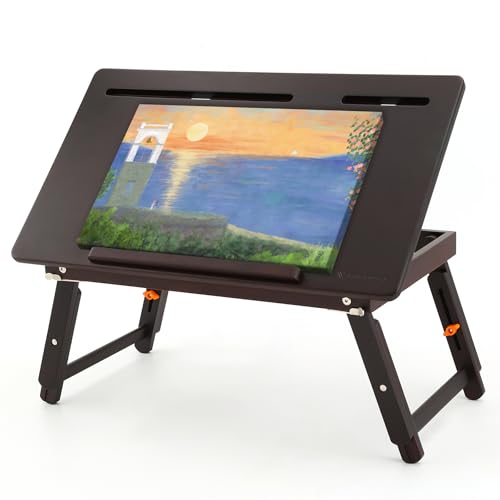
- Folds into a tabletop easel
- 0–65° angle adjustment
- Includes device slots and mouse pad
Best For: Portable drawing and bed or floor-based work
Best Storage Option
Tilting Drafting Table with Stool

- Three drawers and one shelf
- Tilts up to 40° in 10 positions
- Includes side countertop and stool
Best For: Organized art and craft workspaces
Best Traditional Desk
Adjustable Wood Drafting Table

- 35.5-by-23.5-inch work surface
- Adjustable height and up to 60° tilt
- Includes a 24-inch T-square
Best For: Full-size drawing and design work in compact rooms
Most Space-Efficient
Foldable Storage Drafting Table

- Folds to 7.8 inches deep
- 0°–80° adjustable tabletop
- Shelves, cubbies, outlets, and USB ports
Best For: Small rooms needing a fold-away workstation with built-in storage
Best With Seating
Yaheetech Glass Drafting Table

- 0°–40° tilt with five positions
- Includes stool and two mesh drawers
- Easy-clean tempered-glass surface
Best For: Artists wanting a complete drafting setup with seating and supply storage
Best Adjustable Work Surface

- 0°–90° adjustable tilt range
- 23.62-by-35.43-inch desktop
- H-frame with adjustable leveling feet
Best For: Compact workspaces needing a broad, stable, highly adjustable surface
Best All-in-One Station – Adjustable Natural Drafting Desk
If you want drafting tables for small spaces with built-in organization, this adjustable natural-finish workstation combines a tilting surface, secondary tabletop, two drawers, and a matching stool. Its 23.6-by-15-inch extended work surface and height-adjustable main workstation offer useful flexibility for art, study, and home-office tasks.
Best For: Artists, students, and home users who want a multipurpose drafting desk with seating and storage included.
Pros:
- One-hand tabletop adjustment and a sheet-stopping lip help support angled drawing.
- Two storage drawers, an extra flat surface, and a pencil ledge add organization.
- Includes a matching stool and non-slip floor pads.
Cons:
- At 55 inches wide, it may require more wall space than other compact options.
- Assembly requires two people, and the manufacturer advises securing it to the wall or floor.
This is a feature-rich choice when you need one piece of furniture for drawing, writing, and study. Measure carefully before buying, especially if your room is narrow.
Best for Tight Storage – Folding Rolling Drafting Table
Among drafting tables for small spaces, this 31.5-inch folding model is particularly easy to store. The tabletop tilts from 0 to 90 degrees, the table rolls on four lockable casters, and the folded profile is just 3.8 inches thick for sliding under a bed or storing behind furniture.
Best For: Apartment, dorm, and bedroom users who need a portable workstation that can be put away between uses.
Pros:
- Folds flat for compact storage in closets, under beds, or behind furniture.
- Lockable wheels make relocation straightforward.
- Gas-strut tilt adjustment and an anti-slip guardrail support drawing, reading, or laptop work.
Cons:
- It is intended for light-to-moderate use rather than heavy-duty work.
- The notes indicate that minor wobble may occur under heavy loads.
- The work surface is narrower than larger drafting desks.
This is the most storage-friendly option in the group. Its compact footprint and foldable frame make it practical when a permanent desk would crowd the room.
Best Adjustable White Desk – Storage Drafting Table with Stool
This white drafting table is designed for flexible creative and office use in compact rooms. Its 35.58-by-23.62-inch desktop tilts from 0 to 75 degrees and adjusts from 26.77 to 35.82 inches high, while two drawers, an open shelf, and side metal strips keep supplies close without requiring another storage unit.
Best For: Artists and home-office users who want adjustable ergonomics, organized supplies, and a matching stool.
Pros:
- Height and tilt adjustments accommodate drawing, painting, reading, and laptop work.
- Two drawers, an open shelf, and metal storage strips provide multiple organization options.
- Includes a matching stool rated to support up to 330 pounds.
Cons:
- The drawers are non-woven fabric rather than rigid drawer boxes.
- Assembly is required.
- Its roughly 24-inch depth still needs dedicated floor space in a compact room.
Choose this model when adjustable positioning and supply storage matter more than a fold-away design. The white finish can also help a small workspace feel visually lighter.
Best Storage Capacity – Black Tilting Art Desk
For shoppers comparing drafting tables for small spaces, this black art desk makes good use of its 23.6-inch depth by combining a tilting main surface with a side countertop and under-desk storage. The tabletop adjusts through 10 positions up to 40 degrees, while the supplied stool supports a complete creative workstation.
Best For: Artists and crafters who need generous working room and accessible storage in a relatively shallow footprint.
Pros:
- Large 35.4-by-23.6-inch tabletop tilts through 10 locked positions.
- Three fabric drawers, a long shelf, and a 15.7-by-14.2-inch side countertop add storage and workspace.
- Includes a foam-padded stool and supports up to 158.7 pounds on the tabletop.
Cons:
- The 50.5-inch width may be substantial for very tight rooms.
- Its tilt range tops out at 40 degrees, less than some adjustable models.
- Assembly is required and the instructions recommend two people.
This desk is a strong fit when you need more organized surface area without increasing depth. Check the width carefully, since its storage-rich layout extends across a broad wall span.
Best Compact Choice – Foldable Bamboo Drafting Table
For drafting tables for small spaces, the Nnewvante stands out as a lightweight, foldable option that can be used on a bed, floor, or other compact work area. Its adjustable height and angle make it suitable for drawing, studying, laptop work, and reading.
Best For: Portable drawing, studying, laptop work, and floor- or bed-based setups.
Pros:
- Folds its legs and converts into a tabletop easel for easier storage.
- Offers seven angle settings from 0 to 65 degrees and four height settings from 9.3 to 12.6 inches.
- Includes tablet and phone slots, plus a mouse pad.
- Bamboo construction provides a smooth, polished work surface.
Cons:
- The 23.6-by-13.8-inch surface is smaller than a full-size drafting desk.
- Its low height range is designed primarily for bed, floor, or tabletop use.
This is a practical pick when portability and minimal footprint matter more than a traditional standing or seated desk setup. The foldable design and multiple uses make it especially flexible for small rooms.
Best Storage Option – Tilting Drafting Table with Stool
Among drafting tables for small spaces, this Yaheetech model makes a strong case for buyers who need built-in organization. It combines a tilting work surface with three drawers, a shelf, a side countertop, and an included stool.
Best For: Artists and crafters who need a dedicated workspace with nearby supply storage.
Pros:
- Tilts from flat to 40 degrees and locks into 10 height positions.
- Three drawers and a lower shelf keep stationery, paints, books, and other supplies accessible.
- Includes a side countertop for a lamp, laptop, files, or charts.
- Comes with a stool and adjustable protective foot levelers.
Cons:
- At 49.4 pounds, it is considerably less portable than a folding table.
- The 35.4-by-23.6-inch desk and side storage require more floor space than compact tabletop models.
- Assembly is required.
This model is best suited to a small office, studio corner, or bedroom where storage can replace separate organizers. It offers more functionality than a minimalist drafting surface, but its larger footprint should be measured carefully before purchase.
Best Traditional Desk – Adjustable Wood Drafting Table
The MEEDEN combines a generously sized drawing surface with adjustable height and tilt, making it a capable choice for drafting tables for small spaces when you want a traditional desk rather than a portable lap-style table. Its wood construction also suits home studios, bedrooms, offices, and dorm rooms.
Best For: Artists, students, crafters, and designers who need a full-size adjustable work surface.
Pros:
- Provides a 35.5-by-23.5-inch tabletop with a built-in pencil ledge.
- Adjusts from approximately 29.7 to 38.4 inches high and tilts up to 60 degrees.
- Cross supports and side legs are designed to reduce lateral movement and wobbling.
- Includes a 24-inch T-square with inch and metric calibrations.
Cons:
- Its full-size surface needs more floor space than foldable tabletop models.
- Assembly takes about 20 minutes and is recommended for two people.
- The maximum listed weight recommendation is 44 pounds.
This is a good middle ground for buyers who want a stable, conventional drafting desk without adding drawers or a bulky storage unit. Check the available floor area first, since its broad work surface favors usability over maximum compactness.
Most Space-Efficient – Foldable Storage Drafting Table
For anyone comparing drafting tables for small spaces, this foldable model prioritizes a minimal closed footprint. It folds to just 7.8 inches deep, offers a tabletop angle from 0° to 80°, and includes shelves, cubbies, and built-in charging ports.
Best For: Small bedrooms, dorms, offices, and craft areas that need a fold-away workstation with storage.
Pros:
- Folds down to 7.8 inches deep to conserve floor space.
- Adjustable tabletop supports flat work and angled drafting or painting.
- Includes multiple storage tiers plus AC outlets and dual USB ports.
- Wall anchors and an anti-tip design add stability when properly secured.
Cons:
- It must be anchored to a wall.
- At 21.6 inches wide, the work surface is more compact than a traditional drafting table.
- Its 71-inch height and fixed overall dimensions may not suit every user.
This is the most storage-focused and space-conscious option of the three. Its narrow folded profile is especially useful where floor space is limited, though wall mounting and the compact width should be considered before buying.
Best With Seating – Yaheetech Glass Drafting Table
This Yaheetech set is a practical choice among drafting tables for small spaces when you want an included seat and a surface that is easy to clean. Its tempered-glass tabletop tilts from 0° to 40° and locks into five positions, while two mesh drawers hold smaller supplies.
Best For: Artists and hobbyists who want a tilting glass work surface, built-in drawers, and a matching stool.
Pros:
- Tempered-glass tabletop tilts from 0° to 40° in five positions.
- Glass and powder-coated metal surfaces can be wiped clean with a damp cloth and mild cleanser.
- Includes two drawers for craft supplies and a foam-padded PU leather stool.
- Can function as a writing or computer table when the top is flat.
Cons:
- Its 23.6-inch depth and up to 55.5-inch length require more floor space than the foldable option.
- The glass tabletop has a listed capacity of 88 pounds.
- Assembly is recommended for two people.
The included stool makes this a convenient ready-to-use set, and the glass top offers a light-table effect for drawing and tracing. It is less compact when stored, but its drawers and cleanable surface add everyday practicality.
Best Adjustable Work Surface – VEVOR Portable Drafting Table
For drafting tables for small spaces that still need a generous work area, this VEVOR model combines a 23.62-by-35.43-inch desktop with a 0°–90° tilt range. Its H-frame, adjustable feet, and built-in pen holder support stable drawing, writing, crafting, or computer work.
Best For: Users who need a sturdy, versatile table with a broad drafting surface and precise angle adjustment.
Pros:
- Tabletop adjusts from completely flat to 90 degrees.
- 23.62-by-35.43-inch surface accommodates standard drafting board sizes and A1 paper.
- Adjustable feet help level the table on uneven floors.
- H-frame metal support provides stability, with an 88-pound maximum weight recommendation.
Cons:
- It does not fold for storage, and its 23.62-inch depth takes dedicated floor space.
- Storage is limited to a built-in pen holder rather than drawers or shelves.
- Assembly is required and calls for a screwdriver.
This model offers the widest angle range and a useful balance of portability, stability, and surface area. It is a strong fit for a compact permanent workstation, but it is not the best choice if the table must fold away after every session.
How We Picked the Best Drafting Tables for Small Spaces
We focused on the features that matter most when every inch counts: compact dimensions, foldability, rolling mobility, useful storage, tabletop adjustability, and overall workspace stability. We also considered whether each table includes a stool, how easily it can be moved or stored, and whether its design suits occasional projects or regular creative work.
Because a small footprint should not mean an uncomfortable setup, we also looked for adjustable heights and broad tilt ranges. A table that fits neatly against a wall but cannot support your preferred working posture may not be a good long-term choice.
Quick Comparison
- Best for maximum flexibility: Adjustable tables with broad tilt ranges, such as models that move from flat to nearly vertical.
- Best for easy storage: Folding drafting tables that can be collapsed between projects.
- Best for mobility: Compact desks with wheels or lightweight frames.
- Best for organization: Designs with drawers, shelves, or integrated storage compartments.
- Best for a complete setup: Bundles that include a matching stool.
Key Buying Factors for Drafting Tables for Small Spaces
Measure the Footprint and Storage Path
Check the table’s width, depth, and height before ordering, then measure doorways, closets, and the space where you plan to work. Remember to allow clearance for a tilted top, chair or stool, and your knees. Folding models are especially useful when the table must share a room with other activities.
Choose the Right Tilt and Height Range
A modest angle may be enough for sketching, while painting, technical drawing, and detailed craft work can benefit from a wider range. Height adjustment helps accommodate different users and lets you alternate between sitting and standing. Confirm how the angle locks and whether the work surface remains stable at steeper settings.
Balance Storage Against Portability
Drawers and shelves keep pencils, paper, tools, and supplies within reach, but they can add weight and make a table harder to fold or move. If you frequently clear the room, prioritize a lightweight or wheeled design. If the table will stay in one place, built-in storage may be worth the extra bulk.
Look at the Work Surface and Frame
Consider the usable desktop area, surface finish, raised edges, and any separate side shelf. A sturdy frame, reliable locking hardware, and level feet are important for preventing wobble, particularly when using heavy supplies or applying pressure while drawing.
Who Should Buy Which Drafting Tables for Small Spaces?
Apartment dwellers and occasional crafters should favor folding or wheeled tables that can be stored quickly. Artists who need organized supplies may prefer drawer-equipped models, even if they occupy slightly more space. Students and shared-workspace users should look for adjustable height and a manageable weight so the table can serve multiple people. Dedicated artists may benefit most from a larger, sturdier wood or H-frame design with a broad tilt range.
Before choosing, match the table to your actual routine: measure first, decide whether storage or portability matters more, and select the largest stable work surface your room can comfortably accommodate.