Low-light photography demands more than simply raising ISO. The right flash or on-camera light can add clean, controllable illumination while preserving detail, color, and subject separation.
This roundup compares 10 options across compact cameras, interchangeable-lens systems, portraits, events, video, and outdoor shooting. We focus on output, controls, compatibility, power, portability, and practical low-light performance.
Best 10 Camera Flashes for Low Light Picks for 2026
Best Pocket LED

- Compact 130g rechargeable LED light
- Five brightness levels with CRI 95+ output
- Three cold shoes and 1/4-inch mounting hole
Best For: Portable vlogging, livestreaming, and close-up fill lighting
Best Wireless Power

- GN60 output for stronger illumination
- Built-in 2.4G wireless system with 100m range
- Supports multiple groups and 32 channels
Best For: Godox-based off-camera portrait and event lighting
Best Bi-Color Fill
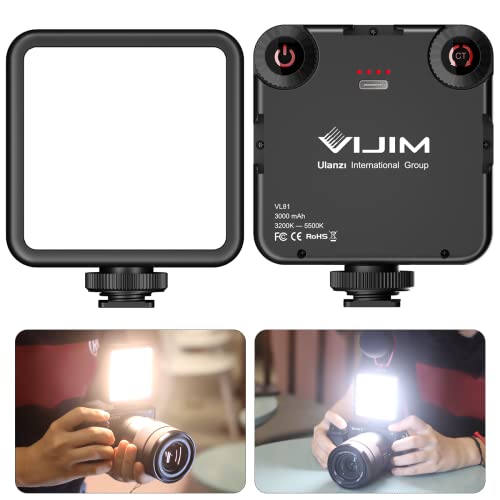
- Adjustable 3200K–5600K color temperature
- 81 beads with CRI 95+ output and softbox design
- Rechargeable 3000mAh battery with up to 480 minutes
Best For: Portable bi-color fill for vlogging, livestreams, and close-up work
Best Outdoor Power

- 120Ws output with 1/8000s HSS
- Up to 420 flashes per charge
- TTL, app, and wireless control
Best For: Outdoor portraits, weddings, and commercial photography
Best for Everyday Use

- GN33 output with LCD controls
- 22-level manual power adjustment
- Includes stand, pouch, and filters
Best For: Manual portraits, events, and studio lighting
Best Compact Flash
NEEWER Z160 SE Mini Speedlight

- Lightweight 5.3-ounce design
- Up to 650 full-power flashes
- Manual output with S1/S2 optical triggering
Best For: Street photography and portable manual flash setups
Best All-Rounder
ULANZI F16R 3-in-1 Flash and Video Light

- GN16 flash with focus-assist and continuous-light modes
- 90-degree tilt, diffuser, and seven power levels
- Up to 550 flashes with bi-color 2500K–6500K lighting
Best For: Versatile low-light photography, portraits, street shooting, and video lighting
Best for Canon TTL

- TTL, manual, and multi modes for Canon cameras
- 1/8000-second HSS and built-in 2.4G wireless X system
- Up to 480 full-power flashes with 0.01–1.5-second recycling
Best For: Canon photographers needing TTL, HSS, and off-camera flash control
Best Compact Pick
Ulanzi SL03 Mini Flash Speedlite

- 1.16-ounce flash with continuous fill-light mode
- GN8 output, four manual power levels, and 90-degree adjustment
- At least 500 full-power flashes with pass-through charging
Best For: Travel, compact cameras, mirrorless kits, and lightweight everyday shooting
Best Manual Value – NEEWER TT560 Speedlite
The NEEWER TT560 is a straightforward manual option among camera flashes for low light. It offers GN38 output, eight manually selected power levels, and a tilting, rotating head for bounce lighting. Confirm your camera has a standard center-contact hot shoe before ordering.
Best For: Photographers who want an affordable manual flash for DSLR or compatible mirrorless cameras and off-camera optical triggering.
Pros:
- GN38 output with eight power settings from 1/128 to full power.
- Tilts 0°–90° and rotates 0°–270° for flexible bounce lighting.
- Supports S1/S2 optical slave modes and PC sync.
- Uses widely available AA batteries and includes overheating protection.
Cons:
- No TTL, HSS, automatic exposure, or camera-menu control.
- Requires manual exposure and output adjustments.
- Fujifilm and other compatible mirrorless cameras must use mechanical shutter mode.
The TT560 is best when low cost and manual control matter more than automation. Its compatibility limitations make checking the camera’s hot shoe and shutter settings essential.
Best Pocket LED – ULANZI VL49 Fill Light
The ULANZI VL49 is a compact continuous light rather than a traditional flash, making it useful for close subjects, video, and quick fill when choosing camera flashes for low light. Its 5500K output, five brightness levels, and rechargeable battery suit portable shooting.
Best For: Vloggers, livestreamers, and photographers who need a small, rechargeable fill light for cameras, phones, or compact rigs.
Pros:
- Lightweight 130g design with a built-in 2000mAh rechargeable battery.
- Five brightness levels from 20% to 100%.
- CRI 95+ output and 5500K natural-light color temperature.
- Three cold shoes plus a 1/4-inch screw hole expand mounting options.
Cons:
- Provides continuous LED illumination, not a conventional flash burst.
- Color temperature is listed at 5500K rather than adjustable.
- Not water resistant.
The VL49 is a practical pocket light for nearby subjects and video. It is less suited to freezing action or illuminating distant scenes than a dedicated speedlite.
Best Wireless Power – Godox TT600 Speedlite
The Godox TT600 is a powerful manual speedlite for photographers building a wireless lighting system. With GN60 output, built-in 2.4G Godox X wireless support, and a stated 0.1–2.6-second recycle time, it is a strong candidate among camera flashes for low light.
Best For: Portrait and event photographers who want high output and expandable off-camera lighting with Godox triggers.
Pros:
- GN60 output provides more illumination than lower-powered compact flashes.
- Built-in 2.4G wireless system supports up to 100m transmission and five groups across 32 channels.
- Approximately 230 full-power flashes from four AA batteries.
- Works with Godox triggers for remote control and high-speed sync functionality.
Cons:
- Cannot provide HSS when used directly on the camera hot shoe.
- TTL functionality requires a separate compatible Godox wireless trigger.
- Four AA batteries are required and not included.
The TT600 offers useful power and wireless flexibility at the cost of direct on-camera automation. It makes the most sense for users willing to add a Godox trigger when they need remote control or HSS.
Best Bi-Color Fill – ULANZI VL-81 LED Light
The ULANZI VL-81 is a rechargeable continuous LED panel with a softbox-style design, making it useful when you need adjustable fill rather than a flash burst. Its 3200K–5600K range and CRI 95+ output add flexibility for low-light video, portraits, and close-up photography.
Best For: Creators who need a portable bi-color light for vlogging, livestreaming, product work, and smartphone or camera setups.
Pros:
- 81-bead panel with adjustable 3200K–5600K color temperature.
- Softbox design helps produce less-dazzling illumination.
- 3000mAh rechargeable battery offers up to 150 minutes at maximum brightness or 480 minutes at minimum brightness.
- Three cold shoes support additional lights or accessories.
Cons:
- Continuous LED output is not a traditional flash for freezing motion.
- Charging takes about three hours.
- Not water resistant.
The VL-81 is a versatile low-light companion when matching ambient color or recording video matters. Its bi-color control and softbox design give it an advantage over fixed-color pocket lights, while its continuous output limits action-freezing use.
Best Outdoor Power – NEEWER Q120 120Ws TTL Strobe
For photographers comparing camera flashes for low light and bright outdoor work, the NEEWER Q120 offers substantially more output than a typical speedlight while retaining TTL convenience. Its rechargeable battery, HSS support, and wireless control make it a flexible choice for portraits, weddings, and commercial shoots.
Best For: Outdoor portraits, weddings, commercial photography, and users who need TTL, HSS, and off-camera wireless control.
Pros:
- Powerful 120Ws output with a 28–105mm zoom range
- TTL, manual, MULTI, and 1/8000s HSS support
- 3000mAh battery delivers up to 420 full-power flashes with 1.5-second recycling
- 2.4GHz wireless control and app-based multi-flash adjustment
Cons:
- Q System and Godox X System compatibility cannot be used simultaneously
- Firmware updates may be needed for full compatibility
- At 1.8 pounds, it is heavier than a compact speedlight
The Q120 is the most capable option here for demanding low-light or outdoor setups. It costs portability compared with smaller flashes, but its power, battery capacity, TTL automation, and HSS make it the strongest all-around choice for advanced shooting.
Best for Everyday Use – PHOTOOLEX FK310 LCD Speedlite
The PHOTOOLEX FK310 is a practical manual option for photographers seeking camera flashes for low light without paying for TTL automation. Its LCD interface, broad single-contact hot-shoe compatibility, and fine power adjustment make it useful for controlled portraits, events, and studio setups.
Best For: Manual shooters using compatible single-contact hot-shoe cameras, wired triggering, and simple multi-light setups.
Pros:
- GN33 output with an easy-to-read LCD display
- 22-level power adjustment from 1/128 to 1/4
- Manual, MULTI, S1, and S2 trigger modes
- Includes a stand, pouch, and 12 color filters
Cons:
- No TTL or automatic flash exposure
- Maximum sync speed is 1/200 second
- Requires four AA batteries
The FK310 favors hands-on control over automation. Its LCD and detailed power settings are valuable when you can meter or adjust exposure manually, while the included accessories make it a convenient starter kit for controlled low-light work.
Best Compact Flash – NEEWER Z160 SE Mini Speedlight
For lightweight camera flashes for low light, the NEEWER Z160 SE keeps the setup simple with a compact body, manual controls, and a built-in rechargeable battery. It is designed for standard single-contact hot shoes and works well for street photography, daily shooting, and basic off-camera optical triggering.
Best For: Street photographers and beginners who want a small, rechargeable manual flash for compatible cameras.
Pros:
- Very compact 5.3-ounce design helps reduce hand fatigue
- Manual power adjustment from 1/128 to full power
- Built-in 1200mAh battery supports up to 650 full-power flashes
- S1 and S2 optical slave modes enable simple wireless triggering
Cons:
- No TTL, HSS, modeling light, or camera-menu control
- Fixed 35mm coverage and 2.8-second recycle time
- Compatibility excludes several specific camera models and requires mechanical shutter operation on many mirrorless cameras
The Z160 SE is best when size and simplicity matter more than automation or output. Its limitations require careful camera compatibility checks, but the rechargeable battery and lightweight design make it appealing for portable, manual flash work.
Best All-Rounder – ULANZI F16R 3-in-1 Flash and Video Light
For photographers comparing camera flashes for low light, the ULANZI F16R combines a GN16 flash with focus-assist and continuous-light modes. Its rechargeable battery, adjustable color temperature, diffuser, and 90-degree tilt make it a flexible option for portraits, street photography, and everyday shooting.
Best For: Backlit portraits, dim rooms, night street photography, and creators who want flash plus video lighting in one unit.
Pros:
- Three-in-one design provides flash, focus assist, and continuous lighting.
- GN16 output, diffuser, and 90-degree tilt support direct or softer bounce lighting.
- Offers seven power levels, 0.5–3-second recycling, and up to 550 full-power flashes per charge.
- Bi-color 2500K–6500K lighting with stepless brightness control and CRI 96.
Cons:
- Single-pin universal hot shoe is not compatible with several listed Canon cameras or cameras without a standard center contact.
- It is not water resistant.
- The listed warranty is one month.
The F16R is a strong pick when versatility matters more than advanced automated exposure features. Confirm your camera’s hot-shoe compatibility before buying, especially if you use one of the listed incompatible Canon models.
Best for Canon TTL – Godox V860III-C Speedlite
The Godox V860III-C is a Canon-compatible speedlite for photographers who want TTL automation, manual control, and high-speed sync when working in low light. Its built-in 2.4G wireless X system also supports off-camera use with compatible Godox triggers.
Best For: Canon shooters covering portraits, events, and fast-moving subjects who need TTL, HSS, and off-camera expansion.
Pros:
- Supports TTL, manual, and multi shooting modes for flexible exposure control.
- 1/8000-second high-speed sync helps manage bright backgrounds and wide apertures.
- Recycles in as little as 0.01–1.5 seconds and provides up to 480 full-power flashes.
- Built-in 2.4G wireless X connectivity supports compatible Godox triggers for off-camera work.
Cons:
- This version is designed for Canon cameras, so compatibility should be confirmed before purchase.
- At 0.53 kg, it is substantially heavier than the compact Ulanzi options.
- It is not water resistant.
The V860III-C is the most feature-rich choice in this group for compatible Canon users. Its TTL, HSS, modeling light, and wireless system make it better suited to controlled and event-oriented shooting than a basic single-contact flash.
Best Compact Pick – Ulanzi SL03 Mini Flash Speedlite
The Ulanzi SL03 is a lightweight option for photographers seeking camera flashes for low light without adding much bulk. It combines a GN8 flash with a continuous fill light, four manual power levels, focus-assist illumination, and a 90-degree adjustable angle.
Best For: Compact cameras, mirrorless bodies, travel, food, street snaps, and casual portraits where portability is a priority.
Pros:
- Ultra-light 1.16-ounce design is well suited to compact cameras and travel kits.
- Provides both flash and 6500K continuous fill light with CRI 97.
- Rechargeable battery delivers at least 500 full-power flashes and supports pass-through charging.
- 90-degree adjustment allows direct or bounce lighting when suitable ceilings or walls are available.
Cons:
- There is no TTL function or automatic exposure control.
- Single-contact hot-shoe compatibility excludes several listed Sony, Canon, and Fujifilm models.
- GN8 output is more limited than the higher-powered flashes in this roundup.
The SL03 makes sense when size and simplicity are more important than automation or long-distance light output. Check the extensive incompatibility list and plan to set shutter speed at 1/250 second or slower for the stated operating guidance.
How We Picked the Best Camera Flashes for Low Light
We evaluated these lights by considering the situations in which photographers typically need extra illumination: indoor portraits, events, product photography, night scenes, and run-and-gun video. The selection includes traditional speedlights, TTL-capable flashes, manual units, wireless-compatible strobes, and continuous LED lights.
Our main criteria were usable light output, control range, recycle or battery performance, camera compatibility, mounting flexibility, color consistency, and ease of use. A powerful flash is not automatically the best choice; portability and automatic exposure control can matter just as much when conditions change quickly.
Quick Comparison
- Best for automatic exposure: Choose a TTL-compatible model such as the Godox V860III-C or NEEWER Q120 when supported by your camera system.
- Best for manual control: The Godox TT600, NEEWER TT560, and PHOTOOLEX FK310 suit photographers who are comfortable setting flash power themselves.
- Best for video and previewing light: The Ulanzi VL49 and ULANZI VL-81 provide continuous illumination, making it easier to see shadows before recording.
- Best for portability: Compact units such as the ULANZI F16R, NEEWER Z160 SE, and Ulanzi SL03 are easier to carry for travel or casual shooting.
- Best for more demanding outdoor work: A higher-output option such as the NEEWER Q120 can provide more flexibility with modifiers and greater subject distance.
Key Buying Factors for Camera Flashes for Low Light
Flash Output and Working Distance
Guide number, watt-seconds, and rated brightness give a rough indication of power, but real-world results also depend on lens aperture, ISO, modifiers, and bounce surfaces. More output helps when bouncing light, using a diffuser, or photographing subjects farther away.
TTL, Manual Control, and Wireless Operation
TTL adjusts flash exposure automatically and is useful for moving subjects or changing compositions. Manual flash is often more consistent for studio-style work and costs less. If you plan to use off-camera lighting, check whether the unit has a built-in radio system or requires a separate trigger.
Battery Life and Recycle Time
Rechargeable lithium-ion models can offer fast recycling and convenient charging, while AA-powered flashes are easier to keep running with spare batteries. Look for overheating protection and consider how many full-power bursts you expect during a session.
Color, Size, and Compatibility
Verify the exact camera version before buying, especially for TTL functions. LED lights should offer a suitable color temperature and, ideally, high color rendering. A compact flash is easier to carry, but a larger head or external battery system may deliver better bounce performance.
Who Should Buy Which Camera Flashes for Low Light?
Beginners should prioritize simple controls, broad compatibility, and a tilt-and-swivel head. Event and portrait photographers will benefit from TTL, fast recycling, and reliable wireless control. Strobists should focus on manual power adjustment, radio triggering, and modifier compatibility. Travel photographers may prefer a compact speedlight or LED that balances useful output with low weight. Video creators should choose a continuous LED model with adjustable brightness, dependable battery life, and accurate color.
Before purchasing, confirm the mounting shoe, TTL support, trigger compatibility, power source, and return policy. Matching the light to your camera and shooting style will usually matter more than choosing the highest advertised output.