Accurate monitoring starts with dependable SPL measurements. The best sound level meters for audio calibration help you align speakers, verify listening levels, and troubleshoot room or equipment inconsistencies.
This roundup compares 10 selected meters and calibrators, from portable Type 2 readers to higher-precision instruments and dedicated reference sources.
Best 10 Sound Level Meters for Audio Calibration Picks for 2026
Best Multi-Level Calibrator

- 94, 104, and 114 dB outputs at 1,000 Hz
- Fits 1/2-inch microphones with an O-ring seal
- IEC 60942:2018 Class 2; ±0.4 dB stated accuracy
Best For: Multi-level calibration in labs and inspection settings
Best Straightforward Calibrator
REED R8090 Sound Level Calibrator

- Selectable 94 dB and 114 dB outputs
- 1,000 Hz signal with ±0.5 dB accuracy
- IEC 60942 Class 2 compliance
Best For: Routine calibration of meters with 1/2-inch microphones
Best Complete Meter
CRY2831 Class 2 Sound Level Meter

- 29–138 dB measurement range
- A/C/Z weighting and fast/slow response modes
- IP54-rated and rated for -20°C to 60°C operation
Best For: Field noise measurement and professional spot checks
Best Certified Option
Triplett SLM400-CAL NIST Calibrator

- Includes a NIST calibration certificate
- 94 dB and 114 dB outputs at 1 kHz
- ±0.5 dB accuracy; battery included
Best For: Traceable professional calibration and documentation
Best Portable Pick
TopTes TS-501B Sound Level Meter

- 30–130 dB range with A/C weighting
- Backlit 2.25-inch LCD display
- MAX/MIN and data-hold functions
Best For: Portable home and audio-system noise checks
Best Calibration Accessory
Digital 94/114 dB Sound Level Calibrator

- Selectable 94 dB and 114 dB outputs
- Supports 1/2-inch and 1-inch microphones
- Stated IEC60942 Class 1 conformity
Best For: Reference checks for compatible sound meters
Best Class 1 Option
Lutron SL-4036SD Industrial Sound Level Meter

- Class 1 sound level meter
- 30–130 dB measurement range
- Intended for industrial and environmental noise
Best For: Industrial and environmental measurement workflows
Precision Calibration Tool
Portable 94/114 dB Sound Level Calibrator

- 94 dB and 114 dB output levels
- IEC942 Class I stated performance
- Compact battery-powered design
Best For: Portable microphone and sound meter calibration
Everyday Measurement Pick
SM-130DB Type 2 Digital Decibel Meter
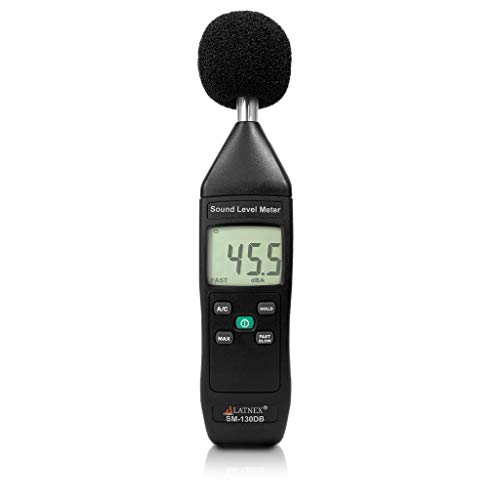
- 35–130 dB measurement range
- 0.1 dB resolution and Type 2 rating
- Includes certificate, battery, and 2-year warranty
Best For: General environmental and mechanical noise measurement
Three-Level Calibration Choice

- Three levels at a 1 kHz frequency
- Stable benchtop design with LED indicators
- Auto power-off helps conserve batteries
Best For: Multi-level calibration with compatible microphones
Best Multi-Level Calibrator – Precision SPL Calibrator
For audio calibration workflows that need more than one reference point, this calibrator offers selectable 94, 104, and 114 dB outputs at 1,000 Hz. Its 1/2-inch microphone slot, O-ring seal, and IEC 60942:2018 Class 2 compliance make it a practical choice for repeatable sound level meter checks.
Best For: Labs, inspection work, and users calibrating compatible 1/2-inch microphones across multiple SPL levels.
Pros:
- Three selectable calibration levels: 94, 104, and 114 dB.
- Supports 1/2-inch microphones with an O-ring seal to help block ambient noise.
- Rated to IEC 60942:2018 Class 2 and specified for ±0.4 dB accuracy across its stated environmental range.
- Simple controls and a low-battery indicator support straightforward operation.
Cons:
- Designed for 1/2-inch microphones, so compatibility should be checked before purchase.
- Its 1,000 Hz output may not suit workflows requiring other calibration frequencies.
With three reference levels and weather-tolerant specifications, this is a flexible option for audio calibration where repeatability and compliance matter.
Best Straightforward Calibrator – REED R8090 Sound Level Calibrator
The REED R8090 keeps sound level meter calibration simple: place it over the microphone, switch it on, and adjust the meter. It provides stable 94 dB and 114 dB signals at 1,000 Hz, with an accuracy specification of ±0.5 dB.
Best For: Users who want a compact, uncomplicated calibrator for compatible 1/2-inch microphones.
Pros:
- Offers both 94 dB and 114 dB output levels.
- Uses a simple place-on-the-microphone calibration process.
- Specified at ±0.5 dB accuracy and 1,000 Hz frequency.
- Complies with IEC 60942 Class 2.
Cons:
- Only provides two output levels.
- Accommodates 1/2-inch diameter microphones, limiting compatibility with other sizes.
This is a focused choice for routine audio calibration when you need standard reference levels without additional operating complexity.
Best Complete Meter – CRY2831 Class 2 Sound Level Meter
Unlike a standalone calibrator, the CRY2831 is a factory-calibrated sound level meter for measuring noise directly. It combines IEC 61672-1:2013 Class 2 performance with a 29–138 dB range, 20 Hz–12.5 kHz response, A/C/Z weighting, and fast/slow time weighting for varied audio calibration and field measurement tasks.
Best For: Technicians, facility teams, EHS users, and inspectors who need a field-ready meter rather than a calibration signal source.
Pros:
- Wide 29–138 dB measurement range.
- Supports A, C, and Z frequency weighting plus fast and slow time weighting.
- Extends frequency measurement to 12.5 kHz.
- IP54-rated enclosure, AC/DC power, and operation from -20°C to 60°C.
Cons:
- It is a measuring instrument, not a dedicated external sound level calibrator.
- Specified accuracy is ±1.5 dB, less precise than the dedicated calibrators listed here.
Choose the CRY2831 when your audio calibration workflow also requires broad, application-specific noise measurement in industrial or outdoor environments.
Best Certified Option – Triplett SLM400-CAL NIST Calibrator
For audio calibration where documented traceability is important, the Triplett SLM400-CAL includes a NIST calibration certificate. It provides selectable 94 dB and 114 dB outputs at 1 kHz, ±0.5 dB accuracy, and a compact battery-powered design.
Best For: Professional environments that prioritize NIST documentation and dependable verification of sound level meters.
Pros:
- Includes a Certificate of Calibration from NIST.
- Provides selectable 94 dB and 114 dB output levels.
- Specified at ±0.5 dB accuracy with output frequency within ±4% at 1 kHz.
- Includes a 9V battery and a two-year warranty.
Cons:
- Only offers 94 dB and 114 dB levels.
- NIST calibration can take 11–15 business days.
- Microphone compatibility details are not specified in the supplied notes.
The Triplett stands out when calibration records matter as much as the reference signal, though its certification process may require advance planning.
Best Portable Pick – TopTes TS-501B Sound Level Meter
For shoppers comparing sound level meters for audio calibration, the TopTes TS-501B is a practical portable option with A- and C-weighting, a 30–130 dB range, and stated accuracy of ±1.5 dB. Its backlit 2.25-inch display, MAX/MIN readings, and data hold make everyday checks easier.
Best For: Home theaters, audio systems, workshops, offices, and general noise monitoring.
Pros:
- A- and C-weighting with a 30–130 dB measurement range.
- Large backlit LCD is easier to read in dim conditions.
- MAX/MIN, data hold, carry case, and included AAA batteries.
Cons:
- Its stated ±1.5 dB accuracy may be less suitable for demanding laboratory work.
- It is factory calibrated, but the notes do not specify a calibration certificate.
The TS-501B balances useful calibration-oriented features with simple handheld operation. It is a sensible choice when portability and quick comparisons matter more than advanced logging or laboratory-grade documentation.
Best Calibration Accessory – Digital 94/114 dB Sound Level Calibrator
For sound level meters for audio calibration, this compact digital calibrator provides selectable 94 dB and 114 dB reference outputs. It is designed to check the accuracy of sound level meters and measuring systems using 1/2-inch or 1-inch microphones.
Best For: Users who need a portable reference source for field, personal, or laboratory accuracy checks.
Pros:
- Simple three-button operation with 94 dB and 114 dB selections.
- Works with 1/2-inch microphones and 1-inch microphones using the removable adapter.
- Backlit digital display and stated IEC60942 Class 1 conformity.
Cons:
- This is a calibrator, not a standalone sound level meter for measuring ambient noise.
- The supplied notes do not identify a specific calibration certificate or included microphone accessories.
Its focused design makes it useful alongside a compatible meter, especially when repeatable reference checks are part of your workflow. Confirm microphone fit and the required reference level before buying.
Best Class 1 Option – Lutron SL-4036SD Industrial Sound Level Meter
For buyers seeking sound level meters for audio calibration in industrial or environmental settings, the Lutron SL-4036SD is presented as a Class 1 meter with a 30–130 dB range. Its positioning suits users who prioritize a higher stated instrument class for vehicle, workplace, or environmental noise checks.
Best For: Industrial, vehicle-noise, and environmental sound measurements where a Class 1 meter is preferred.
Pros:
- Class 1 designation is suited to more demanding measurement applications.
- 30–130 dB range covers a broad set of noise measurements.
- Designed for industrial, vehicle, and environmental noise use.
Cons:
- The supplied details provide limited information about display, weighting, logging, or connectivity features.
- At 15.8 ounces, it is heavier than the compact TopTes option.
This model is worth considering when the stated Class 1 rating is more important than a long list of convenience features. Review the full specifications before purchase if your calibration setup requires particular weighting or data-recording functions.
Precision Calibration Tool – Portable 94/114 dB Sound Level Calibrator
For sound level meters for audio calibration, this compact calibrator provides two standard output levels—94 dB and 114 dB—at a stated deviation of only ±0.3 dB. Its battery-powered design suits both field and laboratory microphone checks.
Best For: Calibrating microphones, sound level meters, and sound-measuring systems that accept 1-inch or 1/2-inch microphones.
Pros:
- Offers 94 dB and 114 dB calibration levels.
- Designed for accurate, stable performance and meets IEC942 Class I.
- Compact, lightweight, and battery operated.
- Includes an instruction manual and battery.
Cons:
- Provides only two output levels.
- Requires compatible 1-inch or 1/2-inch microphone fitment.
This is a practical choice when portability and straightforward two-point calibration matter more than having multiple test levels.
Everyday Measurement Pick – SM-130DB Type 2 Digital Decibel Meter
Among sound level meters for audio calibration, the SM-130DB is a measurement-focused Type 2 meter with a 35–130 dB operating range. It combines 0.1 dB resolution with a stated ±1.8 dB accuracy at 94 dB and 1 kHz.
Best For: Measuring environmental, mechanical, workplace, classroom, building, and general noise levels where a broad range and digital readout are useful.
Pros:
- Covers sound levels from 35 dB to 130 dB.
- Conforms to the stated EN 61672 Type 2 standard.
- Uses a 1/2-inch electret condenser microphone with 0.1 dB resolution.
- Includes a calibration certificate, 9V battery, technical support, and a 2-year warranty.
Cons:
- Its stated ±1.8 dB accuracy is less precise than a dedicated calibrator’s ±0.3 dB specification.
- It is a meter rather than a standalone sound-level calibration source.
This model makes sense for users who need to read and document a wide range of sound levels, but it should be paired with an appropriate calibrator when instrument verification is required.
Three-Level Calibration Choice – 94/104/114 dB SPL Calibrator
For sound level meters for audio calibration, this professional calibrator adds a 104 dB midpoint to the usual 94 dB and 114 dB levels, all at a 1 kHz calibration frequency. Its benchtop form, LED indicators, and auto power-off support repeatable setup and battery conservation.
Best For: Users who want three selectable calibration levels and a stable benchtop design for compatible 13.2 mm microphone cavities.
Pros:
- Provides 94 dB, 104 dB, and 114 dB levels at 1 kHz.
- Benchtop design helps provide a stable position during calibration.
- LEDs indicate operation, completed warm-up, selected level, and low battery.
- Includes batteries and an auto power-off function.
Cons:
- The 13.2 mm cavity requires careful microphone alignment.
- Its approximately 400 g stated weight is less lightweight than some portable calibrators.
- Compatibility should be checked before use to avoid microphone damage.
The extra 104 dB setting makes this a flexible option for calibration workflows that need more than two reference points, provided the microphone fits its cavity correctly.
How We Picked the Best Sound Level Meters for Audio Calibration
We focused on the specifications that matter when setting up or checking an audio system: measurement range, frequency weighting, accuracy class, calibration support, microphone compatibility, display usability, and documentation. The selection includes both complete sound level meters and dedicated calibrators, because a meter measures acoustic output while a calibrator provides a known reference signal for verification.
Products with stated IEC classifications, factory or NIST calibration, broad output levels, and compatibility with common 1/2-inch or 1-inch microphones received particular consideration. Where specifications vary by model or seller, confirm the current manual and calibration certificate before purchase.
Quick Comparison
| Best For | Look For | Typical Choice |
|---|---|---|
| Speaker and room setup | A/C weighting, practical range, readable display | Portable Type 2 meter |
| Routine verification | 94 dB and 114 dB reference outputs | Dual-level calibrator |
| Higher-confidence measurements | Class 1 rating and traceable calibration | Class 1 meter or certified calibrator |
| Flexible professional workflows | Multiple levels and microphone-size support | Multi-level calibrator |
Key Buying Factors for Sound Level Meters for Audio Calibration
Accuracy Class and Calibration
Class 1 instruments generally offer tighter performance than Class 2 models, but Class 2 is often sufficient for studio setup, general maintenance, and comparative checks. A calibration certificate adds confidence, while a calibrator lets you check the meter before important measurements.
Weighting, Range, and Response
A-weighting is useful for hearing-related and environmental comparisons, while C-weighting better represents louder low-frequency content and many audio-system checks. Choose a meter whose range comfortably covers your expected levels, and check whether it provides fast and slow response settings.
Microphone and Reference Compatibility
Dedicated calibrators commonly support 1/2-inch microphones, with some designs also accommodating 1-inch capsules. Confirm the opening size and adapter requirements before buying. Reference outputs such as 94 dB, 104 dB, or 114 dB should match your meter’s calibration procedure.
Usability and Documentation
A backlit display, compact body, stable controls, and clear battery information make repeated measurements easier. For commercial, compliance, or engineering work, prioritize traceable calibration records, stated standards, and manufacturer documentation over price alone.
Who Should Buy Which Sound Level Meters for Audio Calibration?
Choose a portable Type 2 meter if you mainly need quick speaker-level checks, home-studio alignment, or general troubleshooting. Choose a dedicated 94/114 dB calibrator if you already own a compatible meter and want a repeatable verification reference. A multi-level calibrator suits technicians working across different instruments or calibration procedures. For laboratories, regulated environments, or demanding acoustic work, select a Class 1 meter with current certification and pair it with an appropriate reference calibrator.