Viewing the Sun safely requires more than a dark-looking accessory. The best glass solar observation filters are designed for solar use, fit securely over the front of your optics, and help reduce harmful visible and invisible radiation.
This roundup compares 10 options, including mounted glass filters, universal telescope filters, and cut-to-size solar filter sheets for different apertures and equipment.
Best 10 Glass Solar Observation Filters Picks for 2026
Best Integrated 8-Inch Option
Celestron EclipSmart 8-Inch Solar Filter

- ISO 12312-2:2015(E) compliant
- Fits compatible 8-inch Celestron telescopes
- Orange tint and two-year warranty
Best For: Compatible 8-inch Celestron telescope owners
Best DIY 8-Inch Sheet
Thousand Oaks 8-Inch Solar Filter Sheet
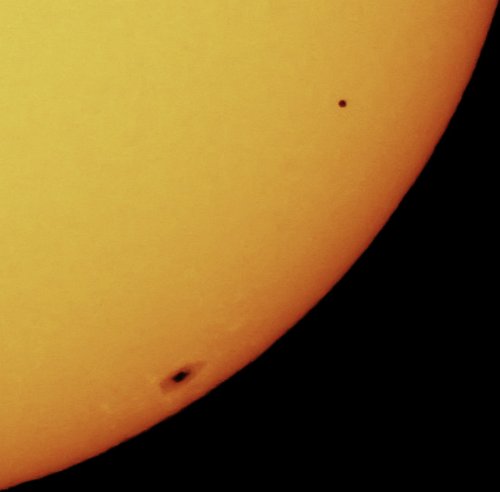
- 8-by-8-inch black polymer sheet
- Works with telescopes, binoculars, and cameras
- Produces an orange solar image
Best For: Custom solar-filter projects on a budget
Best 6-Inch Celestron Fit
EclipSmart 6-Inch Solar Filter

- ISO 12312-2:2015(E) compliant
- Fits listed Celestron 6-inch models
- Secure straps and orange tint
Best For: Supported 6-inch Celestron telescope owners
Best Large DIY Sheet
Thousand Oaks 12-Inch Solar Filter Sheet

- Large 12-by-12-inch polymer sheet
- Fits many custom viewing projects
- Orange solar image and flat surface
Best For: Large custom filters and solar viewers
Best Camera-Lens Glass Solar Filter

- Blocks 99.999% of the Sun’s rays when used correctly
- Slip-on design with nylon thumb screws
- Fits optical tube diameters from 5 1/8 to 5 3/8 inches
Best For: Solar photographers using compatible camera lenses or optical tubes
Best DIY Solar Filter Sheet

- Flexible polymer sheet for custom projects
- Works with telescopes, binoculars, and cameras
- Offers a lower-cost alternative to factory-made filters
Best For: DIY users building a securely attached custom solar filter
Best Telescope Glass Solar Filter
Helios Glass Telescope Solar Filter
- ND5-rated glass blocks 99.999% of sunlight
- Clamp-on cell includes felt tabs and thumb screws
- Fits optical tube diameters from 4 5/8 to 4 7/8 inches
Best For: Telescope owners seeking a secure, ready-to-use glass filter
Best with Extra Features

- Customizable 4-by-4-inch sheet
- For telescopes, binoculars, and cameras
- Produces a natural orange solar image
Best For: DIY solar-filter projects
Large-Aperture Film Filter

- Fits 6 1/8- to 6 3/8-inch tubes
- Clamp-on or slip-on installation
- Supports visual observing and photography
Best For: Larger compatible telescope tubes
Universal Solar Filter
Celestron EclipSmart Adjustable Filter

- Fits 75-100 mm objective diameters
- ISO 12312-2:2015(E) compliant
- Folding design with elastic-band security
Best For: Convenient telescope, scope, or DSLR use
Best Integrated 8-Inch Option – Celestron EclipSmart 8-Inch Solar Filter
If you want a ready-to-use choice among glass solar observation filters and related solar-filter designs, this Celestron EclipSmart model is made for 8-inch Schmidt-Cassegrain and EdgeHD telescopes. It is ISO 12312-2:2015(E) compliant and uses two hook-and-loop straps for a secure fit.
Best For: Owners of compatible 8-inch Celestron telescopes who want an attachable filter for eclipses, sunspots, and routine solar viewing.
Pros:
- Conforms to the ISO 12312-2:2015(E) safety standard.
- Fits compatible Celestron 8-inch Schmidt-Cassegrain and EdgeHD telescopes.
- Orange-tint film provides a natural-looking solar image.
- Includes a two-year US warranty and US-based support.
Cons:
- Compatibility is limited to specified 8-inch telescope designs.
- This is a telescope filter rather than a loose sheet for custom projects.
For owners of the listed Celestron models, the secure attachment system, tested US-made solar film, and stated ISO compliance make this a convenient, purpose-built option.
Best DIY 8-Inch Sheet – Thousand Oaks 8-Inch Solar Filter Sheet
This 8-by-8-inch Thousand Oaks polymer sheet is a practical starting point for making custom glass solar observation filters and other solar-filter assemblies. It works with telescopes, binoculars, and cameras, and produces a natural orange solar image.
Best For: DIY users who need flexible material for building a custom filter at a lower cost than a factory-made filter.
Pros:
- Compatible with telescopes, binoculars, and cameras.
- Black polymer is intended for viewing sunspots and granulation.
- Stronger than Mylar, with filtering properties protected within the substrate.
- Compact 8-by-8-inch size is suitable for smaller custom projects.
Cons:
- Requires the buyer to make and securely attach the filter.
- The supplied warning emphasizes using sticky tape to prevent it from falling.
- It is not water resistant.
This sheet offers versatility and value, but safe construction and attachment are the buyer’s responsibility. Check the finished fit carefully before observing the Sun.
Best 6-Inch Celestron Fit – EclipSmart 6-Inch Solar Filter
For compatible 6-inch Celestron instruments, this EclipSmart filter is a convenient alternative to constructing your own glass solar observation filters. It meets ISO 12312-2:2015(E), uses two hook-and-loop straps, and provides an orange-tinted view for eclipses and sunspots.
Best For: Owners of compatible Celestron 6-inch optical tubes and listed 6-inch telescope models.
Pros:
- Conforms to the ISO 12312-2:2015(E) standard.
- Designed for several Celestron 6-inch telescope models.
- Two hook-and-loop straps help secure it to the objective.
- Includes a two-year warranty and unlimited US-based support.
Cons:
- Not a universal filter; compatibility depends on the listed 6-inch models.
- It is not water resistant.
The model’s defined compatibility list makes it easy to choose when you own one of the supported Celestron instruments. Its ready-made fit is more convenient than fabricating a sheet filter.
Best Large DIY Sheet – Thousand Oaks 12-Inch Solar Filter Sheet
This large 12-by-12-inch polymer sheet gives DIY builders more material for custom glass solar observation filters and solar viewers. It can be used with telescopes, finders, binoculars, cameras, and pocket eclipse viewers, with an orange solar image.
Best For: Makers who need a larger sheet for custom filters or multiple appropriately sized viewing applications.
Pros:
- Generous 12-by-12-inch sheet size.
- Compatible with telescopes, finders, binoculars, cameras, and pocket eclipse viewers.
- Black polymer is intended for observing sunspots and granulation.
- Provides a flat surface compared with thin film filters described as having wrinkles and creases.
Cons:
- Requires custom fabrication and secure attachment.
- Ships without a storage case.
- It is not water resistant.
The larger format is useful when an 8-inch sheet is too small, but this is a build-your-own product. Cover or remove any unprotected sight block before solar observation.
Best Camera-Lens Glass Solar Filter – Helios Glass Solar Filter
For photographers seeking glass solar observation filters, the Helios Glass Solar Filter provides a slip-on design for compatible camera lenses or optical tubes. Its independently tested solar glass blocks 99.999% of the Sun’s rays when installed and used correctly, while nylon thumb screws help secure the filter during use.
Best For: Solar photographers who need a removable, camera-compatible glass filter for viewing or photographing eclipses and other solar events.
Pros:
- Glass filter is independently tested to block 99.999% of the Sun’s rays.
- Slip-on design can be removed quickly during totality.
- Nylon thumb screws help secure the filter to compatible equipment.
- Includes a foam case and comes from a manufacturer recommended by the American Astronomical Society.
Cons:
- Compatibility is limited to optical tube diameters from 5 1/8 to 5 3/8 inches.
- Careful measurement is required before ordering.
- The listed warranty requires the product to remain in its sealed plastic bag for returns.
This is a strong option when you prioritize glass construction and quick removal for eclipse photography. Confirm your equipment’s outside diameter before buying, since the filter is designed for a specific fit range.
Best DIY Solar Filter Sheet – 6×6 Solar Filter Sheet
Thousand Oaks Optical 6"x6" Solar Filter Sheet for Telescopes, Binoculars and Cameras
Check Price On AmazonThis 6-by-6-inch polymer sheet is a flexible alternative to premade glass solar observation filters. It can be cut and assembled for telescopes, binoculars, or cameras, making it useful for custom projects and smaller budgets. The manufacturer warns that the finished filter must be attached securely before observation.
Best For: DIY users who want to make a custom solar filter for compatible telescopes, binoculars, or cameras.
Pros:
- Can be adapted to telescopes, binoculars, and cameras.
- Offers a lower-cost alternative to factory-made filters.
- Produces a natural orange-colored solar image when used through a telescope.
- The 6-by-6-inch sheet provides material for custom filter construction.
Cons:
- Requires the buyer to construct and attach the filter.
- Secure attachment with sticky tape is specifically required by the warning.
- Polymer construction is not glass and is not water resistant.
This sheet makes sense for experienced users comfortable building their own filter cell or holder. It is less convenient than a ready-to-use filter, so attachment and fit should be treated as essential safety considerations.
Best Telescope Glass Solar Filter – Helios Glass Telescope Solar Filter
Designed for telescope users, this Helios model is one of the more purpose-built glass solar observation filters in the lineup. Its ND5-rated glass blocks 99.999% of sunlight, while the clamp-on cell uses nylon thumb screws and felt tabs to help center and protect the telescope’s objective lens.
Best For: Telescope owners who want a securely mounted glass filter for observing or photographing sunspots, eclipses, and other solar features.
Pros:
- ND5-rated glass blocks 99.999% of sunlight when used correctly.
- Clamp-on design fits optical tube diameters from 4 5/8 to 4 7/8 inches.
- Felt tabs help prevent scratches while nylon thumb screws secure and center the filter.
- Designed for relatively quick removal and reattachment during eclipse phases.
Cons:
- Only fits telescopes within the specified 118–124mm diameter range.
- Requires precise measurement before purchase.
- Quick removal during totality requires careful handling and appropriate eclipse conditions.
Choose this model when you want a dedicated telescope filter with a protective mounting system rather than a loose sheet. Its fit range is narrow, but the aluminum-and-felt cell offers a more finished setup for compatible telescopes.
Best with Extra Features – 4-Inch Black Polymer Sheet
This 4-by-4-inch Thousand Oaks Optical sheet is a practical option for making your own glass solar observation filters or other custom solar-filter setups. Its black polymer material is designed for observing sunspots and granulation through telescopes, binoculars, and cameras, with the Sun appearing a natural orange color.
Best For: DIY users who need a customizable sheet for a compatible telescope, binocular, or camera.
Pros:
- Can be cut and fitted to telescopes, binoculars, or cameras.
- Black polymer is intended for observing sunspots and solar granulation.
- Stronger than Mylar, with filtering properties protected within the substrate.
- Costs less than many factory-made filter assemblies.
Cons:
- Requires you to construct the filter mount yourself.
- Only measures 4 by 4 inches, so compatibility depends on your equipment.
- Must be securely attached with sticky tape to prevent it from falling during observation.
This is a budget-friendly, hands-on alternative to a finished filter. Choose it when you are comfortable building a secure mount and have verified that the sheet fully covers the front objective.
Large-Aperture Film Filter – 6.5-Inch Hyperion Solar Film
The Seymour Solar Hyperion is a ready-to-use choice for larger telescopes, with a 6.5-inch filter size designed for optical tube diameters from 6 1/8 to 6 3/8 inches. Among glass solar observation filters and film alternatives, it emphasizes secure installation, broad device compatibility, and clear, high-contrast solar viewing.
Best For: Owners of larger compatible telescopes who want a removable clamp-on or slip-on solar filter for viewing or photography.
Pros:
- Blocks more than 99.99% of visible light plus ultraviolet and infrared radiation, according to the supplied product notes.
- Clamp-on or slip-on design makes installation and removal straightforward.
- Nylon thumbscrews and felt tabs help reduce scratching or damage to the telescope.
- Compatible with telescopes, refractors, binoculars, viewfinders, cameras, and cell-phone cameras.
Cons:
- Fit is limited to the specified 6 1/8- to 6 3/8-inch optical tube diameter range.
- The supplied notes describe a 90-day guarantee with return conditions that include keeping the product sealed unless addressing a manufacturer defect.
- It is Hyperion solar film rather than a glass filter.
For a large optical tube that matches the stated measurements, this filter offers a more convenient alternative to building a custom sheet mount. Confirm the objective diameter carefully before ordering.
Universal Solar Filter – Celestron EclipSmart Adjustable Filter
The Celestron EclipSmart is a folding, adjustable solar filter for objective lenses measuring 75 to 100 mm outside diameter. It is a convenient alternative to custom glass solar observation filters for eclipses, sunspots, and everyday white-light solar viewing through compatible telescopes, spotting scopes, and DSLR cameras.
Best For: Users who want an adjustable, ready-made filter with a secure elastic-band attachment and compact storage.
Pros:
- Conforms to the ISO 12312-2:2015(E) international safety standard, according to the supplied notes.
- Adjustable side panels accommodate objective lenses from 75 to 100 mm.
- Elastic band helps secure the filter, while the folding design stores in the included reusable bag.
- Produces an orange-tinted image and includes a two-year limited warranty with US-based support.
Cons:
- Compatibility is limited to objective lenses within the 75-100 mm outside-diameter range.
- The paper-enclosed folding design is not water resistant.
- Requires careful adjustment and attachment before observing.
This is the most convenient pick of the three for users with a compatible 75-100 mm objective. Its adjustable fit, included securing bands, and reusable storage bag make it well suited to occasional eclipse viewing as well as routine solar observations.
How We Picked These Glass Solar Observation Filters
We focused on filters made specifically for front-mounted solar observation, covering a range of telescope apertures and common camera or binocular setups. The selection includes glass models for a durable, rigid solution and solar filter sheets for buyers who need flexible sizing or broader compatibility.
We also considered stated safety standards, intended equipment, available dimensions, mounting style, and the likelihood of achieving a snug, stable fit. Always verify the manufacturer’s instructions and inspect any filter for damage before use.
Quick Comparison
| Filter type | Best for | Main advantage | What to check |
|---|---|---|---|
| Mounted glass filter | Frequent telescope use | Rigid, reusable construction | Optical tube diameter and retaining fit |
| Solar filter sheet | Custom setups and multiple optics | Can be trimmed or adapted | Correct installation and complete front coverage |
| Universal telescope filter | Users needing broader compatibility | Adjustable or adaptable mounting | Whether the mounting system locks securely |
Key Buying Factors for Glass Solar Observation Filters
Fit and Front Placement
The filter must cover the objective or camera lens completely and remain firmly attached during use. Measure the outside diameter of the optical tube, not just the telescope’s advertised aperture. A filter that is loose, strained, or only partially supported should not be used.
Glass Construction and Optical Size
Glass filters are rigid and generally convenient for repeated setup, but they are less forgiving of impacts than flexible film. Match the filter’s stated fit range to your equipment and leave enough clearance for the holder to sit squarely without contacting the glass.
Safety Information
Look for clear solar-specific instructions and, where stated, compliance with relevant safety standards such as ISO 12312-2. Do not substitute ordinary neutral-density, photographic, smoked, or homemade dark filters. Never place a front filter behind an eyepiece or other internal optical component.
Condition and Handling
Before every session, check for cracks, chips, pinholes, scratches, loose mounts, or gaps. Store glass filters in protective packaging and follow the maker’s guidance for cleaning. Supervise children and avoid looking through unfiltered finderscopes or secondary optics.
Who Should Buy Which Glass Solar Observation Filters?
Choose a Mounted Glass Filter for Regular Telescope Observing
A fitted Celestron or Seymour Solar glass option is a practical choice when you use one telescope often and want a durable, ready-to-install setup. Prioritize the correct tube-diameter range over the nominal aperture alone.
Choose a Sheet for Flexible or Multi-Device Use
Solar filter sheets make more sense for buyers adapting protection to telescopes, binoculars, cameras, or unusual front openings. They can be economical and versatile, but the finished installation must be secure, opaque around the edges, and fully compliant with the manufacturer’s directions.
Choose a Universal Model When Equipment May Change
A universal telescope filter can suit households with more than one compatible instrument. Confirm its adjustment range and locking method before purchase, then test the fit on the ground before pointing any equipment at the Sun.