The best digital barometers make it easier to monitor atmospheric pressure, anticipate weather changes, and track conditions indoors or outdoors. The right model depends on whether you need precise measurements, wireless sensors, a weather-station display, or a compact hiking instrument.
We compared 10 options across measurement range, accuracy, connectivity, display features, portability, and overall usefulness to help you choose a barometer that fits your routine.
Best 10 Digital Barometers Picks for 2026
Calibrated Lab Monitor

- NIST-traceable calibration included
- Pressure, temperature, and humidity monitoring
- 24-hour min/max storage and optional PC capture
Best For: Labs, plants, and documented environmental monitoring
Connected Environment Sensor
SensorPush HTP.xw Bluetooth Barometer
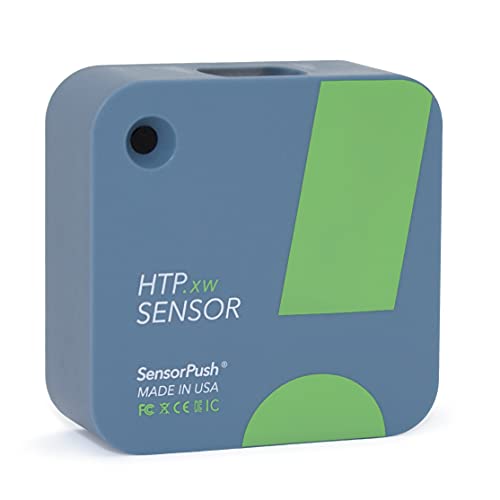
- Tracks pressure plus temperature and humidity
- 30 days onboard logging with app storage
- Optional WiFi Gateway enables remote access
Best For: Long-term monitoring in humidors, greenhouses, and storage spaces
Portable Field Meter
BTMETER BT-100WM Handheld Barometer
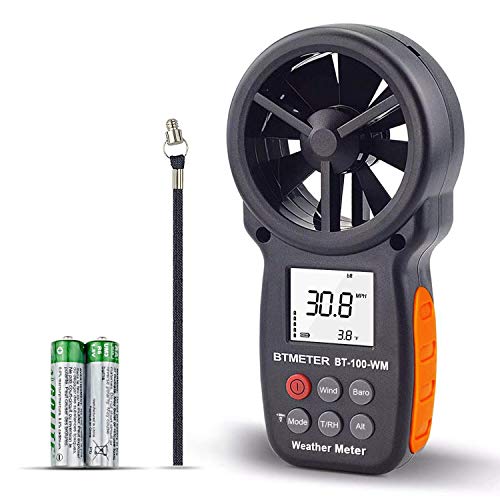
- Combines barometer with wind-speed measurement
- Logs 16 groups of pressure data
- Backlit handheld design with tripod hole
Best For: Outdoor activities, shooting, and HVAC airflow checks
Home Forecast Station
Newentor Wireless Digital Barometer Station

- Color display includes pressure and weather forecast
- Wireless indoor/outdoor temperature and humidity
- Atomic clock and support for up to three sensors
Best For: Homes, offices, and bedside weather monitoring
Fishing Pressure Pick

- Adjustable pressure-change indicator
- Color-coded fishing-condition dial
- Calibrates to local pressure
Best For: Anglers tracking pressure for fishing
Home Weather Station Pick
AcuRite Digital Weather Forecaster
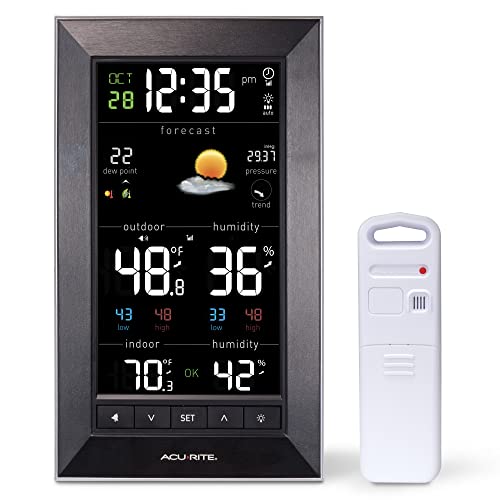
- Shows pressure, temperature, and humidity
- Wireless sensor reaches up to 330 feet
- Includes forecasting and programmable alarms
Best For: Home or RV weather monitoring
Outdoor Multitool Pick
Digital Altimeter and Barometer

- Eight functions for outdoor navigation
- Altitude range to 29,500 feet
- Measures pressure from 300 to 1100 mbar
Best For: Hiking, camping, and mountain travel
Solar-Assisted All-Rounder
Indoor Outdoor Thermometer Wireless Solar Weather Station

- Tracks indoor and outdoor temperature, humidity, and pressure trends
- Offers a 328-foot wireless sensor range and 30-second updates
- Uses solar-assisted automatic backlighting with a 12-hour forecast
Best For: Whole-home monitoring with remote outdoor readings
Simple Pressure Specialist
Digital Barometer Weather Forecast Clock

- Measures local pressure with manual calibration
- Shows pressure, trends, temperature, humidity, and weather icons
- Offers front controls, desk or wall placement, and a 4-inch display
Best For: Indoor pressure tracking without an outdoor sensor
Feature-Rich Color Station
Newentor Wireless Indoor Outdoor Thermometer

- Combines barometric pressure with a color LCD weather display
- Supports up to three sensors and includes one remote sensor
- Offers adapter-powered always-on viewing, alerts, and atomic clock functions
Best For: A multifunction home weather station with an always-on display
Calibrated Lab Monitor – Traceable Digital Barometer
Traceable Calibrated Digital Barometer, 7.25 - 14.94 PSI, 0.1 Hg Resolution, Accuracy of 0.12" Hg
Check Price On AmazonFor controlled environments, this digital barometer combines pressure, temperature, and relative-humidity monitoring with NIST-traceable calibration. Its large display, alarms, and stored readings make it practical for labs, plants, and other spaces where changing conditions need attention.
Best For: Laboratories, plants, and users who need calibrated monitoring with alerts and downloadable data.
Pros:
- NIST-traceable calibration certificate with data is included.
- Measures pressure, temperature, and relative humidity.
- Stores hourly minimum and maximum readings for the past 24 hours.
- Optional software can capture data from up to eight barometers.
Cons:
- Optional PC software is required for computer-based data capture.
- Its feature set may be more than needed for casual home weather monitoring.
This is a strong choice when measurement documentation and configurable alarms matter more than a simple, portable display.
Connected Environment Sensor – SensorPush HTP.xw Bluetooth Barometer
SensorPush HTP.xw is a compact digital barometer for users who prefer phone-based monitoring. It records barometric pressure alongside temperature, humidity, dew point, heat index, and VPD, with Bluetooth access through the app and optional remote access using the separately sold G1 WiFi Gateway.
Best For: Humidors, greenhouses, freezers, basements, and other areas needing ongoing environmental records.
Pros:
- Setup is designed to take seconds, with Bluetooth range up to 100 meters line of sight.
- Provides 30 days of onboard logging and unlimited in-app storage.
- Measures pressure, temperature, humidity, dew point, heat index, and VPD.
- Water-resistant design and typical battery life of one to two years.
Cons:
- Remote access requires the separately sold G1 WiFi Gateway.
- There is no dedicated built-in display; readings are viewed in the app.
Choose this sensor if historical records and mobile access are more important than a traditional standalone weather-station screen.
Portable Field Meter – BTMETER BT-100WM Handheld Barometer
For fieldwork, this handheld digital barometer adds pressure readings to a broader wind and weather toolkit. The BT-100WM also measures wind speed, temperature, humidity, dew point, wind chill, and altitude, making it useful for outdoor activities and airflow checks.
Best For: Shooting, hunting, sailing, drone activities, HVAC checks, and portable weather measurements.
Pros:
- Measures pressure, altitude, wind speed, temperature, humidity, and dew point.
- Logs 16 groups of barometric-pressure data for comparison.
- Backlit LCD and multiple wind-speed units support field use.
- Compact handheld design includes a tripod mounting hole.
Cons:
- Wind-speed accuracy is specified at plus or minus 5%.
- Barometric logging is limited to 16 groups.
- Automatic shutdown occurs after 10 minutes without operation.
This is the most versatile option here for users who need barometric information alongside wind measurements rather than a stationary indoor monitor.
Home Forecast Station – Newentor Wireless Digital Barometer Station
This Newentor weather station brings digital barometer readings into a broader home display. Its color LCD shows barometric pressure with indoor and outdoor temperature and humidity, forecasts, time, moon phase, and customizable alerts, while the included wireless sensor monitors an additional location.
Best For: Homes, offices, bedrooms, and living spaces needing an at-a-glance weather and clock display.
Pros:
- Large color LCD displays pressure, temperature, humidity, and forecast information.
- Includes one wireless remote sensor and supports up to three channels.
- Offers customizable alerts, atomic time, dual alarms, and snooze.
- Wall-power mode supports an always-on display with adjustable brightness.
Cons:
- Battery-only operation switches to a 15-second quick-glance display.
- Additional remote sensors are not included.
- Temperature accuracy is specified at plus or minus 1.8°F.
This model suits households that want barometric pressure as part of an accessible weather station, rather than a specialized pressure-monitoring instrument.
Fishing Pressure Pick – Camco TRAC Fishing Barometer
If you want digital barometers mainly for fishing-related pressure tracking, the Camco TRAC Outdoors Fishing Barometer keeps the focus on changing barometric conditions. Its adjustable indicator, reference marker, and color-coded dial make it easy to compare readings and calibrate the unit to local pressure.
Best For: Anglers who want a simple, portable barometer for monitoring fishing conditions.
Pros:
- Adjustable pressure-change indicator with reference marker
- Color-coded dial identifies great, good, or poor fishing conditions
- Easy calibration to local barometric pressure
- Sure-grip plastic housing and braided lanyard support portability
Cons:
- Designed specifically around fishing conditions rather than broader weather monitoring
- Uses an analog color-coded dial instead of a digital display
This is a practical choice when fishing guidance matters more than a feature-rich home weather station. The compact housing and lanyard also make it convenient to carry or hang near your gear.
Home Weather Station Pick – AcuRite Digital Weather Forecaster
For shoppers comparing digital barometers as part of a broader home weather setup, the AcuRite Digital Vertical Weather Forecaster combines barometric pressure with indoor and outdoor temperature, humidity, time, and date information. Its wireless outdoor sensor sends readings from up to 330 feet away to an easy-to-read LCD display.
Best For: Homes, RVs, and indoor spaces where you want pressure readings alongside temperature, humidity, and time.
Pros:
- Displays barometric pressure, temperature, humidity, date, and time
- Provides a personalized 12-hour weather forecast
- Wireless sensor range reaches up to 330 feet
- Supports table or wall placement and includes programmable alarms
Cons:
- Requires three AAA batteries
- Its larger feature set may be more than needed for pressure-only monitoring
This AcuRite model is the more versatile option for everyday household monitoring. Choose it when you want digital barometers functionality integrated with a complete indoor/outdoor weather display rather than a standalone pressure instrument.
Outdoor Multitool Pick – Digital Altimeter and Barometer
Among digital barometers for hiking and camping, this 8-in-1 instrument adds altitude, compass, thermometer, time, and weather functions in one portable tool. It measures air pressure from 300 to 1100 mbar and includes a five-second electronic backlight for checking information outdoors.
Best For: Hikers, campers, and mountain travelers who need pressure readings alongside navigation and elevation data.
Pros:
- Combines barometer, altimeter, compass, thermometer, and additional functions
- Measures altitude from -2,300 to 29,500 feet
- Measures pressure from 300 to 1100 mbar
- Includes an eight-direction electronic compass and backlight
Cons:
- Its multifunction design may require more setup and mode switching than a dedicated barometer
- Supplied notes do not specify battery type or water resistance
This is the strongest fit for active outdoor use where altitude and direction are as important as air pressure. Its broad measurement range and compact multifunction format make it more useful on the trail than in a stationary home setting.
Solar-Assisted All-Rounder – Indoor Outdoor Thermometer Wireless Solar Weather Station
If you want digital barometers combined with broad indoor and outdoor monitoring, this wireless weather station offers a well-rounded setup. It tracks temperature, humidity, barometric pressure trends, and a 12-hour forecast while adding solar-assisted automatic backlighting.
Best For: Homes, nurseries, patios, garages, greenhouses, and other spaces where remote temperature and humidity monitoring is useful.
Pros:
- Monitors indoor and outdoor temperature and humidity with readings refreshed every 30 seconds.
- Built-in barometer provides a 12-hour forecast and pressure history.
- Wireless sensor range reaches up to 328 feet in open areas.
- Solar-assisted backlight turns on automatically in low light and the display records maximum and minimum readings.
Cons:
- The outdoor sensor and main unit require multiple AA batteries.
- The forecast is a general 12-hour indication rather than a detailed weather service.
This is the most versatile choice of the three for monitoring conditions in multiple locations. Its pressure history, trend arrows, comfort indicator, and wireless range make it more informative than a basic indoor barometer, although its many display elements may be more than some users need.
Simple Pressure Specialist – Digital Barometer Weather Forecast Clock
This compact option puts local barometric pressure at the center of the display. Among digital barometers, it stands out for manual pressure calibration, front-mounted controls, and a readable 4-inch screen that also shows indoor temperature, humidity, time, and weather icons.
Best For: Indoor users who want a straightforward barometer for a home, office, garage, RV, boat cabin, or workshop.
Pros:
- Measures local pressure and allows manual calibration from the front buttons.
- Displays pressure, pressure trend, indoor temperature, humidity, time, and weather icons on one screen.
- Can sit on a desk or mount on a wall.
- Includes a short backlight function for viewing the display in darker conditions.
Cons:
- It is an indoor-only unit and does not include a wireless outdoor sensor.
- Pressure trends may take 24 to 48 hours to stabilize after setup or relocation.
- The backlight stays on for approximately 10 seconds after activation.
This is the focused, easy-to-use pick for buyers who primarily want local pressure data without a larger weather-station system. Because it uses local actual pressure rather than sea-level-corrected readings, its values may differ from weather apps or airport reports.
Feature-Rich Color Station – Newentor Wireless Indoor Outdoor Thermometer
For shoppers who want digital barometers as part of a full home information display, this Newentor station combines barometric pressure with a color screen, wireless outdoor monitoring, clock functions, alerts, and forecast features. It can run continuously from the included adapter or switch to a battery-saving viewing mode.
Best For: Bedrooms, living rooms, offices, gardens, and households that want a large multifunction weather and clock display.
Pros:
- Color LCD shows indoor and outdoor temperature, humidity, pressure, forecast, time, date, and moon phase.
- Supports up to three wireless sensors for monitoring multiple locations.
- Included adapter enables an always-on display, while battery operation uses an energy-saving 15-second viewing mode.
- Adds customizable alerts, an atomic clock, dual alarms, and snooze functionality.
Cons:
- Only one remote sensor is included, despite support for up to three channels.
- AA batteries are not included, and battery-only operation dims the screen after about 15 seconds.
- The personal forecast requires approximately 7 to 10 days of calibration for improved accuracy.
This is the strongest choice for users who value an information-rich color display and clock features alongside pressure monitoring. The powered always-on mode suits a bedside table or living room, while the expandable sensor design offers room to add monitoring locations later.
How We Picked the Best Digital Barometers
We evaluated these Digital Barometers by looking at the features that matter most in everyday use. Measurement accuracy and resolution were important for users who need dependable pressure readings, while sensor range and refresh behavior matter for outdoor monitoring. We also considered whether each product is designed for a fixed indoor location, a wireless home weather station, or portable use.
Additional factors included temperature and humidity readings, Bluetooth or wireless connectivity, display readability, weather-forecast functions, power requirements, portability, and the usefulness of included accessories. Because these products serve different purposes, the selections cover precision instruments, multipurpose weather stations, handheld meters, and compact outdoor tools rather than treating one design as best for everyone.
Quick Comparison
| Best For | Recommended Type | Features to Prioritize |
|---|---|---|
| Precise pressure monitoring | Calibrated digital barometer | Accuracy, resolution, calibration data |
| Home weather tracking | Wireless weather station | Remote sensor range, display, temperature and humidity readings |
| Phone-based monitoring | Bluetooth sensor | App support, alerts, battery life, data history |
| Hiking and travel | Handheld altimeter or barometer | Portability, elevation range, compass, durability |
| Simple forecasting | Barometer clock or weather forecaster | Readable display, pressure trends, time and date functions |
Key Buying Factors for Digital Barometers
Accuracy and Measurement Range
Check both the stated accuracy and the resolution. Resolution describes how finely a device displays changes, while accuracy indicates how close the reading is to the actual pressure. A wide range is useful for travel and elevation changes, but a highly specialized home or laboratory-style model may emphasize precision over portability.
Sensor Placement and Connectivity
Wireless systems are convenient when you want outdoor temperature, humidity, and pressure data shown inside. Confirm the sensor transmission range and remember that walls, metal structures, and other obstructions can reduce it. Bluetooth models are useful when you prefer smartphone access, historical data, or alerts instead of a dedicated console.
Display and Extra Measurements
A large, readable display is valuable for a kitchen, office, or workshop. Weather stations that also measure temperature and humidity provide more context than pressure alone. For outdoor use, a compass, altimeter, thermometer, and backlight can be more useful than a larger stationary screen.
Power, Calibration, and Placement
Review battery requirements, solar support, and whether the unit can remain powered continuously. Place indoor sensors away from direct sunlight, vents, heaters, and exterior doors. Pressure trends are most useful when the instrument remains in a stable location and has time to establish a baseline.
Who Should Buy Which Digital Barometers?
Choose a calibrated precision model if you need dependable pressure readings for technical work or close weather observation. A wireless weather station is the better choice for households that want indoor and outdoor conditions at a glance, especially when multiple sensors are helpful.
Bluetooth sensors suit users who prefer app-based monitoring and stored data. Hikers, campers, and travelers should favor a compact altimeter-barometer with a compass and broad elevation range. If you mainly want an easy-to-read forecast, time, temperature, and pressure display, a digital weather clock or vertical forecaster offers the simplest setup.