A diagonal can influence more than viewing comfort. For planetary imaging, the right model helps maintain alignment, preserve contrast, and give your camera a secure, repeatable connection to the telescope.
This roundup compares 10 popular 1.25-inch and 2-inch mirror, dielectric, and erect-image diagonals. Use the guide below to match optical performance and mechanical fit to your observing or imaging setup.
Best 10 Telescope Diagonals for Planetary Imaging Picks for 2026
Best 1.25-Inch Value
SVBONY SV188P Dielectric Diagonal
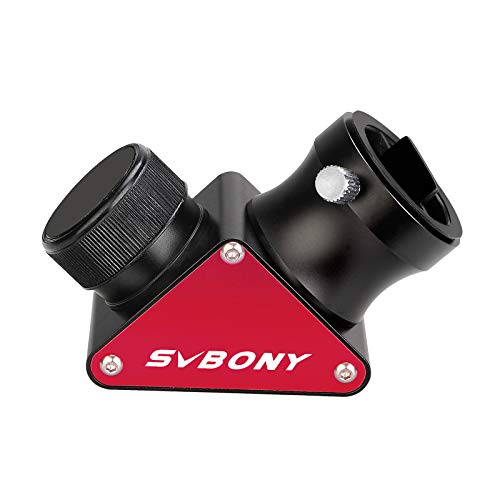
- 1.25-inch format for common eyepieces and filters
- Claimed over-99% dielectric reflectivity
- Brass compression ring protects and secures eyepieces
Best For: Compact 1.25-inch planetary viewing setups
Trusted Compact Choice
Celestron 1.25-Inch Star Diagonal
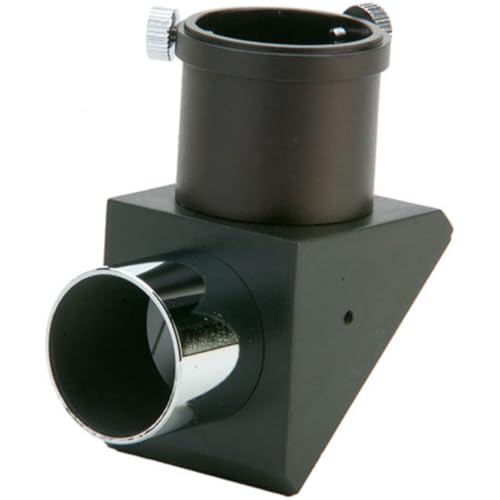
- Fits compatible refractors and SCTs
- 90-degree viewing angle for overhead targets
- Two-year limited warranty included
Best For: Standard 1.25-inch refractor and SCT setups
Best Large-Aperture Flexibility

- 2-inch diagonal with included 1.25-inch converter
- Up to 99% stated dielectric reflectivity
- Internal treatment helps reduce stray light
Best For: Mixed 2-inch and 1.25-inch accessory systems
Best Premium Locking Design
Celestron 2-Inch Twist-Lock Diagonal

- 2-inch format with 1.25-inch stepdown adapter
- Twist-lock centers and secures eyepieces
- Claimed over-99% reflectivity with 58 dielectric layers
Best For: Premium mixed-format refractor and SCT systems
High-Reflectivity Click-Lock Choice

- 99% reflective dielectric coating
- Click-lock accessory retention
- 2-inch body with 1.25-inch adapter
Best For: Observers seeking a secure, high-reflectivity 2-inch diagonal
Premium Alignment Pick

- Over 99% reflective dielectric surface
- Diffraction-limited optics
- Twist-lock centers accessories
Best For: 1.25-inch refractor and SCT setups
Compact Filter-Ready Value

- Supports 1.25-inch filters
- Brass pressure ring protects eyepieces
- Internal extinction treatment
Best For: Compact 1.25-inch refractor setups with filters
Daytime Viewing Pick
Celestron 45° Erect Image Diagonal

- Upright, left-to-right-correct images
- Compatible with refractors and SCTs
- Accepts standard 1.25-inch eyepieces
Best For: Daytime terrestrial viewing with compatible telescopes
Filter-Friendly Choice
Astromania 1.25-Inch 90° Diagonal

- 90-degree angle for comfortable viewing
- Built-in 1.25-inch filter thread
- Metal barrel helps provide stable seating
Best For: Refractor and Cassegrain users who use filters
Lightweight Correct-Image Pick

- Erect-image 45-degree prism design
- 19mm clear aperture with multi-coating
- Supports 1.25-inch filters
Best For: Compatible refractor and catadioptric telescope users
Best 1.25-Inch Value – SVBONY SV188P Dielectric Diagonal
For telescope diagonals for planetary imaging, the SVBONY SV188P offers a practical 1.25-inch format with claimed over-99% reflectivity. Its 90-degree mirror layout is designed to make overhead viewing more comfortable while supporting common 1.25-inch accessories.
Best For: 1.25-inch telescopes and observers who want a bright, secure, straightforward diagonal.
Pros:
- Dielectric-coated mirror with claimed over-99% reflectivity
- Accepts 1.25-inch eyepieces, filters, and Barlow lenses
- Brass compression ring helps secure eyepieces without scratching barrels
- Produces an upright image for comfortable viewing
Cons:
- Limited to 1.25-inch telescope and accessory compatibility
- The supplied notes indicate a left-right reversed view when used at 90 degrees
This is a sensible compact option when your planetary setup is built around 1.25-inch accessories and you value secure clamping and high stated reflectivity.
Trusted Compact Choice – Celestron 1.25-Inch Star Diagonal
Among telescope diagonals for planetary imaging, this Celestron model is a compact 1.25-inch option for refractors and SCTs with compatible focusers or visual backs. Its 90-degree viewing angle is intended to improve comfort when observing higher targets.
Best For: Refractor and SCT owners using standard 1.25-inch eyepieces and accessories.
Pros:
- Fits telescopes with 1.25-inch focusers or visual backs
- Accepts 1.25-inch eyepieces, Barlow lenses, and other accessories
- Dielectric-coated mirror design is listed for bright views
- Includes a two-year limited warranty
Cons:
- Does not directly support 2-inch accessories
- Product specifications describe individual/manual focus rather than a fixed-focus design
This diagonal suits users seeking a simple, compact Celestron-branded solution for compatible 1.25-inch telescope systems.
Best Large-Aperture Flexibility – SVBONY SV188P 2-Inch Diagonal
For telescope diagonals for planetary imaging, the 2-inch SVBONY SV188P is built for larger telescope and eyepiece formats while retaining 1.25-inch compatibility through its included converter. Its stated 99% dielectric reflectivity and stray-light treatment target bright, clear views.
Best For: 2-inch telescope owners who want to use both 2-inch and 1.25-inch accessories.
Pros:
- 2-inch format supports a wider range of telescope accessories
- Includes a 2-inch-to-1.25-inch converter
- Dielectric-coated mirror is specified at up to 99% reflectivity
- Brass pressure ring and anti-contact block help protect eyepieces
Cons:
- Heavier than the 1.25-inch version at a listed 650 g
- Requires adequate clearance and support for a larger diagonal body
The combination of 2-inch capacity, an included reducer, and internal stray-light treatment makes this a flexible choice for mixed-format observing systems.
Best Premium Locking Design – Celestron 2-Inch Twist-Lock Diagonal
This Celestron diagonal is a premium option among telescope diagonals for planetary imaging, pairing a 2-inch format with diffraction-limited optics and over-99% stated reflectivity. Its twist-lock mechanism is designed to center eyepieces for improved optical alignment.
Best For: Refractor and SCT users who want 2-inch compatibility and a centered twist-lock eyepiece hold.
Pros:
- 58 dielectric coating layers provide a claimed over-99% reflective surface
- Twist-lock system keeps the eyepiece centered
- Includes a stepdown adapter for 1.25-inch accessories
- Two-year US warranty and unlimited US-based support are included
Cons:
- Relatively heavy at 1.64 pounds
- May be more equipment than needed for exclusively 1.25-inch setups
Choose this model when secure, centered accessory retention and broad 2-inch/1.25-inch compatibility matter more than minimizing weight.
High-Reflectivity Click-Lock Choice – SV223 2" Diagonal
For shoppers comparing telescope diagonals for planetary imaging, the SVBONY SV223 emphasizes reflectivity, secure accessory retention, and a larger 2-inch format. Its 99% reflective dielectric coating and 1/10λ surface accuracy support a high-contrast viewing setup, although imaging compatibility still depends on your telescope and camera configuration.
Best For: Observers who want a 2-inch diagonal with a twist-lock mechanism, dielectric coating, and included 1.25-inch adapter.
Pros:
- 99% reflective dielectric coating is designed to preserve light transmission.
- Click-lock mechanism helps hold eyepieces and accessories securely.
- 1/10λ surface accuracy, internal baffling, and high-quality aluminum construction.
- 90-degree viewing angle supports a more comfortable observing position.
Cons:
- The 2-inch body and 0.69 kg weight may be more than some compact setups need.
- Planetary imaging users should verify that the included 1.25-inch adapter suits their camera train.
The SV223 is a feature-rich option when secure clamping and high reflectivity matter. Its larger format and supplied adapter make it versatile, but confirm clearance and connection requirements before purchasing.
Premium Alignment Pick – Celestron Twist-Lock Diagonal
The Celestron 1.25-inch Twist-Lock Dielectric Star Diagonal is a practical candidate among telescope diagonals for planetary imaging when diffraction-limited optics, alignment, and a standard accessory size are priorities. Its 58-layer dielectric coating is rated over 99% reflective, while the twist-lock is designed to keep accessories centered.
Best For: Refractor and Schmidt-Cassegrain telescope users who need a 1.25-inch diagonal with a comfortable 90-degree viewing angle.
Pros:
- Diffraction-limited optics are intended for detailed telescope views.
- 58 dielectric coating layers provide over 99% reflectivity.
- Twist-lock design helps maintain accessory centering and optical alignment.
- Accepts standard 1.25-inch eyepieces, Barlow lenses, and threaded filters.
Cons:
- Its 1.25-inch format may not suit setups built around 2-inch accessories.
- The product is specifically positioned for refractors and SCTs, so other telescope designs require compatibility checking.
Celestron’s diagonal is a focused choice for standard 1.25-inch systems. Its optical specifications and twist-lock design make it appealing for precision-minded users, while the included two-year US warranty and support add reassurance.
Compact Filter-Ready Value – SV221 1.25" Diagonal
For telescope diagonals for planetary imaging on a compact 1.25-inch system, the SVBONY SV221 offers filter-thread support, internal extinction treatment, and a brass pressure ring. Its enhanced aluminum design is aimed at higher light transmission and clearer views, making it a straightforward accessory for compatible refractors.
Best For: Users with 1.25-inch refractor equipment who want built-in filter compatibility and a pressure ring that helps protect eyepieces.
Pros:
- 1.25-inch format fits compatible telescopes and eyepieces.
- M28.5×0.6mm filter thread supports 1.25-inch filters.
- Brass pressure ring helps reduce surface damage and scratches on eyepieces.
- Internal extinction treatment is intended to produce clearer, brighter images.
Cons:
- It is limited to 1.25-inch accessories and may not suit 2-inch imaging trains.
- The enhanced aluminum design is not specified as a dielectric coating.
- The image is upright vertically but reversed left-to-right.
The SV221 is a sensible budget-conscious option when size, filter threading, and eyepiece protection matter more than a larger-format design. Check your telescope and camera connections before using it for planetary imaging.
Daytime Viewing Pick – Celestron 45° Erect Image Diagonal
For shoppers comparing telescope diagonals for planetary imaging, the Celestron 45° Erect Image Diagonal is primarily a daytime-oriented option. Its prism design produces upright, left-to-right-correct images for refractors and Schmidt-Cassegrain telescopes while accepting standard 1.25-inch eyepieces.
Best For: Terrestrial viewing with compatible refractor and catadioptric telescopes.
Pros:
- Corrects image orientation for upright, natural-looking views.
- Works with refractors and Schmidt-Cassegrain telescopes.
- Accepts standard 1.25-inch eyepieces.
- Provides a comfortable 45-degree viewing angle.
Cons:
- Designed mainly for daytime terrestrial viewing rather than dedicated planetary imaging.
- Limited to 1.25-inch optical accessories.
Choose this diagonal when image orientation and comfortable daytime observation matter more than specialized planetary-imaging performance. Verify that your telescope uses a compatible 1.25-inch focuser or visual back.
Filter-Friendly Choice – Astromania 1.25-Inch 90° Diagonal
Among telescope diagonals for planetary imaging, the Astromania 90° diagonal offers a practical setup for refractor and Cassegrain users who want a comfortable viewing angle and easy filter access. Its 1.25-inch filter thread accepts moon, UHC, and polarizing filters.
Best For: Refractor and Schmidt-Cassegrain observers who use 1.25-inch eyepieces and filters.
Pros:
- 90-degree orientation supports comfortable viewing from above.
- Built-in filter thread supports compatible 1.25-inch filters.
- Accepts standard 1.25-inch eyepieces from most brands.
- Protective mirror coating and a metal barrel support durability and stable seating.
Cons:
- Not suitable for Newtonian or other reflector telescopes.
- Limited to telescopes with a 1.25-inch connector.
This is a flexible visual accessory for Moon, planet, and terrestrial observation, especially if you regularly switch filters. Confirm your telescope is a compatible refractor or compound scope before buying.
Lightweight Correct-Image Pick – SVBONY SV221 45° Diagonal
The SVBONY SV221 is a lightweight correct-image option for telescope owners comparing telescope diagonals for planetary imaging and general observation. Its 45-degree prism design provides erect images, multi-coated surfaces, a 19mm clear aperture, and support for 1.25-inch filters.
Best For: Refractor and compatible Schmidt-Cassegrain or Maksutov-Cassegrain users seeking a compact correct-image diagonal.
Pros:
- 45-degree prism design provides erect, non-inverted images.
- Multi-coated surfaces and a 19mm clear aperture support clear views.
- Brass pressure ring and lock screw help protect accessories from scratches.
- Lightweight 79-gram construction and dustproof cover aid portability and care.
Cons:
- Not compatible with Newtonian or Dobsonian reflector telescopes.
- Plastic components are used in parts of the housing and eyepiece connection.
Consider the SV221 when you want an erect-image diagonal with filter support and a lightweight build. Check both telescope compatibility and the 19mm clear aperture for your intended observing setup.
How We Picked These Telescope Diagonals for Planetary Imaging
We focused on diagonals that are commonly paired with refractors and Schmidt-Cassegrain telescopes, covering the most useful 1.25-inch and 2-inch formats. The selection includes standard mirror diagonals, dielectric-coated models, twist-lock designs, and erect-image options. We considered stated reflectivity, optical design, barrel size, connection security, compatibility, and whether the diagonal’s intended use favors astronomy or terrestrial viewing.
For planetary imaging, a diagonal is only one part of the optical train. Camera spacing, focus travel, seeing conditions, and the telescope’s aperture often matter more than small differences in advertised specifications. Treat reflectivity claims as a useful comparison point, not a guarantee of identical real-world results.
Quick Comparison
| Feature | What to look for | Best suited to |
|---|---|---|
| 1.25-inch barrel | Compact, widely compatible format | Most planetary cameras and smaller telescopes |
| 2-inch barrel | Larger optical path and heavier construction | 2-inch focusers, larger accessories, visual use |
| Dielectric coating | Durable, high-reflectivity mirror surface | Frequent use and demanding visual setups |
| Twist-lock clamp | Even pressure without relying on a single screw | Heavier cameras and repeatable setup changes |
| 45-degree erect image | Correct-orientation image | Daytime or terrestrial observing |
Key Buying Factors for Telescope Diagonals for Planetary Imaging
Optical Format and Reflectivity
Choose a 1.25-inch diagonal if your planetary camera, filter wheel, and focuser are built around that standard. A 2-inch model may offer a wider clear aperture, but it can add weight and may require extra adapters. High-reflectivity or dielectric coatings can improve light transmission and durability, although correct alignment and clean optics remain essential.
Mechanical Security
Planetary imaging magnifies small alignment errors. Look for a well-machined nosepiece, a firm camera connection, and a clamp that does not tilt the accessory. Twist-lock systems can be convenient with heavier cameras, but check that the camera or adapter reaches focus without excessive extension.
Image Orientation and Angle
Standard 90-degree mirror diagonals are generally the practical choice for astronomical observing and imaging. Erect-image diagonals correct the view for terrestrial use, but their additional optical design may not be the first choice when maximum planetary contrast and a straightforward optical path are priorities. A 45-degree angle is comfortable for daytime viewing rather than high-magnification planetary capture.
Compatibility and Back Focus
Verify whether your telescope accepts a visual-back diagonal, threaded connection, or a specific SCT accessory. Confirm available back focus, especially with cameras, filters, barlows, and adapters installed. Also check the diagonal’s clear aperture and maximum supported accessory weight before buying.
Who Should Buy Which Telescope Diagonals for Planetary Imaging?
Choose a 1.25-inch 90-degree mirror diagonal for a compact planetary setup, especially when using a typical USB planetary camera or a smaller refractor. Choose a dielectric model if you observe frequently and want a durable, high-reflectivity surface. Choose a 2-inch diagonal when your telescope and accessories already use a 2-inch system and the added size and weight are acceptable.
Choose a twist-lock design if secure, repeatable accessory changes are important or your camera train is relatively heavy. Choose a 45-degree erect-image diagonal primarily for terrestrial viewing, spotting, or casual daytime use—not as the default choice for demanding planetary imaging. Before ordering, match the barrel size, telescope connection, focus requirements, and camera weight to your complete optical train.