Finding the best focuser for a reflector telescope can make a noticeable difference in sharpness, tracking, and everyday observing comfort. The right upgrade should match your tube, drawtube size, mounting pattern, and intended accessories.
This roundup compares 10 focusers, adapters, collimation tools, and electronic focusing options for Newtonian and other reflector setups. Use the buying guide below to narrow the choices by compatibility, focusing precision, load capacity, and budget.
Best 10 Telescope Focusers for Reflector Telescopes Picks for 2026
Best Rack-and-Pinion Upgrade
SV181 1.25-Inch Reflector Focuser

- 65mm travel with geared fine adjustment
- Brass ring helps protect eyepiece barrels
- Threaded interior helps reduce reflections
Best For: Compatible 114mm and 150mm Newtonian reflectors
Best for Precise Alignment
Celestron Cheshire Collimation Eyepiece

- Designed for precise Newtonian collimation
- Fits 1.25-inch focusers or diagonals
- Also supports SCT alignment
Best For: Users fine-tuning optical alignment
Best Full-Metal Replacement
Skyoptikst 1.25-Inch Newtonian Focuser
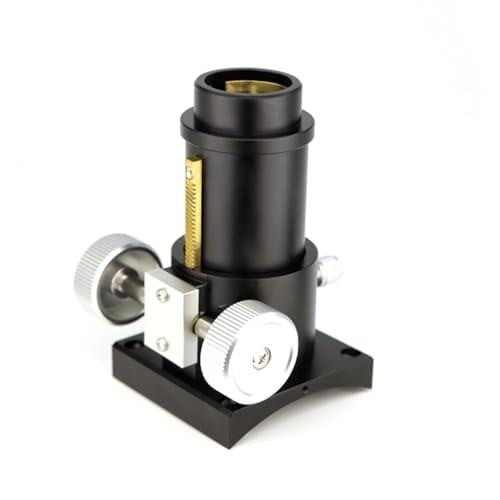
- Full-metal rack-and-pinion construction
- Designed for 150mm to 203mm Newtonians
- Threaded interior helps minimize reflections
Best For: Compatible 6- to 8-inch Newtonian reflectors
Best Collimation Laser
Astromania 1.25-Inch Laser Collimator

- Seven brightness levels for the red laser beam
- Metal body with anodized aluminum finish
- Includes CR2032 battery and bilingual instructions
Best For: Portable Newtonian reflector alignment
Best Full-Metal Upgrade
2-Inch Crayford Reflector Focuser
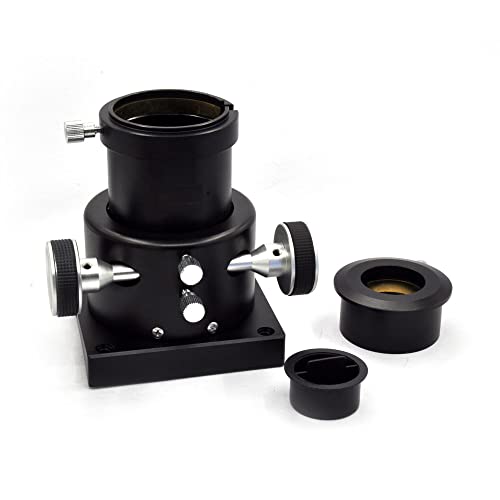
- Smooth Crayford-style manual adjustment
- Accepts 2-inch and 1.25-inch accessories
- Fits 150mm to 203mm reflectors
Best For: Compatible 6- to 8-inch reflector owners wanting a sturdy, versatile focuser
Best for Guide Scopes
Astromania 1.25-Inch Helical Focuser

- 10mm travel with 0.05mm stated precision
- Fixed orientation prevents accessory rotation
- All-metal design for guide scopes and imaging
Best For: Compact guide-scope and autoguider setups needing repeatable focus
Best Complete Reflector Setup
Celestron PowerSeeker 127EQ Reflector
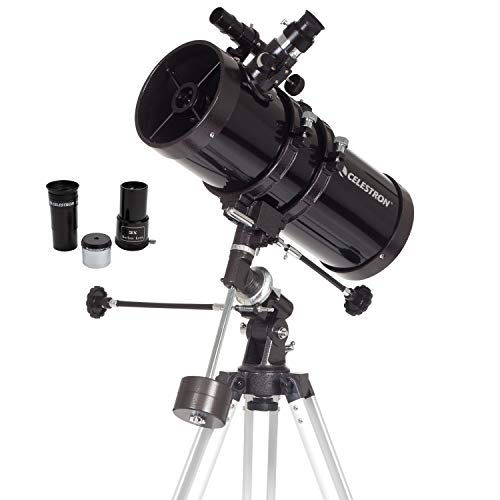
- 127mm Newtonian reflector for beginner observing
- Includes two eyepieces and a 3x Barlow
- Manual equatorial mount with slow-motion controls
Best For: Beginners wanting a complete, portable reflector telescope package
Best Electronic Upgrade
Alstar AccuFocus Automatic Focuser
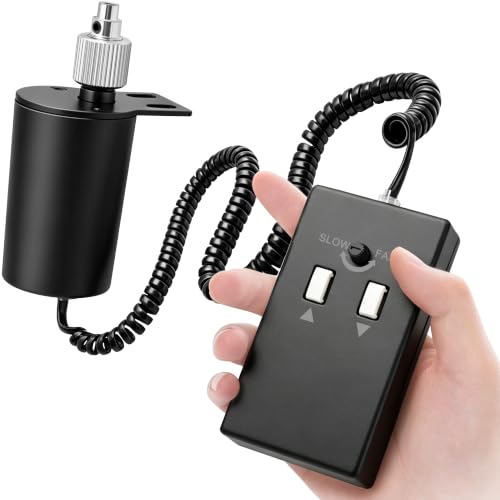
- Motorized pushbutton focusing
- Adjustable speed control
- Fits listed single-speed reflectors
Best For: Steadier focusing and astrophotography on compatible reflectors
Best Eyepiece Adapter
SVBONY 1.25-Inch Focuser Adapter

- Accepts 1.25-inch eyepieces
- Uses M42×0.75 male thread
- Three thumbscrews secure accessories
Best For: Adapting compatible reflector setups to 1.25-inch accessories
Best DIY Replacement

- Fits reflectors up to 117mm inner diameter
- Accepts 1.25-inch eyepieces
- DIY-friendly toothed focusing design
Best For: Custom reflector builds and dimension-matched focuser replacements
Best Rack-and-Pinion Upgrade – SV181 1.25-Inch Reflector Focuser
For shoppers comparing telescope focusers for reflector telescopes, the SVBONY SV181 is a practical manual rack-and-pinion option for compatible 114mm and 150mm Newtonian reflectors. Its 65mm travel, geared adjustment, and dual-knob design are aimed at smooth, more precise focusing with 1.25-inch eyepieces.
Best For: Newtonian reflector owners who want a geared 1.25-inch focuser with fine adjustment and eyepiece-friendly retention.
Pros:
- 65mm focuser travel with gear adjustment for more accurate focusing.
- Internal brass ring helps hold eyepieces without marking the barrel.
- Fully threaded interior is designed to minimize internal reflections.
- Includes a 1.25-inch dust cover.
Cons:
- Limited to 1.25-inch eyepieces.
- Compatibility notes specifically identify 114mm and 150mm Newtonian reflectors.
The SV181 stands out when controlled manual focusing and a careful eyepiece-contact design matter more than broad compatibility. Verify your telescope’s mounting dimensions before ordering.
Best for Precise Alignment – Celestron Cheshire Collimation Eyepiece
The Celestron Cheshire is not a replacement focuser, but it is a useful accessory alongside telescope focusers for reflector telescopes. This 1.25-inch collimation eyepiece fits compatible focusers or diagonals and is designed to make Newtonian optical alignment more precise than a simple collimation tool.
Best For: Newtonian telescope users who need a 1.25-inch Cheshire alignment tool for more accurate collimation.
Pros:
- Designed for precise Newtonian collimation.
- Fits 1.25-inch focusers or diagonals.
- Can also be used for SCT collimation and alignment.
Cons:
- It is a collimation eyepiece, not a replacement focuser.
- Its usefulness depends on having a compatible 1.25-inch interface.
Choose the Cheshire when alignment accuracy is your priority. It complements a reflector focuser by helping optimize the telescope’s optical setup, but it does not provide mechanical focusing.
Best Full-Metal Replacement – Skyoptikst 1.25-Inch Newtonian Focuser
This full-metal Skyoptikst unit is a straightforward option for shoppers seeking telescope focusers for reflector telescopes. It uses a 1.25-inch rack-and-pinion design, a curved base plate, and a fully threaded interior, with stated suitability for 150mm to 203mm Newtonian reflectors.
Best For: Owners of 6- to 8-inch Newtonian reflectors looking for a manual, all-metal 1.25-inch focuser.
Pros:
- Full-metal construction for a solid mechanical design.
- Rack-and-pinion focusing with a curved base plate.
- Fully threaded interior is intended to minimize reflections.
- Includes a 1.25-inch dust cover.
Cons:
- Limited to 1.25-inch accessories.
- Compatibility is stated for 150mm to 203mm Newtonian reflectors, so fit should be confirmed.
This focuser makes sense for a compatible larger Newtonian when durability and a simple rack-and-pinion mechanism are more important than advanced fine-focus controls. Check the base and mounting dimensions before installation.
Best Collimation Laser – Astromania 1.25-Inch Laser Collimator
The Astromania laser collimator is an alignment accessory for reflector telescopes with standard 1.25-inch focusers, rather than a mechanical focuser itself. It offers a red laser, seven brightness levels, and a metal body for quickly checking and adjusting Newtonian telescope collimation.
Best For: Newtonian reflector users who want a portable, battery-powered 1.25-inch laser tool for faster alignment.
Pros:
- Fits standard 1.25-inch reflector telescope focusers.
- Seven brightness levels help adapt the red beam to the observing environment.
- Metal construction and anodized aluminum finish support durability.
- Includes one CR2032 battery and adjustment instructions in German and English.
Cons:
- It aligns optics but does not replace or improve the mechanical focuser.
- Laser safety and correct adjustment procedures require careful use.
- The supplied notes identify compatibility with 1.25-inch focusers only.
This is a useful companion for a reflector focuser when repeatable Newtonian collimation is part of your observing routine. Its compact format suits travel kits, while the adjustable beam can accommodate different lighting conditions.
Best Full-Metal Upgrade – 2-Inch Crayford Reflector Focuser
For users comparing telescope focusers for reflector telescopes, this 2-inch Skyoptikst model is a practical upgrade when smooth manual adjustment and broad accessory compatibility matter. Its Crayford-style design fits 150mm to 203mm reflector telescopes and supports both 2-inch and 1.25-inch accessories.
Best For: Reflector telescope owners seeking a sturdy, full-metal focuser for visual observing with mixed 2-inch and 1.25-inch accessories.
Pros:
- Crayford-style mechanism is designed for smooth, accurate focusing.
- Supports both 2-inch and 1.25-inch eyepiece sizes.
- Suitable for 150mm to 203mm reflector telescope apertures.
- Fully threaded interior helps minimize reflections.
Cons:
- Manual focusing does not provide motorized control.
- Its 2-inch format may be more focuser than smaller reflector setups require.
With a metal body, broad accessory support, and reflection-reducing internal threads, this is a sensible choice for owners of compatible 6- to 8-inch reflectors who prioritize mechanical feel and versatility.
Best for Guide Scopes – Astromania 1.25-Inch Helical Focuser
Among telescope focusers for reflector telescopes and guide-scope setups, the Astromania double helical focuser stands out for fine, repeatable adjustment. It provides a 10mm focusing stroke, claimed 0.05mm accuracy, and a fixed orientation that helps keep cameras or eyepieces from rotating during focusing.
Best For: Guide scopes, finder scopes, and compact astrophotography configurations using 1.25-inch accessories or compatible M42x0.75 connections.
Pros:
- Offers a 10mm stroke with a stated 0.05mm precision scale.
- Fixed orientation helps maintain a stable field of view while focusing.
- All-metal construction is intended to reduce flexure and thermal expansion.
- Works with 1.25-inch eyepieces and autoguider cameras.
Cons:
- Designed for guide or finder scopes rather than as a general 2-inch focuser replacement.
- The required M42x0.75 female-to-female adapter for some upgrades is not included.
- Its 10mm travel may not suit every optical configuration.
This compact helical focuser is especially appealing when precise, rotation-free adjustment is more important than long travel or large-format accessory support.
Best Complete Reflector Setup – Celestron PowerSeeker 127EQ Reflector
If you are researching telescope focusers for reflector telescopes but do not yet own a telescope, the Celestron PowerSeeker 127EQ provides a complete manual reflector setup rather than a replacement focuser alone. Its 127mm Newtonian reflector includes a German equatorial mount, slow-motion control, two eyepieces, and a 3x Barlow lens.
Best For: Beginners and families who want an entry-level 127mm reflector telescope with included accessories for Moon, planetary, and selected deep-sky viewing.
Pros:
- 127mm aperture provides useful light-gathering capability for beginner observing.
- Includes 20mm and 4mm eyepieces plus a 3x Barlow lens.
- German equatorial mount includes slow-motion controls for tracking.
- Compact, portable design is suitable for backyard or dark-sky use.
Cons:
- This is a complete telescope, not a standalone replacement focuser.
- The manual mount requires hands-on alignment and tracking.
- The included 4mm eyepiece produces high magnification that may be demanding for beginners.
The PowerSeeker 127EQ is best viewed as an entry point into reflector astronomy: it includes the optical tube, mount, accessories, and support needed to begin observing, rather than focusing on focuser customization.
Best Electronic Upgrade – Alstar AccuFocus Automatic Focuser
For telescope focusers for reflector telescopes, the Alstar AccuFocus is a practical motorized upgrade for compatible single-speed systems. Its handheld controller, adjustable speed, and included mounting hardware are designed to make fine focusing easier without manually turning the focusing knob.
Best For: Reflector owners with compatible single-speed focusers who want steadier, vibration-free focusing for observing or astrophotography.
Pros:
- Includes brackets for Crayford and rack-and-pinion focusers, plus hardware and hex keys.
- Adjustable speed control supports coarse and fine focusing.
- Battery-powered and compatible with listed 60–127mm single-speed reflectors.
- Pushbutton operation helps reduce manual vibration.
Cons:
- Requires a 9V battery, which is not included.
- Not compatible with Mak, Dobsonian, or APO two-speed focusers according to the supplied specifications.
- Compatibility should be checked before purchase.
This is the most feature-rich option here for hands-free focusing, provided your reflector uses a compatible single-speed focuser. Its installation flexibility and speed adjustment make it a useful choice for high-magnification viewing.
Best Eyepiece Adapter – SVBONY 1.25-Inch Focuser Adapter
The SVBONY adapter is a straightforward choice when telescope focusers for reflector telescopes need to accept standard 1.25-inch eyepieces. It uses an M42×0.75 male thread and three locking thumbscrews to secure and center inserted accessories.
Best For: Reflector users whose focuser or accessory setup has an M42×0.75 connection and requires a 1.25-inch eyepiece adapter.
Pros:
- Accepts 1.25-inch eyepieces and astronomy accessories.
- Three thumbscrews help secure inserted accessories.
- All-metal anodized aluminum construction is designed for durability.
- Thumbscrews allow adjustment of eyepiece centering.
Cons:
- It is a manual adapter, not a complete focusing mechanism.
- Requires an M42×0.75 male-thread connection for compatibility.
- Three-screw centering requires manual adjustment.
Choose this model when your main need is adapting and securing a 1.25-inch eyepiece rather than adding motorized focusing. Confirm the thread specification and available clearance on your reflector before ordering.
Best DIY Replacement – 80mm Reflector Focusing Seat
This 80mm focusing seat is a DIY-oriented option among telescope focusers for reflector telescopes. It is designed for reflectors with an inner diameter up to 117mm, uses a toothed focusing mechanism, and accepts 1.25-inch eyepieces through a side securing screw.
Best For: DIY builders and hobbyists making or modifying reflector telescopes that match the stated dimensions.
Pros:
- Designed for reflectors with an inner diameter of up to 117mm.
- Provides a 67mm focal length for focusing adjustment.
- Side screw helps hold 1.25-inch eyepieces securely.
- Internal treatment is intended to reduce unwanted reflections.
Cons:
- Compatibility depends on the reflector’s inner diameter and mounting arrangement.
- Its DIY design may require installation or modification work.
- Made from ABS plastic rather than metal.
This focusing seat is best viewed as a project component rather than a universal drop-in replacement. Match the dimensions carefully, especially if you are building a custom reflector or replacing an existing focusing assembly.
How We Picked These Telescope Focusers for Reflector Telescopes
We selected products that address the main focusing needs of reflector owners: replacing a basic rack-and-pinion unit, adding finer adjustment, supporting 1.25-inch or 2-inch accessories, improving alignment, or enabling remote focusing. We also considered construction, adjustment style, compatibility information, installation requirements, and the practical needs of visual observing, planetary imaging, and astrophotography.
Not every item is a complete replacement focuser. Some are adapters, collimation accessories, or focusing aids, so check the product type carefully before ordering.
Quick Comparison
| Option type | Best suited to | What to check |
|---|---|---|
| Rack-and-pinion focuser | Affordable general upgrades | Tube diameter, mounting holes, travel |
| Crayford focuser | Smooth visual or imaging focus | Load capacity, base dimensions, back focus |
| Helical focuser | Fine guide-scope adjustment | Rotation, travel, accessory size |
| Electronic focuser | Remote or repeatable focusing | Motor compatibility and power control |
| Collimator or adapter | Alignment and accessory fit | Reflector design and thread standards |
Key Buying Factors for Telescope Focusers for Reflector Telescopes
Compatibility and Installation
Measure the telescope tube, focuser cutout, mounting-hole spacing, and required drawtube travel. A focuser advertised for a similar aperture may still require drilling, a replacement plate, spacers, or optical-path changes. Confirm whether the unit accepts 1.25-inch, 2-inch, or both accessory sizes.
Focusing Smoothness and Precision
Rack-and-pinion designs can be sturdy and economical, while Crayford mechanisms are often preferred for smooth, backlash-free adjustment. A fine-focus control is valuable for high magnification and imaging. Helical models offer precise movement but may rotate the attached accessory.
Load Capacity and Stability
Consider the combined weight of your eyepiece, diagonal, camera, filter wheel, and adapter. The focuser should hold that load without slipping or introducing tilt. Metal construction is generally preferable for heavier imaging trains, but a rigid mounting base matters just as much.
Focusing Range and Optical Spacing
Verify that the drawtube has enough inward and outward travel to reach focus with your eyepieces or camera. Accessories such as adapters can alter back focus, and some Newtonian telescopes may need an extension tube or a low-profile focuser.
Who Should Buy Which Telescope Focusers for Reflector Telescopes?
Choose a basic rack-and-pinion replacement if you want a straightforward, budget-conscious improvement for visual observing. A 2-inch Crayford-style model is a better direction for users with heavier accessories or wide-field 2-inch eyepieces, provided the telescope can support the installation.
Observers seeking precise guide-scope adjustment may prefer a compact helical focuser. For planetary or deep-sky imaging, prioritize rigidity, fine adjustment, minimal backlash, and enough travel for the complete camera setup. Remote observers should consider an electronic focuser, but confirm motor, controller, and power requirements first.
If the telescope already focuses adequately, a collimation tool or correctly threaded adapter may deliver more useful results than replacing the entire focuser. Before buying, compare measurements against the seller’s technical diagram and verify the return policy in case the mounting or focus position does not match your reflector.