The best lightweight telescope focusers make precise adjustments without adding unnecessary weight to your optical tube. They can improve viewing comfort, simplify eyepiece changes, and provide finer control for astrophotography.
This roundup compares 10 options, from compact rack and helical designs to motorized and fully metal focusers. Use the buying guide below to match travel convenience, compatibility, focusing travel, and control style to your telescope.
Best 10 Lightweight Telescope Focusers Picks for 2026
Best Precision Upgrade

- 65mm travel with fine gear adjustment
- Brass ring protects eyepiece barrels
- Threaded interior reduces reflections
Best For: 114mm and 150mm Newtonian reflector owners
Best Entry-Level Replacement
Adjustable ABS Reflector Focuser

- 65mm extension range
- 1.25-inch interface for compatible eyepieces
- Three mounting holes for attachment
Best For: Small Newtonian reflectors and basic visual observing
Best Simple Motor Upgrade
Astromania AccuFocus Electronic Focuser

- Pushbutton electronic focusing
- Coarse-to-fine speed control
- Includes mounting hardware and cables
Best For: 60–127mm telescopes with single-speed focusers
Best Automated Focusing
Temperature-Adaptive Motor Focuser

- Automatic and manual control
- Onboard temperature sensor
- Standard 3.5mm interface
Best For: Astrophotography and software-assisted observation
Best Motorized Upgrade
AccuFocus Electronic Telescope Focuser

- Motorized focusing with adjustable speed control
- Pushbutton operation designed to reduce vibration
- Includes brackets, coupler, cable, and installation hardware
Best For: Powered focusing on compatible Crayford or rack-and-pinion focusers
Best Lightweight Guide-Scope Option
Astromania 1.25-Inch Double Helical Focuser

- Only 3.2 ounces for a compact optical train
- 0.05mm scale and 10mm focusing stroke
- Fixed orientation helps prevent accessory rotation
Best For: Guide scopes, finder scopes, and compact astrophotography setups
Best Long-Travel Manual Option
2-Inch Fully Metal Telescope Focuser
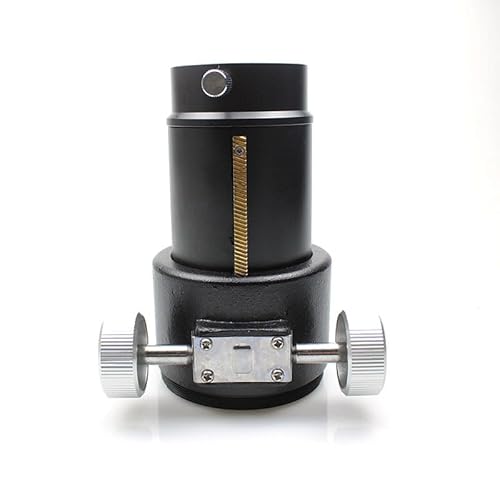
- CNC-machined all-metal body for refractor use
- 60mm focusing stroke for broad adjustment range
- 2-inch interface includes brass protection ring and dust plug
Best For: Larger refractors needing a durable 2-inch manual focuser
Best for Low-Leakage Astrophotography

- Minimal light leakage for deep-space photography
- Quick-release two-speed focusing components
- 360-degree rotation and oversized hand-wheels
Best For: Astrophotographers needing precise manual adjustment
Best for Anti-Rotation Precision
1.25-Inch Double Helical Focuser
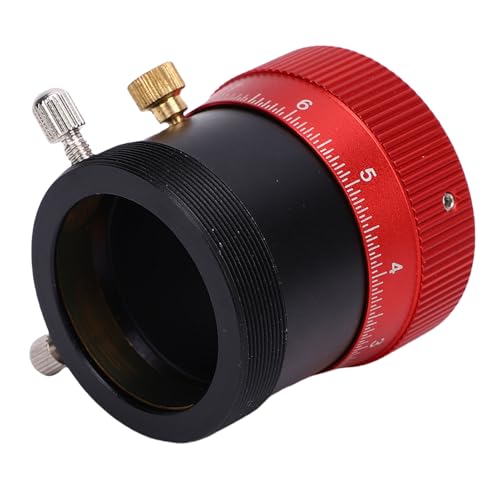
- 10mm focusing stroke for accessory flexibility
- Anti-rotation design supports stable alignment
- Lightweight aluminum-alloy construction
Best For: 1.25-inch visual observing and astrophotography
Best for DIY Telescope Upgrades
1.25-Inch Plastic Gear Focuser

- Lightweight 3.35-ounce design
- Steel shaft gears for precise adjustment
- Multiple tube-size options from 60mm to 102mm
Best For: DIY Newtonian and refractor telescope projects
Best Precision Upgrade – SV181 Rack-and-Pinion Focuser
For shoppers comparing lightweight telescope focusers for Newtonian reflectors, the SVBONY SV181 combines manual rack-and-pinion movement with a 65mm travel range. Its dual-knob adjustment, brass retaining ring, and threaded interior target smoother, more controlled focusing with 1.25-inch eyepieces.
Best For: Owners of 114mm or 150mm Newtonian reflector telescopes who want a manual 1.25-inch focuser with fine adjustment.
Pros:
- 65mm focusing travel with gear-based fine adjustment
- Brass ring helps hold eyepieces without marking the barrel
- Fully threaded interior helps minimize internal reflections
- Includes a 1.25-inch dust cover
Cons:
- Manual operation rather than motorized focusing
- Designed for 1.25-inch eyepieces and specified reflector models
At 410g, the SV181 offers a relatively compact upgrade path while adding useful control features. Confirm your telescope’s mounting pattern and compatibility before buying.
Best Entry-Level Replacement – Adjustable ABS Reflector Focuser
This adjustable ABS model is a practical option for lightweight telescope focusers on smaller Newtonian reflectors. It provides a 65mm extension range, a 1.25-inch interface, and three mounting holes for installation on compatible telescope tubes.
Best For: Entry-level 76mm, 114mm, and 135mm Newtonian reflector owners seeking a basic replacement or upgrade.
Pros:
- 65mm effective extension range
- 1.25-inch general eyepiece interface
- Three mounting holes support secure attachment
- Designed for compatible tubes measuring roughly 110–160mm in diameter
Cons:
- ABS construction may offer less rigidity than a metal focuser
- Compatibility depends on telescope aperture, tube diameter, and mounting pattern
- Limited 90-day warranty
Its 130mm base height is intended to provide stable central-plane control, but measurements should be checked carefully before installation. This is a straightforward choice for basic visual observing rather than a feature-heavy focusing system.
Best Simple Motor Upgrade – Astromania AccuFocus Electronic Focuser
Among lightweight telescope focusers, the Astromania AccuFocus stands out as a motorized add-on for single-speed focusers. Its pushbutton controller provides adjustable speeds from coarse to very fine, helping you make focus changes without touching the telescope’s focusing knob.
Best For: Users with compatible single-speed refractors or reflectors in the 60–127mm range who want vibration-reduced electronic focusing.
Pros:
- Motorized focusing avoids direct manual knob movement
- Hand controller offers coarse-to-fine speed adjustment
- Includes brackets, hardware, and coil cables
- Runs from a standard 9V battery
Cons:
- Not compatible with APO two-speed focusing systems
- Requires careful installation and shaft-coupler adjustment
- Battery-powered rather than rechargeable
The AccuFocus is a focused solution for reducing vibration during fine adjustments, especially when aiming at a bright star for final focus. Check the focuser type and telescope size before purchasing.
Best Automated Focusing – Temperature-Adaptive Motor Focuser
For astrophotographers comparing lightweight telescope focusers with automation, this motorized unit adds automatic and manual control in a plug-and-play design. Its onboard temperature sensor can work with software to compensate for temperature changes during observing or imaging sessions.
Best For: Astrophotography and deep-sky observation setups that benefit from software-assisted focusing and temperature-based adjustments.
Pros:
- Supports one-click automatic focusing with compatible software
- Includes a manual hand controller
- Onboard temperature sensor supports environmental compensation
- Uses a standard 3.5mm interface for broad focuser-system compatibility
Cons:
- At 1.25 pounds, it is heavier than the simplest manual options
- Software and focuser compatibility should be confirmed before buying
- Temperature adjustment depends on compatible software
This model is more focused on automation than minimum weight. Its plug-and-play approach and manual override make it a flexible choice, provided your telescope uses a supported focuser system and connection.
Best Motorized Upgrade – AccuFocus Electronic Telescope Focuser
If you want lightweight telescope focusers with powered adjustment, the AccuFocus Electronic Telescope Focuser adds motorized control without requiring manual knob turns. Its adjustable speed control, pushbutton hand controller, and included mounting hardware make it a practical option for smoother focusing.
Best For: Observers who want powered, low-vibration focusing on compatible rack-and-pinion or Crayford focusers.
Pros:
- Adjustable speeds range from coarse to very fine for controlled focusing.
- Pushbutton hand controller is designed for smooth adjustments without vibration.
- Includes brackets, cable, shaft coupler, tools, and installation hardware.
- Compact 12.3-ounce motor assembly with a two-year warranty.
Cons:
- Requires one 9-volt battery, which is not included.
- Compatibility depends on the telescope’s focuser design and mounting arrangement.
The AccuFocus is a convenient electronic upgrade when precise, vibration-conscious focusing matters more than the simplicity of a fully manual focuser. Verify your focuser type before ordering.
Best Lightweight Guide-Scope Option – Astromania 1.25-Inch Double Helical Focuser
For lightweight telescope focusers used with guide scopes or finder scopes, the Astromania Double Helical Focuser offers compact manual control and fine adjustment. Its 0.05mm precision scale, 10mm travel, and fixed orientation are especially useful for astrophotography setups.
Best For: Guide scopes, finder scopes, autoguider cameras, and visual accessories that use a compatible 1.25-inch or M42 connection.
Pros:
- Weighs 3.2 ounces, helping limit added load in the optical train.
- Provides 0.05mm focusing accuracy with 10mm of travel.
- Fixed orientation helps keep cameras or eyepieces from rotating during focusing.
- All-metal construction is intended to minimize flexure and thermal expansion.
Cons:
- Compatibility requires the appropriate M42x0.75 or included adapter interfaces.
- The 10mm focusing stroke may not suit setups needing substantially more travel.
This is a particularly focused choice for compact guiding and imaging arrangements. Check the thread specifications and accessory diameter before purchasing, especially when upgrading an existing rack-and-pinion focuser.
Best Long-Travel Manual Option – 2-Inch Fully Metal Telescope Focuser
Skyoptikst 2 inch Telescope Focuser Fully Metal Body for Refractor Astronomy Telescope
Check Price On AmazonThis 2-inch telescope focuser is a sturdy manual option for refractors with apertures greater than 80mm. Although it is heavier than other lightweight telescope focusers in this roundup, its CNC-machined metal body, 60mm focusing stroke, and brass accessory protection ring prioritize durability and useful travel.
Best For: Refractor telescopes over 80mm aperture that need a 2-inch accessory interface and extended manual focusing range.
Pros:
- Fully metal CNC-processed body with matte black finish.
- 60mm focusing stroke provides substantial adjustment range.
- 2-inch optical interface includes a brass eyepiece protection ring.
- Includes a 2-inch dust plug and matte-treated internal surfaces.
Cons:
- At 0.72kg, it is considerably heavier than the compact alternatives.
- Designed for refractors with apertures greater than 80mm, limiting general compatibility.
- Manual operation does not provide motorized focusing.
Choose this model when a robust 2-inch interface and long focus travel are more important than minimizing weight. Confirm the refractor aperture and available mounting space before replacing an existing focuser.
Best for Low-Leakage Astrophotography – 16-Bearing Travel Focuser
Telescope Focuser 16-Bearing Travel with Round Adapter Ring for Astrophotography
Check Price On AmazonFor photographers comparing lightweight telescope focusers, this manual model emphasizes precise locking, smooth two-speed adjustment, and minimal light leakage. Its round adapter ring and rotating design make it particularly practical for deep-space imaging setups.
Best For: Astrophotographers who want precise, rotatable manual focusing with large adjustment wheels.
Pros:
- Designed for almost no light leakage during deep-space photography.
- High-precision locking ring helps support coaxial alignment and a secure fit.
- Quick-release two-speed components can be removed without disassembling the entire focuser.
- 360-degree rotation supports composition and visual inspection adjustments.
Cons:
- Manual focusing requires hands-on adjustment.
- The supplied details do not specify compatibility beyond telescope use.
With oversized coarse and fine wheels plus 360-degree rotation, this TeSeek focuser is built around practical control for imaging and observing. Confirm the adapter and mounting dimensions before ordering.
Best for Anti-Rotation Precision – 1.25-Inch Double Helical Focuser
This GOWENIC model is one of the lightweight telescope focusers aimed at stable, fine adjustments. Its aluminum-alloy body, double-helical mechanism, and anti-rotation design are intended to limit image shift while providing 10mm of focusing travel.
Best For: Observers and astrophotographers using 1.25-inch eyepieces, Barlow lenses, or camera adapters.
Pros:
- Double-helical mechanism is designed to reduce image shift and play.
- 10mm focusing stroke accommodates a range of eyepieces and accessories.
- Anti-rotation design helps maintain alignment while focusing.
- All-metal aluminum-alloy construction balances durability with low weight.
Cons:
- Its 1.25-inch format may not suit larger accessories.
- The product details list a 90-day manufacturer warranty.
- Compatibility with a specific telescope is not provided in the supplied information.
The anti-rotation mechanism and stated backlash-free operation make this a compelling choice when keeping an object centered matters. Check your telescope’s mounting requirements and accessory format before purchase.
Best for DIY Telescope Upgrades – 1.25-Inch Plastic Gear Focuser
For a budget-conscious DIY build, this compact focuser offers a simple alternative among lightweight telescope focusers. Its ABS plastic holder, steel shaft gears, and multiple size options are designed for Newtonian and refractor telescope tubes.
Best For: DIY telescope owners matching a replacement focuser to 60mm-to-145mm tube sizes.
Pros:
- Lightweight construction weighs 3.35 ounces according to the supplied details.
- Steel shaft gears are designed for smooth, precise focusing.
- Available in several size options, including 60mm, 67mm, 80mm, 90mm, and 102mm.
- Designed for installation onto a telescope with an uncomplicated setup.
Cons:
- ABS plastic construction may be less robust than an all-metal focuser.
- Correct sizing is essential for the telescope tube and selected model.
- The supplied information does not specify focusing travel or astrophotography features.
This focuser makes the most sense for hobbyists replacing or building a telescope component while keeping weight low. Carefully match the selected size to the tube’s inner diameter before ordering.
How We Picked These Lightweight Telescope Focusers
We selected models representing the main upgrade paths for compact reflectors, refractors, guide scopes, and astrophotography setups. Our comparison emphasizes stated barrel size, focusing mechanism, construction, travel range, installation requirements, and whether the focuser supports manual or motorized adjustment.
Because telescope compatibility is highly model-specific, specifications should be confirmed against your tube, mounting holes, drawtube diameter, eyepiece size, and available back focus before purchasing. A light focuser is useful only if it reaches focus securely and does not introduce excessive flex.
Quick Comparison
| Focuser type | Best suited to | Main advantage | Watch for |
|---|---|---|---|
| Rack-and-pinion | Reflectors and general viewing | Simple, familiar adjustment | Mounting and travel compatibility |
| Helical | Guide scopes and fine focusing | Compact, precise movement | Rotation during adjustment |
| Motorized | Astrophotography | Remote, repeatable focusing | Power, control, and fit |
| Metal 2-inch | Larger eyepieces and cameras | Greater capacity and rigidity | Added weight and tube balance |
Key Buying Factors for Lightweight Telescope Focusers
Compatibility and Size
Start with the telescope rather than the focuser. Check whether you need a 1.25-inch or 2-inch drawtube, the optical tube’s mounting pattern, and the adapter or extension length required to reach focus. Reflectors, refractors, and guide scopes often use different interfaces.
Weight, Rigidity, and Load Capacity
ABS and compact aluminum designs can reduce balance problems on smaller mounts, while fully metal focusers may better support heavier cameras or eyepiece assemblies. Consider the complete imaging train, not just the camera body. Excessive flex can soften images even when the focuser feels smooth by hand.
Focusing Travel and Control
Short-travel helical models suit fine adjustments and guide scopes, while rack focusers may provide more practical movement for visual setups. Motorized units are valuable when touching the telescope would cause vibration or when repeatable focus is important during long imaging sessions.
Adjustment Smoothness and Locking
Look for controlled movement, minimal backlash, and a locking method that can hold the selected focus position. A secure compression ring or set screw is also important for protecting eyepieces and cameras from unwanted tilt.
Who Should Buy Which Lightweight Telescope Focusers?
Choose a compact rack focuser if you want a straightforward upgrade for a lightweight reflector. A helical focuser is a strong choice for guide scopes or observers who prioritize fine manual control in a small package. Select a 2-inch metal model when your telescope and accessories support larger-format eyepieces and you need additional rigidity.
Astrophotographers should consider a motorized focuser when remote operation, vibration reduction, or repeatable focusing matters more than the lowest weight. For beginners and casual visual users, prioritize confirmed fit, smooth adjustment, and low mass over advanced automation. Whichever style you choose, verify the mounting interface and available focus range before ordering.