Choosing among telescope guide cameras for refractor telescopes can make a major difference in tracking accuracy, setup time, and the quality of long-exposure images.
This roundup covers compact guide cameras, guide scopes, and compatible refractor-based options for beginners, portable rigs, and more advanced astrophotography systems.
Best 10 Telescope Guide Cameras for Refractor Telescopes Picks for 2026
Lightweight APO Guide Scope

- 50mm APO doublet with ED glass
- 242mm focal length and 1.25-inch helical focuser
- Includes finder stalk and V-style mounting plate
Best For: Compact refractor guiding and flexible astrophotography setups
Compact Color Guide Camera

- 1.23MP 1280x960 color CMOS sensor
- ST4 interface and support for several guide programs
- 1.25-inch body fits guide scopes and OAG setups
Best For: Budget-conscious autoguiding with compatible software
Wide-Field Dual-Purpose Guide Scope
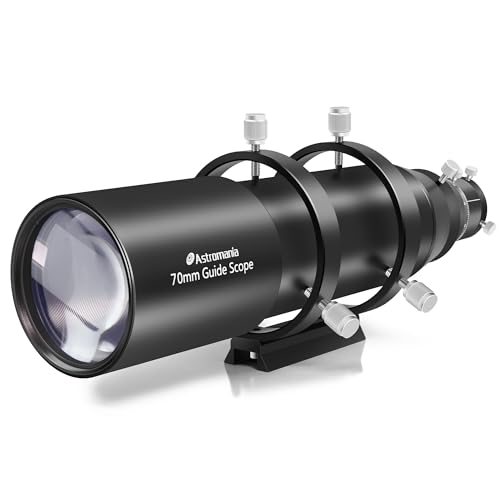
- 70mm aperture with 400mm focal length
- Fine worm-style helical focusing mechanism
- Includes clamps and Synta-style mounting plate
Best For: Guiding and finder use where precise focus and guide-star access matter
All-in-One Digital Refractor
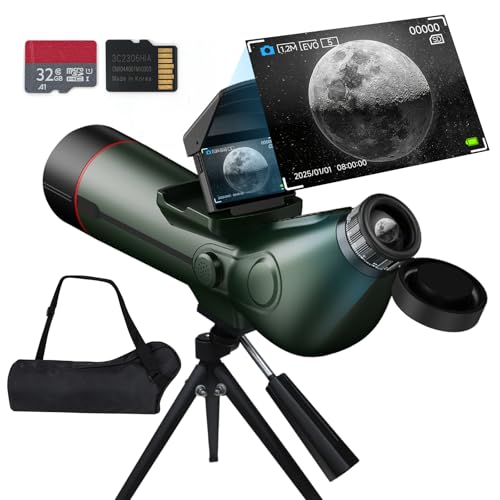
- 80mm aperture and 300mm focal length
- Built-in autofocus and 4K astrophotography camera
- Dual screens and up to six hours of battery life
Best For: Beginners wanting integrated viewing and imaging rather than standalone guiding
Compact Guide Scope
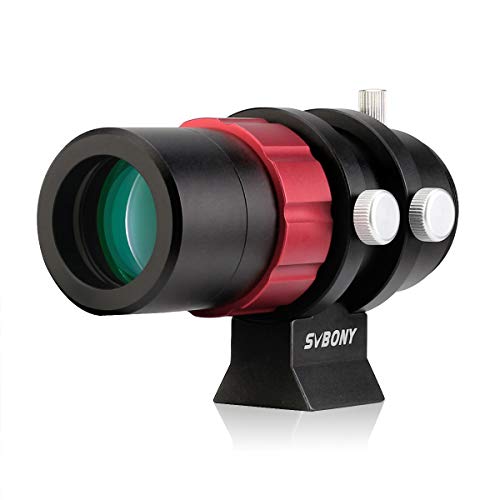
- 30mm aperture with 120mm focal length
- 1.25-inch and M42 camera interfaces
- Wide 2.86-degree field of view
Best For: Compact refractor setups with compatible auto-guiding cameras
Beginner Refractor Alternative
ToyerBee 70mm Travel Telescope

- 70mm aperture and 300mm focal length
- Includes phone adapter and wireless remote
- Portable beginner-focused observing package
Best For: Visual astronomy and basic smartphone photography
Precision Focusing Pick

- 60mm aperture with 240mm focal length
- 48mm helical focusing range
- T-thread camera compatibility and finder use
Best For: Astrophotographers needing precise focus and a dual-purpose finder
Flat-Field Imaging Pick
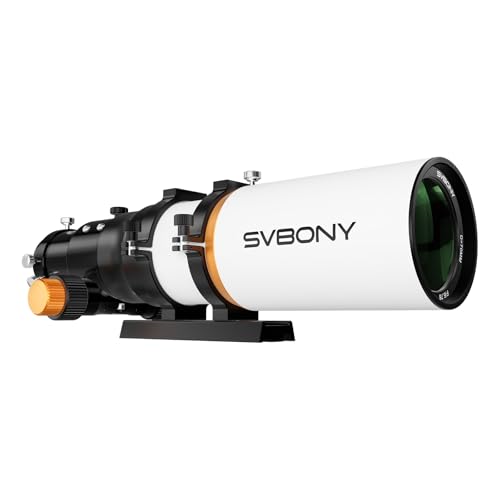
- Built-in field flattener
- ED glass helps reduce color fringing
- Dual-speed manual focuser
Best For: Astrophotographers seeking a corrected wide field
Smartphone-Guided Starter

- App-guided target finding
- 80mm refractor optics
- Includes eyepieces and 2x Barlow
Best For: Beginners and families learning the night sky
Equatorial Tracking Value

- Manual German equatorial mount
- 70mm refractor aperture
- Includes 3x Barlow lens
Best For: Beginners learning manual tracking and stargazing
Lightweight APO Guide Scope – Sky-Watcher EvoGuide 50DX
For a compact option among telescope guide cameras for refractor telescopes, the Sky-Watcher EvoGuide 50DX provides a 50mm apochromatic doublet optical tube with a 242mm focal length. Its included finder stalk and Vixen-style mounting plate make it straightforward to attach to a compatible astrophotography setup.
Best For: Astronomers who want a lightweight guide scope that can also support visual observing and, with an optional adapter, wide-field astrophotography.
Pros:
- ED glass and an APO doublet design are intended to provide contrast-rich views.
- Includes both a finder stalk and a V-style mounting rail for flexible installation.
- Compact 50mm aperture, 242mm focal length, and 1.25-inch helical focuser suit guiding applications.
Cons:
- This is a guide scope rather than a guide camera, so a separate compatible camera is required.
- The astrograph conversion requires an optional adapter that is not included.
- The 2.7-pound weight may be more than some minimalist guide setups require.
The EvoGuide 50DX is a versatile foundation for a refractor guiding system, especially when easy mounting and a compact APO optical design matter. Pair it with a compatible guide camera and check your mount’s payload capacity before installation.
Compact Color Guide Camera – SVBONY SV905C
The SVBONY SV905C is a compact color camera to consider when comparing telescope guide cameras for refractor telescopes. Its 1.23MP, 1280×960 CMOS sensor, small 3.75-micron pixels, and 1.25-inch form factor are designed for autoguiding with compatible guide scopes or off-axis guider setups.
Best For: Users seeking a small color autoguiding camera with ST4 connectivity and support for common guiding software such as PHD2, MDL, NINA, and SKY-X.
Pros:
- 1/3-inch CMOS sensor offers 1280×960 resolution and 3.75-micron pixels.
- High stated peak QE and low read noise are intended to help with faint guide stars.
- Includes USB 2.0 output, an ST4 guide port, and a 1.25-inch telescope-eyepiece form factor.
Cons:
- It is not compatible with ASI AIR.
- Driver software must be downloaded separately.
- The supplied notes identify it as a compact guide camera, not a complete guide-scope package.
With its small cylindrical body, scale mark, and snap ring, the SV905C is aimed at repeatable placement and focusing. Confirm software compatibility and connection requirements before adding it to a refractor-based guiding system.
Wide-Field Dual-Purpose Guide Scope – Astromania 70mm Guide Scope
The Astromania 70mm guide scope combines a 400mm focal length with a helical focuser, making it a substantial option for telescope guide cameras for refractor telescopes. It accepts 1.25-inch eyepieces and autoguiding cameras, while the included tube clamps and Synta-style mounting plate simplify installation.
Best For: Astrophotographers who want one optical tube to serve as both a guide scope and a finder scope, with fine manual focusing control.
Pros:
- 70mm aperture and 400mm focal length provide a broad selection of potential guide stars.
- Helical worm focuser offers fine adjustment and helps prevent camera or eyepiece rotation.
- Includes matching pipe clamps and a Synta-style mounting plate.
- Works with 1.25-inch eyepieces and autoguiding cameras.
Cons:
- At 2.5 pounds, it may add meaningful weight to a smaller refractor mount.
- The longer 400mm focal length may be more guide scope than compact setups need.
- Manual focusing requires adjustment and locking of the drawtube.
This Astromania model is a practical choice when star availability, dual-purpose use, and precise manual focus are priorities. Before mounting it on a refractor, verify that the rings, plate, and added weight suit your mount and tube configuration.
All-in-One Digital Refractor – FASHIONARI Smart Telescope
The FASHIONARI Smart Telescope is an all-in-one digital refractor rather than a standalone guide camera for a separate refractor telescope. It combines an 80mm objective, 300mm focal length, autofocus, and a built-in 4K astrophotography camera, making it relevant to buyers comparing integrated imaging systems.
Best For: Beginners and casual observers who want a portable telescope with built-in imaging, dual screens, and one-touch photo and video controls.
Pros:
- 80mm aperture and 300mm focal length are specified for bright, clear viewing.
- Built-in autofocus and 4K camera reduce the need for separate imaging accessories.
- Foldable external screen, eyepiece diopter adjustment, and one-touch photo/video modes support convenient operation.
- 4500mAh battery is rated for up to six hours, with storage support up to 512GB.
Cons:
- It is an integrated smart telescope, not a standalone guide camera or guide scope for an existing refractor.
- The supplied notes do not specify ST4, USB guiding, or compatibility with guiding software.
- Its feature set is oriented toward viewing and imaging rather than conventional autoguiding.
This model makes the most sense for users seeking a self-contained viewing and imaging experience. If your goal is to guide a separate refractor during astrophotography, choose a dedicated guide camera and compatible guide scope instead.
Compact Guide Scope – SVBONY SV165 30mm Guide Scope
For shoppers comparing telescope guide cameras for refractor telescopes, the SVBONY SV165 is a compact optical guide scope designed to pair with compatible auto-guiding cameras. Its 30mm aperture, 120mm focal length, and 45mm back focus provide a wide field of view for locating targets and making focus adjustments.
Best For: Compact refractor setups using compatible SV305C Pro, ZWO, QHY, Orion, or other auto-guiding cameras.
Pros:
- 1.25-inch and M42 interfaces support several compatible guide cameras.
- Fully multi-coated 30mm achromatic optics are designed for bright, clear images.
- Wide 2.86-degree field of view helps with target acquisition.
- Nylon-tipped thumbscrews help protect the guide-scope tube.
Cons:
- Some camera models may require additional accessories for focusing.
- It cannot be used with a dielectric mirror star diagonal and will not focus in that configuration.
The SV165 is a sensible lightweight option when your refractor imaging setup needs a simple, wide-field guide scope. Confirm the camera interface and required focus accessories before buying.
Beginner Refractor Alternative – ToyerBee 70mm Travel Telescope
This ToyerBee refractor is primarily a beginner visual telescope rather than a dedicated guide scope. For those researching telescope guide cameras for refractor telescopes, it is best viewed as a complete entry-level observing package with a 70mm aperture, phone adapter, tripod, and included finderscope—not as a purpose-built autoguiding platform.
Best For: Beginners and families who want a portable refractor for visual astronomy, phone snapshots, and daytime viewing.
Pros:
- 70mm fully multi-coated aperture supports daytime and nighttime viewing.
- 300mm focal length and included eyepieces provide listed magnifications from 15x to 150x.
- Includes a phone adapter, wireless camera remote, tripod, and 5×24 finderscope.
- Lightweight design is suited to camping and travel.
Cons:
- It is designed for beginners and smartphone use, not specifically for auto-guiding cameras.
- The supplied notes do not identify a dedicated guide-camera interface.
- Manual focusing and the included tripod may not suit advanced astrophotography setups.
This telescope can be a convenient starter refractor for visual use and basic phone imaging, but buyers seeking a dedicated guide-camera solution should verify compatibility carefully or consider a purpose-built guide scope.
Precision Focusing Pick – Alstar 60mm Guide Scope
For telescope guide cameras for refractor telescopes, the Alstar 60mm Guide Scope stands out for its larger aperture and detailed focusing system. Its 240mm focal length, T-thread compatibility, and built-in helical focuser are aimed at astrophotographers who want precise adjustments while retaining the option to use the scope as a finder.
Best For: Astrophotographers who want a dual-purpose 60mm guide and finder scope with fine manual focusing.
Pros:
- 60mm fully multi-coated optical system gathers ample light for guiding and locating objects.
- Dual helical focuser offers 48mm of focusing range, including 10mm of micro-focusing.
- T-thread compatibility supports direct guide-camera attachment.
- Includes a Synta-style dovetail plate, pipe clamps, and adjustable dovetail weight.
Cons:
- At 2 pounds, it is heavier than a compact mini guide scope.
- Manual focusing requires more adjustment than a simpler fixed-focus design.
- The supplied guidance recommends it for telescopes up to 1500mm focal length, so longer systems may need careful evaluation.
The Alstar is the more feature-rich choice for users who value precise focusing and flexible finder use. Its larger, heavier construction makes it better suited to a properly balanced refractor mount than to an ultralight travel setup.
Flat-Field Imaging Pick – SV503 70mm ED Refractor
For shoppers comparing telescope guide cameras for refractor telescopes, the SVBONY SV503 is an imaging-oriented 70mm ED refractor with a built-in field flattener. Its flat-field design, 474mm focal length, and dual-speed focuser make it especially practical for connecting an astronomy camera and refining focus.
Best For: Astrophotographers who want a wide, corrected field without purchasing a separate field flattener.
Pros:
- Built-in field flattener helps reduce edge blur and field curvature.
- ED glass and the flat-field design help limit chromatic aberration.
- Dual-speed focuser supports both quick adjustments and fine focusing.
- Includes a 2-inch-to-1.25-inch adapter and mounting hardware.
Cons:
- Manual focus means camera users must adjust focus themselves.
- It is an optical tube assembly rather than a complete camera-guided telescope setup.
- No finderscope is included.
The SV503 is the strongest fit here for camera-based refractor imaging because its built-in correction simplifies the optical train. Verify that your camera and mount are compatible with the included adapters and mounting hardware.
Smartphone-Guided Starter – StarSense Explorer LT 80AZ
If you are exploring telescope guide cameras for refractor telescopes but want simple target navigation, the Celestron StarSense Explorer LT 80AZ uses your smartphone as a guided sky-navigation tool. Its 80mm refractor and app point beginners toward planets, nebulae, galaxies, and star clusters without requiring an electronic mount.
Best For: Beginners and families who want app-assisted navigation with a manual refractor telescope.
Pros:
- StarSense technology analyzes star patterns to help identify the telescope’s position.
- The app recommends visible targets based on time and location.
- 80mm refractor provides views of the Moon, planets, and selected deep-sky objects.
- Includes 25mm and 10mm eyepieces, a 2x Barlow lens, tripod, and phone dock.
Cons:
- The manual altazimuth mount does not automatically track targets.
- Smartphone guidance requires using a compatible phone with the StarSense Explorer app.
- Manual focusing is required.
This model is more of a smartphone-guided observing telescope than a dedicated camera-imaging platform. Choose it when easy object location matters more than a specialized imaging optical system.
Equatorial Tracking Value – PowerSeeker 70EQ
For buyers researching telescope guide cameras for refractor telescopes on a budget, the Celestron PowerSeeker 70EQ offers a 70mm refractor paired with a manual German equatorial mount. Its slow-motion control is useful for following objects as they appear to drift across the sky, while the included eyepieces and Barlow lens support basic visual observing.
Best For: Families and beginners who want an affordable refractor with manual equatorial tracking.
Pros:
- German equatorial mount with slow-motion control helps follow celestial objects.
- 70mm aperture supports views of the Moon, planets, stars, and Orion Nebula.
- Includes 20mm and 4mm eyepieces plus a 3x Barlow lens.
- Compact, portable design suits backyard or dark-sky observing.
Cons:
- The mount is manual and does not provide powered tracking.
- It is designed primarily for entry-level visual observing rather than dedicated astrophotography.
- Accessories and mount add up to a listed weight of 13.9 pounds.
The PowerSeeker 70EQ can be a practical first step for learning manual equatorial operation, but camera users should not expect the convenience of an app-guided or electronically controlled system. Its main advantage is basic tracking control at an entry-level price point.
How We Picked the Best Telescope Guide Cameras for Refractor Telescopes
We focused on products that can support guiding or complement a refractor astrophotography setup, prioritizing sensor usefulness, optical compatibility, mounting practicality, focusing control, and overall ease of use. We also considered whether each option suits a specific type of buyer, from first-time users to experienced imagers building a lightweight portable rig.
Because the selection includes both dedicated guide cameras and guide-scope or refractor packages, check the product specifications carefully. A guide scope alone still needs a compatible camera, while a camera generally requires a suitable optical tube, mount, software, and connection method.
Quick Comparison
| Best For | Look For | Typical Advantage |
|---|---|---|
| Portable setups | Small guide scope and lightweight camera | Lower payload and faster setup |
| Beginner guiding | Simple USB connectivity and easy focusing | Less troubleshooting |
| Longer focal-length refractors | Higher-quality optics and precise focus | More reliable guide-star detection |
| General visual astronomy | Complete refractor telescope package | Useful for observing before adding imaging gear |
Key Buying Factors for Telescope Guide Cameras for Refractor Telescopes
Sensor Sensitivity and Resolution
A sensitive monochrome sensor is often preferred for guiding because it can detect dim stars efficiently. Resolution matters too, but more pixels do not automatically produce better guiding. Match the camera’s pixel size and sensor area to the guide scope’s focal length and your mount.
Guide-Scope Focal Length
The guide scope should provide an appropriate image scale relative to the imaging refractor. Very short guide scopes are convenient, but a longer focal length may offer more precise star movement data for demanding setups. A 30mm or 50mm guide scope can work well for compact systems, while larger optics may suit heavier or longer-focal-length refractors.
Focusing and Mounting
Helical or adjustable focusers make it easier to achieve sharp guide stars. Confirm that the scope includes usable rings, a dovetail, or another mounting solution compatible with your telescope. Flexure between the guide scope and imaging tube can undermine otherwise good equipment.
Software and Connections
Before buying, verify operating-system support, driver availability, USB requirements, and compatibility with guiding software such as PHD2. A camera that fits physically but lacks dependable software support can create unnecessary setup problems.
Payload and Optical Quality
Keep the complete guiding package light enough for your equatorial mount. For the imaging telescope, quality glass, field flattening, and solid focuser mechanics can be more important than maximum magnification. A well-corrected refractor generally makes a stronger astrophotography foundation.
Who Should Buy Which Telescope Guide Cameras for Refractor Telescopes?
Choose a compact guide scope and camera if you already own a refractor and want a lightweight guiding upgrade. Small SVBONY-style systems are especially practical for portable mounts and short-focal-length imaging.
Choose a larger guide scope with a helical focuser if precise focusing and better guide-star acquisition are priorities. This approach is useful when your refractor, camera, or mount demands more careful alignment.
Choose a complete refractor package if you are still building an astronomy setup. Beginner-oriented Celestron or similar kits can provide a lower-friction introduction, though they may require additional accessories for serious deep-sky imaging.
Choose a higher-quality ED refractor if imaging performance is the main goal. A model such as the SV503-style setup may be a better long-term optical platform, but budget separately for a guide camera, guiding scope, mount, and flattening accessories where needed.