Compact telescope guide cameras can make a portable astrophotography setup easier to align and more reliable to track. The right model depends on more than sensor resolution: compatibility, field of view, focusing, connectivity, and guiding software support all matter.
We’ve selected 10 options spanning dedicated guide cameras, mini guide scopes, wireless electronic eyepieces, and higher-resolution planetary imaging cameras. Use the guide below to narrow the list by setup, imaging goal, and budget.
Best 10 Compact Telescope Guide Cameras Picks for 2026
Compact Guiding Camera

- 1.23MP color CMOS sensor for guiding and planetary imaging
- ST4 interface and support for several guiding programs
- Compact 1.25-inch body with CS/C-mount compatibility
Best For: Autoguiding and planetary imaging
Mini Guide Scope
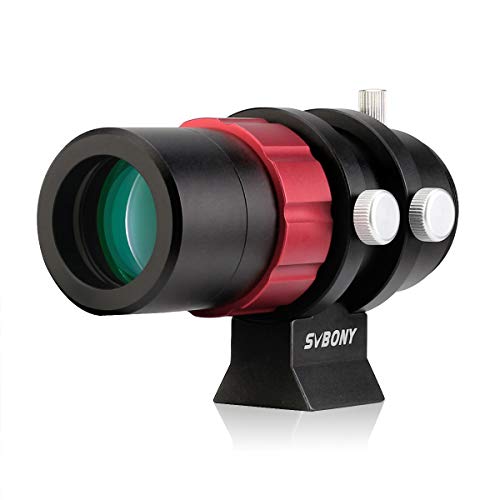
- 30mm achromatic optics with a wide field of view
- 45mm back focus for focusing adjustments
- 1.25-inch and M42 interfaces for many guide cameras
Best For: Compact deep-sky guiding setups
Wireless Telescope Camera

- 8MP sensor with 4K video and high-resolution stills
- Built-in 2.8-inch screen and WiFi remote viewing
- Universal mount fits eyepieces from 23mm to 60mm
Best For: Beginner electronic viewing and recording
Adjustable Guide Scope

- 40mm achromatic optics for telescopes up to 700mm focal length
- 1.25-inch and M42 interfaces for several guide cameras
- Front focuser and six-point ring support repeatable alignment
Best For: Adjustable guiding on telescopes up to 700mm
Best Portable WiFi Eyepiece
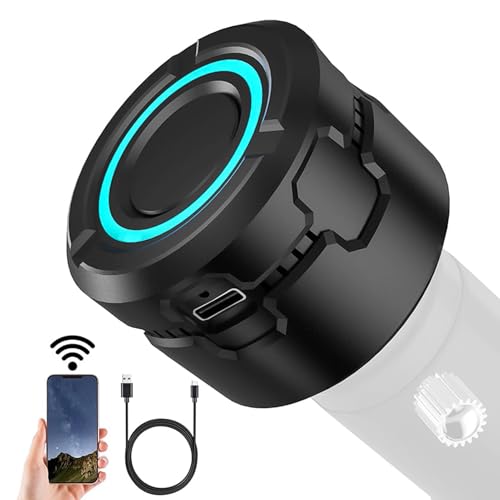
- WiFi viewing and recording
- 1.25-inch telescope compatibility
- Lightweight rechargeable design
Best For: Traveling beginners and casual observers
Best Multi-Use Guide Scope
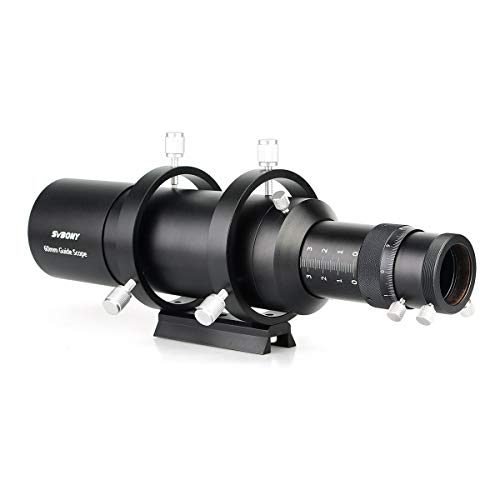
- 60mm guide-scope aperture
- Non-rotating helical focuser
- Also works as a finder scope
Best For: Astrophotographers needing flexible guiding and finding
Best Beginner Planetary Camera
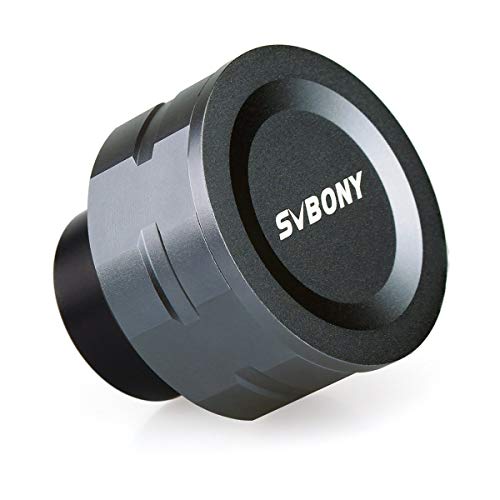
- 1.25-inch USB telescope camera
- 1080p video up to 30 fps
- Designed for lunar and planetary imaging
Best For: First-time computer-based astronomy imaging
Best Plug-and-Play Pick

- Plug-and-play USB operation
- 7.05MP IMX415 color sensor
- Up to 30fps at 1080p
Best For: Beginners capturing lunar and planetary video
Best Wireless Option
SC002 1080P Wi-Fi Eyepiece Camera

- 37–56mm universal eyepiece fit
- 1080p recording with 3x digital zoom
- Over three hours of battery life
Best For: Wireless phone-based viewing and outdoor sharing
Best for EAA Control
SV305C IMX662 Color Astronomy Camera

- Low-noise IMX662 color sensor
- ROI and BIN2×2 capture modes
- SharpCap planetary and long-exposure modes
Best For: Entry-level EAA and planetary imaging
Compact Guiding Camera – SVBONY SV905C Guide Camera
The SVBONY SV905C is a compact telescope guide camera designed for autoguiding and planetary imaging. Its 1.23MP color CMOS sensor, small pixels, ST4 port, and broad software compatibility make it a practical option when you want a lightweight camera for a 1.25-inch guide setup.
Best For: Autoguiding and planetary imaging with compatible 1.25-inch guide scopes or off-axis guiders.
Pros:
- 1/3-inch 1280×960 color CMOS sensor with 3.75-micron pixels
- High peak QE and low read noise support guide-star tracking
- USB 2.0, ST4 interface, and compatibility with PHD2, NINA, MDL, and other software
- Compact 1.25-inch body with CS and C-mount lens compatibility
Cons:
- Not compatible with ASI AIR
- USB 2.0 is less modern than faster camera interfaces
Choose this model if software compatibility with your existing guiding workflow matters more than high-resolution deep-sky imaging. The built-in scale mark and snap ring can also make repeated focusing and positioning easier.
Mini Guide Scope – SVBONY SV165 30mm F4
The SVBONY SV165 30mm is a compact telescope guide scope for users pairing a small optical tube with a separate autoguiding camera. Its wide field of view, 45mm back focus, and 1.25-inch/M42 interfaces are suited to locating guide stars and making focused adjustments.
Best For: Deep-sky astrophotography setups using compatible 1.25-inch or M42 guide cameras.
Pros:
- 30mm achromatic optics with fully multilayer-coated glass
- F4 aperture and 2.86-degree field of view help locate targets quickly
- 45mm back focus supports precise focusing adjustments
- Nylon-tipped thumbscrews help protect the optical tube
Cons:
- Some cameras may require additional focusing accessories
- Cannot be used with a dielectric mirror star diagonal and still focus
- The image is inverted when used with an eyepiece
This guide scope is a sensible compact choice when you already have an autoguiding camera and need a wide-field optical platform. Verify camera spacing and focusing requirements before purchasing.
Wireless Telescope Camera – Telonixium 4K Eyepiece Camera
The Telonixium 4K wireless camera takes a different approach to compact telescope guide cameras by combining electronic viewing, recording, and app control in one eyepiece-mounted unit. It supports 4K video, high-resolution stills, WiFi viewing, and a universal locking groove for multiple eyepiece sizes.
Best For: Beginners who want live electronic viewing, recording, and easy sharing from telescopes, binoculars, or microscopes.
Pros:
- 8MP CMOS sensor with 4K video and up to 64MP image capture
- Rotatable 2.8-inch IPS display for real-time viewing
- WiFi remote viewing within a stated 32-foot range
- 2000mAh battery, time-lapse functions, and support for microSD cards up to 512GB
Cons:
- Manual focus and eyepiece mounting may require setup adjustments
- Its feature set is aimed at observation and recording rather than dedicated ST4 autoguiding
This is better suited to visual astronomy and casual astrophotography than to a conventional guiding-camera workflow. The universal 23mm-to-60mm mounting range and XDVPRO app make it flexible for beginners and outdoor observation.
Adjustable Guide Scope – SVBONY SV165 40mm F4
The SVBONY SV165 40mm is a compact telescope guide scope intended for optical tubes with focal lengths up to 700mm. Compared with smaller mini guide scopes, its 40mm objective, adjustable guide ring, and front focuser provide a more configurable platform for pairing with an autoguiding camera.
Best For: Guide-camera systems on telescopes with focal lengths within 700mm that need adjustable alignment and repeatable focus.
Pros:
- 40mm fully multi-coated achromatic optics for clear guiding views
- 1.25-inch and M42 interfaces support SV305 Pro, Orion, ZWO, QHY, and other cameras
- Front focuser with scale helps repeat focus settings
- Six-point guide ring allows adjustment of guide-scope coaxiality
Cons:
- Manual focusing may require removing the red locking ring or shortening the tube for some eyepieces
- At 450g, it is heavier than many compact guide-scope options
Select this model when alignment control and a larger objective are more important than minimizing weight. Its included T2 extension tubes and adjustable six-point ring can help accommodate different camera and telescope combinations.
Best Portable WiFi Eyepiece – Andoer 4K Electronic Eyepiece
For shoppers comparing compact telescope guide cameras, the Andoer WiFi Electronic Eyepiece is a lightweight option for simple live viewing and recording. Its 1.25-inch barrel, wireless connection, and built-in battery make it convenient for travel, casual astrophotography, and outdoor observation.
Best For: Beginners who want smartphone or tablet viewing without carrying a larger camera setup.
Pros:
- Connects directly to a smartphone or tablet over WiFi for real-time viewing, photos, and video.
- Compact 5.3-ounce design fits easily in a backpack.
- Built-in 1600mAh lithium battery recharges through USB Type-C.
- Works with telescopes using a 1.25-inch barrel and can also support bird watching.
Cons:
- Its basic beginner-oriented design may not suit advanced imaging workflows.
- Wireless operation depends on a compatible smartphone or tablet.
This is a practical pick when portability and easy wireless sharing matter more than a specialized guiding setup. It offers a straightforward way to turn a compatible telescope into a connected viewing camera.
Best Multi-Use Guide Scope – SVBONY SV106 60mm Guide Scope
Among compact telescope guide cameras and accessories, the SVBONY SV106 stands out as a dedicated 60mm guide scope with flexible focusing and mounting options. It is designed to work with autoguider cameras while also serving as a straight-through finder when paired with an optional 1.25-inch eyepiece.
Best For: Astrophotographers who want one scope for guiding, finding, and precise manual focusing.
Pros:
- 60mm aperture and 240mm focal length provide a versatile guide-scope platform.
- Helical focuser offers 8mm of precise travel without rotating the field of potential guide stars.
- Telescoping drawtube adds up to 35mm of back-travel for autoguider compatibility.
- Male T-threads and a compression ring support secure, scratch-conscious attachment.
Cons:
- An optional 1.25-inch eyepiece is needed to use it as a finder scope.
- At 790g, it is less lightweight than a basic compact finder.
- Manual focusing requires setup and adjustment in the field.
The SV106 is the most purpose-built option here for guiding-camera use. Its non-rotating helical focus and extra back-travel make it especially useful when compatibility and repeatable focusing are priorities.
Best Beginner Planetary Camera – SVBONY SV105 IMX307 Camera
The SVBONY SV105 is a straightforward choice for shoppers seeking compact telescope guide cameras for lunar, planetary, and terrestrial video. Its 1.25-inch format, USB connection, and plug-and-play design are aimed at beginners who want to view and record telescope images on a computer.
Best For: Beginners capturing the Moon, bright planets, and terrestrial targets with a Windows, Linux, or compatible Mac computer.
Pros:
- Uses a 1/2.8-inch IMX307 color CMOS sensor with up to 30 frames per second at 1920×1080.
- Standard 1.25-inch format includes an M28.5×0.6 filter thread.
- Plug-and-play USB 2.0 operation supports real-time viewing without a driver.
- Dark-light compensation is intended to improve clarity in low-light conditions.
Cons:
- It is designed primarily for lunar, planetary, and terrestrial imaging rather than broad deep-sky use.
- Capture software downloads are required for Windows, Linux, and Android workflows.
- It is not compatible with Apple phones or tablets running iOS.
For a first astronomy camera, the SV105 keeps the connection and imaging process relatively simple. Its strongest use case is quick planetary or lunar video capture through a computer rather than advanced standalone guiding.
Best Plug-and-Play Pick – SV205 7.05MP Telescope Camera
For shoppers comparing compact telescope guide cameras, the SVBONY SV205 is a straightforward USB option for viewing and recording the Moon, bright planets, and terrestrial targets on a computer. Its 1.25-inch barrel connects directly to many telescopes, while plug-and-play operation avoids a separate driver installation.
Best For: Beginners who want simple computer-based lunar and planetary imaging.
Pros:
- 7.05MP IMX415 color sensor with dark-light compensation for improved low-light clarity.
- Records up to 30fps at 1920×1080 in MJPG format.
- Supports USB 3.0 and includes a 1.2m cable, dust cover, and cleaning cloth.
- Compatible with Windows, Linux, and macOS using Astroamx Capture.
Cons:
- Uses a 1.25-inch interface, so some telescopes may require an adapter.
- Not compatible with Apple phones or tablets.
- Designed primarily for lunar, planetary, and terrestrial targets rather than broad deep-sky imaging.
The SV205 makes a practical entry point when ease of setup and high-resolution planetary video matter more than advanced astrophotography controls. Confirm your telescope’s eyepiece size and computer operating system before buying.
Best Wireless Option – SC002 1080P Wi-Fi Eyepiece Camera
The SVBONY SC002 stands out among compact telescope guide cameras for viewers who want wireless live viewing from a phone. Its adapter supports eyepiece diameters from 37 to 56mm, and the built-in Wi-Fi hotspot works without an external network for remote observation and recording.
Best For: Outdoor observers who prefer smartphone viewing, sharing, and wireless recording.
Pros:
- Works with telescopes, monoculars, and binoculars measuring 37–56mm at the eyepiece.
- Provides 1080p video, 2MP imaging, H.264 recording, and 3x digital zoom.
- Supports Android, iOS, and HarmonyOS through the SvbonyCam app.
- 1500mAh battery provides more than three hours of continuous recording and includes a 32GB TF card.
Cons:
- Its adapter range may not fit eyepieces outside 37–56mm.
- Wireless control depends on the app and a 2.4GHz connection within the stated 10m range.
- When two phones connect, only the first has photo and video controls.
The SC002 is a convenient choice for casual digital observation and group sharing rather than computer-focused astrophotography. Check the eyepiece diameter and confirm your phone’s operating system before purchase.
Best for EAA Control – SV305C IMX662 Color Astronomy Camera
For buyers seeking compact telescope guide cameras with more imaging controls, the SVBONY SV305C offers a 2.1MP IMX662 color sensor and features aimed at planetary photography, lunar work, and electronically assisted astronomy. SharpCap support includes dedicated planetary high-speed and sky-space long-exposure modes.
Best For: Entry-level astrophotographers who want ROI, binning, and EAA-oriented controls.
Pros:
- Back-illuminated IMX662 sensor offers low readout noise, no glow, and improved red sensitivity.
- ROI can reduce the readout area to increase capture speed while maintaining image scale.
- BIN2×2 mode can combine pixels to improve sensitivity.
- Includes a universal 1.25-inch interface plus CS and C-mount compatibility with the supplied adapter ring.
Cons:
- At 2.1MP, it has a lower stated resolution than the SV205.
- Its advanced controls may require more setup and learning than a plug-and-play camera.
- The UV/IR cut filter is built in and is not removable, although the protective glass is detachable.
The SV305C is the strongest fit here for users ready to move beyond basic live viewing and experiment with capture settings. Its sensor features and SharpCap modes make it more flexible, but compatibility with your telescope and preferred software should be verified first.
How We Picked These Compact Telescope Guide Cameras
We focused on compact cameras and guide-scope combinations designed for small telescopes, portable mounts, and beginner-to-intermediate astrophotography rigs. Selection factors included sensor type and resolution, 1.25-inch or 2-inch compatibility, connection method, focusing hardware, likely guiding use, and versatility for lunar or planetary video. Because specifications vary by seller and revision, verify the current listing, included cables, drivers, and mounting accessories before ordering.
The list includes both true guide-camera solutions and electronic eyepiece-style products. The latter may be better for live viewing or wireless sharing than for precise long-exposure guiding, so match the product category to your intended workflow.
Quick Comparison
- Best for basic guiding: A small monochrome or color guide camera paired with a compatible mini guide scope.
- Best for portable setups: A 30mm or 40mm guide scope with a lightweight camera and simple USB connection.
- Best for higher-resolution capture: Cameras using larger, higher-megapixel sensors for lunar and planetary imaging.
- Best for wireless viewing: Wi-Fi electronic eyepieces that stream or record without a direct computer connection.
- Best for flexibility: A camera with a standard 1.25-inch nosepiece, broad software support, and adjustable gain or exposure controls.
Key Buying Factors for Compact Telescope Guide Cameras
Sensor and Guiding Sensitivity
Guiding usually prioritizes sensitivity, low read noise, and dependable short exposures over maximum pixel count. A higher-resolution sensor can provide more cropping latitude, but it may create larger files and demand more processing. Color sensors are convenient for general imaging, while monochrome sensors can be advantageous when guide-star detection is the priority.
Compatibility and Field of View
Check whether the camera fits a 1.25-inch holder, 2-inch focuser, or a proprietary electronic-eyepiece mount. Pair the camera and guide scope so the field of view is wide enough to locate guide stars but sufficiently sampled for your mount. Also confirm that the telescope’s back focus and adapters accommodate the camera.
Focus and Mounting
A helical focuser or secure locking adjustment makes focusing easier, especially when changing cameras. Look for a rigid mounting solution with suitable rings, a Vixen-style shoe, or the adapter required by your mount. Avoid adding unnecessary weight to a small tracking mount.
Connectivity and Software
USB models generally offer a straightforward computer-based workflow and are often preferable for guiding software. Wireless models are convenient for live viewing and recording, but check app compatibility, operating-system support, latency, battery requirements, and whether guiding software can access the camera.
Who Should Buy Which Compact Telescope Guide Cameras?
Choose a dedicated camera and mini guide scope if accurate tracking is your main goal. This is the most practical route for deep-sky imaging with a compatible equatorial mount.
Choose a wireless electronic eyepiece if you want to share live telescope views, observe from a phone or tablet, or record casual footage without building a computer-centered guiding system.
Choose a higher-resolution telescope camera if lunar and planetary imaging matter more than guiding. These models can capture more detail, provided your optics, seeing conditions, storage, and processing workflow can support the added data.