Choosing among telescope guide scopes for beginners can feel complicated, especially when similar-looking models vary in aperture, focal length, focus control, and mounting hardware.
We compared compact 30mm and 40mm options with larger 50mm and 60mm guide scopes to help you match your setup, guiding goals, and budget.
Best 10 Telescope Guide Scopes for Beginners Picks for 2026
Compact Starter Pick
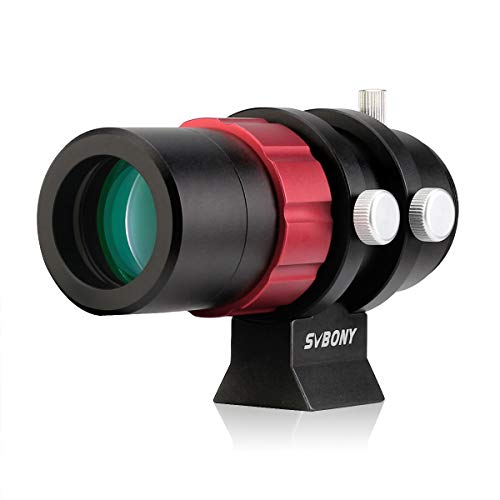
- Wide-field 30mm f/4 optics
- 1.25-inch and M42 interfaces
- 45mm back focus with protected thumbscrews
Best For: Lightweight beginner astrophotography setups
Premium Optics Choice

- 50mm f/4.8 APO doublet with ED glass
- Includes finder stalk and V-style plate
- Can become an astrograph with an adapter
Best For: Versatile guiding, visual observing, and future expansion
Most Versatile Focuser
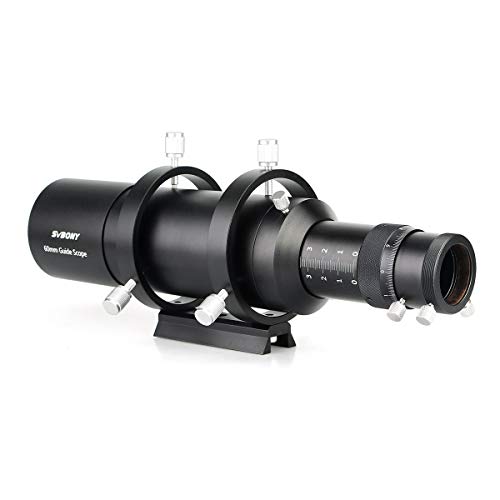
- 60mm aperture with 240mm focal length
- Helical focus avoids rotating the field
- Can double as a straight-through finder
Best For: Beginners wanting guiding and finder-scope flexibility
Best Mounting Bundle

- Designed for telescopes up to 700mm
- Includes universal dovetail base
- Focus scale and locking ring aid repeatability
Best For: Compact setups needing flexible finder-style mounting
Versatile 60mm Choice
Astromania 60mm Helical Guide Scope

- 60mm aperture with a wide 2.7-degree field of view
- Fine helical focusing with camera-rotation control
- Includes rings, dovetail plate, and T-thread support
Best For: Beginners needing a dual-purpose finder and autoguiding scope
Compact Camera Bundle

- Includes a 40mm mini scope and SV905C guide camera
- Designed for telescope focal lengths within 700mm
- USB, ST4, and common guiding-software compatibility
Best For: Beginners wanting a compact, ready-to-connect guiding setup
Precision Finder Kit
Alstar 60mm Helical Guide Scope

- 60mm aperture and 240mm focal length for wide-field viewing
- 48mm dual helical focusing range with micro-focus control
- Includes rings, dovetail plate, and T-thread support
Best For: Beginners prioritizing precise focus and dual finder-guide use
Versatile Starter Pick
Astromania 30mm Mini Guide Scope

- 30mm F4 achromatic optics with full multi-coating
- Works as both a finderscope and guide scope
- Includes right-angle diagonal and broad base compatibility
Best For: Beginners wanting one compact scope for finding and guiding
Bright Wide-Field Choice

- Larger 60mm objective for bright, wide-field views
- Designed for telescopes up to 1500mm focal length
- Includes 1.25-inch double-helical focuser
Best For: Beginners prioritizing guide-star visibility over low weight
Imaging Bundle for Beginners
SVBONY SV165 with SV105 Camera

- 30mm F4 mini guide scope with wide-field optics
- Includes SV105 electronic telescope camera
- Supports lunar, planetary, and terrestrial imaging
Best For: Beginners starting with compact guiding and basic imaging
Compact Starter Pick – SVBONY SV165 30mm Guide Scope
For beginners comparing telescope guide scopes for beginners, the SVBONY SV165 is a compact option designed for compatible autoguiding cameras. Its 30mm f/4 optics provide a wide field of view to help locate targets, while the 45mm back focus allows manual focus adjustments.
Best For: Beginners building a lightweight deep-sky astrophotography setup with a compatible guide camera.
Pros:
- Works with many 1.25-inch and M42 autoguiding camera interfaces.
- Wide field of view helps with target acquisition.
- Nylon-tipped thumbscrews help protect the optical tube.
- Compact 30mm design with fully multilayer-coated optics.
Cons:
- Some cameras may require additional accessories to achieve focus.
- Cannot be used with a dielectric mirror star diagonal for focusing.
- The image is inverted when used with an eyepiece.
The SV165 is a practical entry-level guide scope when small size and broad camera compatibility matter. Confirm your camera and focusing accessories before ordering.
Premium Optics Choice – Sky-Watcher EvoGuide 50DX
The Sky-Watcher EvoGuide 50DX is a versatile choice among telescope guide scopes for beginners, combining a 50mm f/4.8 apochromatic doublet with ED glass. It includes a finder stalk, tube rings, and a Vixen-style mounting plate for straightforward installation.
Best For: Beginners who want a lightweight guide scope that can also support visual observing and future astrograph use.
Pros:
- Matched ED glass is designed for contrast-rich views.
- Includes both a finder stalk and V-style mounting rail.
- 242mm focal length and a 1.25-inch helical focuser.
- Built-in T-threads enable astrograph conversion with an optional adapter.
Cons:
- The astrograph adapter is optional and not included.
- At 2.7 pounds, it is heavier than the compact mini guide scopes listed here.
- Manual focusing requires user adjustment.
The EvoGuide 50DX offers more optical versatility than a basic mini guider and provides useful mounting hardware in the box. Its larger, heavier format is worth considering alongside your telescope’s payload capacity.
Most Versatile Focuser – SVBONY SV106 60mm Guide Scope
The SVBONY SV106 stands out among telescope guide scopes for beginners because its helical focuser supports precise adjustment without rotating the attached camera or eyepiece. It can also serve as a straight-through finder when paired with an optional 1.25-inch eyepiece.
Best For: Beginners who want one guide scope for autoguiding and occasional finder-scope use.
Pros:
- 60mm aperture and 240mm focal length provide a versatile guiding platform.
- Helical focuser offers 8mm of precise travel without field rotation.
- Up to 35mm of additional drawtube back-travel can reduce the need for extension tubes.
- T-threads and a compression ring support compatible cameras and eyepieces.
Cons:
- An optional 1.25-inch eyepiece is needed for finder-scope use.
- Its 790g weight may be more than some lightweight mounts comfortably carry.
- Manual focusing requires setup adjustment.
The SV106 is a strong pick for users who value focusing control and multi-use flexibility. Check your mount’s payload capacity and camera thread compatibility before adding it to a compact setup.
Best Mounting Bundle – SVBONY SV165 40mm Guide Scope
For beginners choosing telescope guide scopes for beginners, this 40mm SVBONY SV165 bundle adds a universal dovetail base to a compact guide scope. It is intended for telescope optical tubes up to 700mm focal length and includes interfaces for several common guiding cameras.
Best For: Beginners who need a compact guide scope plus a flexible finder-style mounting base.
Pros:
- Suitable for telescopes with focal lengths within 700mm.
- Universal dovetail base supports finder scopes and reflex sights.
- Front focuser scale and locking ring make repeatable focusing easier.
- 1.25-inch and M42 interfaces support compatible SV305 Pro, ZWO, and QHY cameras.
Cons:
- Manual focusing still requires user adjustment.
- Camera compatibility depends on the correct interface and accessories.
- It is designed for shorter telescopes rather than focal lengths above 700mm.
This bundle is convenient when mounting flexibility is as important as guiding. Its focus lock and included base make it a practical beginner package, provided your telescope and camera meet the stated compatibility limits.
Versatile 60mm Choice – Astromania 60mm Helical Guide Scope
For beginners comparing telescope guide scopes for beginners, this Astromania model offers a flexible starting point for both visual finding and autoguiding. Its 60mm aperture, 240mm focal length, wide field of view, and included mounting hardware make it suitable for locating guide stars and attaching compatible guide cameras.
Best For: Beginners who want one guide scope for visual finding and astrophotography setups up to about 1500mm focal length.
Pros:
- 60mm fully multi-coated optics with a 240mm focal length and 2.7-degree field of view.
- Helical focuser provides fine adjustments, with a 45mm total focusing range and camera-rotation control.
- Includes guide rings, a Synta-style dovetail mounting plate, T-threads, and protective Teflon inserts.
- Can work as both a visual finder and an autoguiding scope.
Cons:
- Its larger 60mm design may be more scope than needed for compact beginner setups.
- Manual focusing and multiple mounting adjustments require hands-on setup.
- The notes do not indicate that a guide camera is included.
The Astromania is a well-equipped, adaptable option when you want a sturdy guide scope that can also serve as a comfortable finder. Its included rings and dovetail bar simplify installation, while the helical focuser supports precise astrophotography adjustments.
Compact Camera Bundle – SVBONY SV165 40mm Guide Scope
This SVBONY bundle is a convenient entry point for telescope guide scopes for beginners because it combines a compact 40mm guide scope with the SV905C telescope camera. The setup is aimed at shorter optical tube assemblies and supports common guiding software through USB 2.0 and ST4 connections.
Best For: Beginners using telescopes with focal lengths within 700mm who want a guide scope and camera together.
Pros:
- Includes the SV165 40mm mini guide scope and a 1.23-megapixel SV905C color camera.
- Camera features a 1280×960 sensor, 3.75-micron pixels, up to 80% peak QE, and low read noise.
- Supports 1.25-inch and M42 threaded interfaces, plus two T2 extension tubes for focusing assistance.
- USB 2.0 and ST4 connections support PHD2, N.I.N.A., and other listed guiding software.
Cons:
- Designed for telescope focal lengths within 700mm, limiting use with longer systems.
- The included camera is color and has a modest 1.23-megapixel resolution.
- Manual focusing may require adjustment during initial setup.
For a beginner who wants a more complete guiding package, this compact bundle reduces the need to choose a camera separately. Its main limitation is compatibility with shorter-focal-length telescopes, so check your telescope specifications before buying.
Precision Finder Kit – Alstar 60mm Helical Guide Scope
For newcomers choosing telescope guide scopes for beginners, the Alstar 60mm kit combines a wide-field optical design with a precise dual helical focuser. It can function as a guide scope or finder, and its included rings and Synta-style dovetail plate support installation on a range of telescope setups.
Best For: Beginners who want a durable 60mm dual-purpose scope with fine manual focusing for visual observing and astrophotography.
Pros:
- 60mm fully multi-coated optical system with a 240mm focal length for bright, wide-field views.
- Dual helical focuser offers 48mm total travel, including 10mm of micro-focusing adjustment.
- Includes pipe clamps, a Synta-style dovetail plate, T-thread compatibility, and a compression ring.
- Works with optional 1.25-inch eyepieces as a finder or with compatible cameras for guiding.
Cons:
- At about 2 pounds, it may add noticeable weight to a portable setup.
- Its listed 1.04-degree field of view is narrower than the Astromania model’s stated view.
- A camera or eyepiece is not included in the supplied kit details.
The Alstar stands out for its extensive focusing range and all-metal construction. It is a practical choice when precise, rotation-free focusing matters, though its weight and need for separate camera or eyepiece accessories should be included in your setup planning.
Versatile Starter Pick – Astromania 30mm Mini Guide Scope
For beginners comparing telescope guide scopes for beginners, the Astromania 30mm model is a flexible option that works as both a finderscope and a guide scope. Its wide-field F4 optics, right-angle diagonal, and manual focus design support quick target acquisition and comfortable visual observation.
Best For: Beginners who want one compact scope for finding targets, visual viewing, and introductory astrophotography.
Pros:
- 30mm fully multi-coated achromatic optics are designed to provide bright, clear images while reducing glare and reflections.
- Includes a 1.25-inch 90-degree diagonal for more comfortable naked-eye observing.
- T2 extension adapter supports compatible guide cameras and DSLRs.
- Synta-style dovetail base works with finder bases from brands including Sky-Watcher, GSO, Celestron, Vixen, and Orion.
Cons:
- Manual focusing requires adjustment rather than offering automated focus control.
- Its 30mm objective is compact, so it may provide less light-gathering capability than a larger guide scope.
The Astromania stands out for its dual-purpose design and broad mounting compatibility. Its 45mm back focus and helical focus ring are useful for beginners learning both visual aiming and autoguiding setup.
Bright Wide-Field Choice – MEOPTEX 60mm Guide Scope
Among telescope guide scopes for beginners, the MEOPTEX 60mm model prioritizes a larger objective and bright, wide-field views. It is designed for astrophotography telescopes up to 1500mm focal length and uses a manual 1.25-inch double-helical focuser.
Best For: Beginners who need a larger guide scope with a wide field for locating potential guide stars.
Pros:
- 60mm objective provides bright, wide-field optics with numerous potential guide stars in view.
- Designed for astrophotography telescopes up to 1500mm focal length.
- 1.25-inch double-helical focuser supports manual focusing.
- Adjustable-aim dovetail bracket is intended for quick installation on many astrophotography telescopes.
Cons:
- At 2.5 pounds, it is substantially heavier than compact mini guide scopes.
- Manual focus may require more setup time than a simpler fixed-focus arrangement.
- The supplied notes do not specify a bundled guide camera.
The MEOPTEX is a sensible choice when brightness and guide-star availability matter more than minimum weight. Its larger 60mm objective can be useful for wider target-finding, but beginners should account for the added load on their setup.
Imaging Bundle for Beginners – SVBONY SV165 with SV105 Camera
The SVBONY SV165 is a beginner-oriented entry in telescope guide scopes for beginners because it pairs a 30mm F4 mini guide scope with an SV105 telescope camera. Its wide-field optics and camera connectivity are suited to starting lunar, planetary, and basic astrophotography projects.
Best For: Beginners who want a compact guide scope and an included electronic camera for exploring telescope imaging.
Pros:
- 30mm F4 achromatic optics with fully multi-coated lenses are designed for bright, clear images with reduced reflections.
- 45mm back focus and wide field help with focusing and quick target acquisition.
- 1.25-inch and M42 interfaces support compatible SV305 Pro, Orion, ZWO, QHY, and other autoguiding cameras.
- Included SV105 camera supports lunar, planetary, and terrestrial viewing through a laptop or PC.
Cons:
- The SV105 is described as a basic starter camera, so advanced imaging users may want a more capable camera later.
- It cannot be used with a dielectric mirror star diagonal, and some cameras may need additional accessories to reach focus.
- Manual focusing requires user adjustment.
The SV165 bundle offers a straightforward path into electronic observing and imaging without requiring a separate starter camera. Its compatibility details are useful, but beginners should confirm their camera and accessory setup before buying.
How We Picked These Telescope Guide Scopes for Beginners
We focused on the features that matter most for entry-level guiding: usable aperture, focal length, optical design, focusing method, mounting compatibility, and overall practicality. The selection includes compact guidescopes for portable rigs, larger models for more demanding setups, and bundles that include a camera or dovetail base.
We also considered whether a scope can serve multiple purposes, such as acting as a finder scope or supporting visual alignment. A good beginner model should be straightforward to mount and focus without adding unnecessary weight or complexity.
Quick Comparison
| Guide scope type | Best suited for | Main advantage |
|---|---|---|
| 30mm F4 mini scope | Portable beginner rigs | Low weight and easy mounting |
| 40mm mini scope | Entry-level imaging setups | Good balance of brightness and size |
| 50mm APO scope | Longer focal-length imaging | More optical reach and refinement |
| 60mm guide scope | Flexible or demanding setups | Greater aperture and multi-use capability |
Key Buying Factors for Telescope Guide Scopes for Beginners
Aperture and Focal Length
Smaller 30mm scopes are light and convenient, making them attractive for compact mounts and short-focal-length imaging telescopes. A 40mm or 50mm model generally gathers more light and may provide more guide-star choices. A 60mm scope can offer additional flexibility, but its extra size and weight should be supported by a sturdy mount.
Focusing and Optical Control
A helical focuser allows precise adjustment and can be useful when switching cameras or finding the sharpest guide-star image. Fixed or simpler focusers may be adequate for a permanent setup, but check how the camera attaches and whether the available travel suits your equipment.
Mounting Compatibility
Verify that the package includes the dovetail base, rings, or adapter required by your guide-scope shoe. A scope that fits securely is essential; flexure between the guide scope and imaging telescope can cause elongated stars even when guiding software reports acceptable performance.
Camera Pairing and Field of View
Confirm that the guide camera uses a compatible thread or nosepiece and that the scope provides a useful field of view for your camera sensor. Bundles can simplify setup, but a separate camera may be preferable if you already own one or want higher sensitivity.
Who Should Buy Which Telescope Guide Scopes for Beginners?
- Choose a 30mm model if portability, low weight, and simple installation are your top priorities.
- Choose a 40mm model for a balanced beginner setup with a little more light-gathering ability.
- Choose a 50mm APO model if you want a more capable optical design for a larger imaging telescope.
- Choose a 60mm model if you need a brighter, multi-use finder and have enough mounting capacity for the added weight.
- Choose a bundle when you need a compatible camera or mounting base and want to reduce setup guesswork.
Before ordering, compare the guide scope’s weight and attachment method with your mount, then confirm camera compatibility and available focus adjustment. For most beginners, a securely mounted 30mm or 40mm scope is the simplest starting point.