The best solar system models for homeschool turn abstract astronomy lessons into hands-on learning. A well-designed kit can help children understand planetary order, scale, motion, and key space concepts more clearly than a textbook alone.
These 10 options include glow-in-the-dark planetariums, paint-your-own kits, interactive talking models, and gear-driven designs. Use the guide below to match the right model to your child’s age, lesson goals, available space, and preferred learning style.
Best 10 Solar System Models for Homeschool Picks for 2026
Best Glow-and-Build Pick
National Geographic Solar System Model

- Builds and paints eight planets plus the sun
- Movable arms support adjustable display positions
- Glow accents and fact poster add engagement
Best For: Kids ages 8 and up who want a glowing, movable astronomy project
Best Wall-Display Project

- Includes 63 pieces for a paint-and-build activity
- Hangs on a wall to save display space
- Instructions support planet names and orbital positions
Best For: Homeschoolers and classrooms needing a space-saving project
Best Planetarium-Style Kit
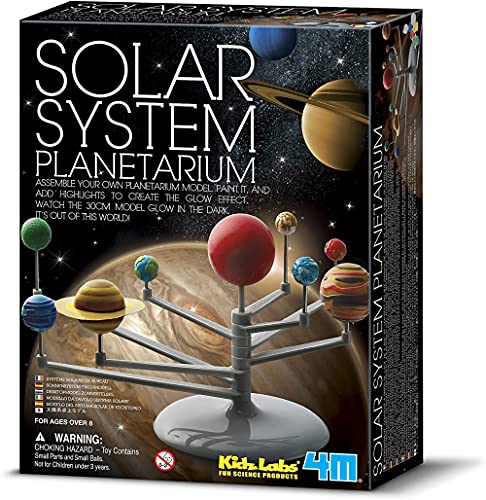
- Combines assembly, painting, and astronomy facts
- Includes a wall chart and 10 quiz sets
- Glow paint and hanging components need no batteries
Best For: Ages 8 and up who enjoy model building with review activities
Best Large Craft Supply Set
Wookidel 64-Piece Solar System Kit

- Provides foam pieces, stars, sticks, flags, paints, and brushes
- Designed for coloring and hands-on assembly
- Works for home, classroom, and family activities
Best For: Ages 6–12 and group homeschool science projects
Interactive Learning Pick
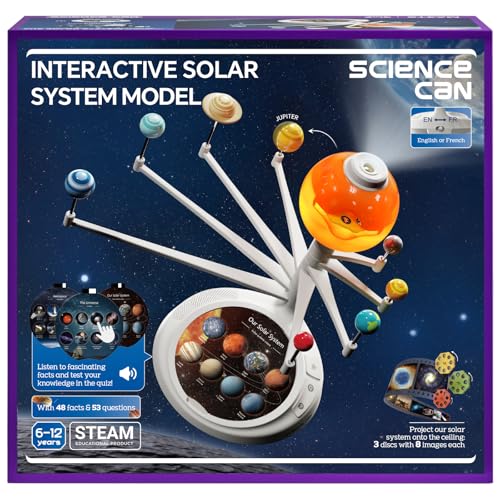
- 48 facts and 53 quiz questions
- Projects 24 colorful space images
- English and French learning modes
Best For: Interactive astronomy lessons for children ages 6–12
Creative Project Pick
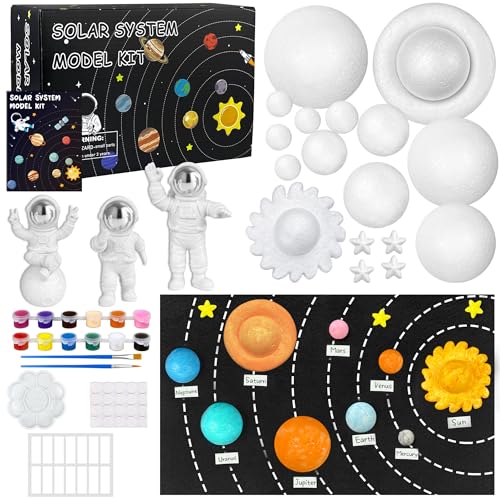
- 35-piece painting and assembly kit
- Includes pigments, brushes, and instructions
- Finished model can hang on a wall
Best For: Art-focused homeschool astronomy projects for ages 8–10
Build-and-Explore Pick

- Assemble and rotate the planet model
- Explores orbits, day, and night
- Designed for ages 8–14
Best For: Construction-based STEM astronomy lessons
Hands-On Pick
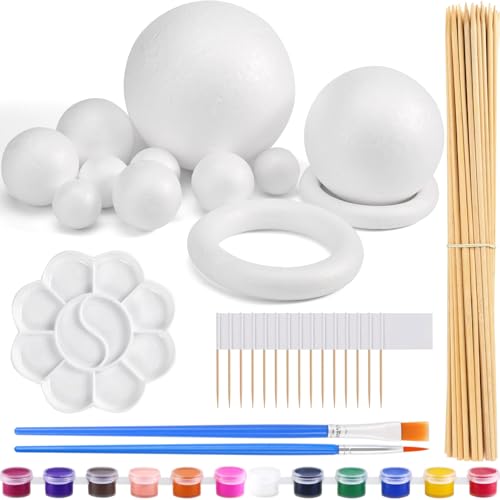
- Includes 10 foam ball sizes for visual scale comparisons.
- Provides paints, brushes, sticks, rings, and labeling flags.
- A glue-free craft project for science lessons and displays.
Best For: Younger homeschool learners who enjoy building and painting
Orbit Demonstration Pick

- Shows Earth and Moon orbital relationships through movement.
- Supports lessons on seasons, eclipses, and moon phases.
- Includes a seasonal plate and measures about 38 × 20 × 28 cm.
Best For: Interactive Earth science and astronomy lessons
Elementary Science Fair Pick

- Combines a wood model, puzzle, fact cards, paint, and brushes.
- Designed for children ages eight to twelve.
- Can be completed in about one to two hours and displayed.
Best For: Structured elementary homeschool projects and science fairs
Best Glow-and-Build Pick – National Geographic Solar System Model
For homeschoolers seeking solar system models for homeschool, this National Geographic kit combines hands-on construction, painting, and astronomy learning. Children build and customize all eight planets and the sun, then arrange them on movable arms for display.
Best For: Kids ages 8 and up who want a glowing, movable model with room-decor appeal.
Pros:
- Includes planets, paints, brush, palette, decals, and a fact-filled poster.
- Movable arms allow the planet positions to be adjusted.
- Glow-in-the-dark details make the finished model engaging after dark.
Cons:
- Recommended for ages 8 and up, so it may not suit younger learners.
- The model is intended as a display project rather than a detailed scale representation.
This is a strong all-in-one choice when you want an attractive, interactive project that supports creativity, construction skills, and introductory astronomy.
Best Wall-Display Project – Pllieay Felt Solar System Kit
This Pllieay kit is a practical option among solar system models for homeschool, especially when learners need a project that can be displayed without taking up desk space. Children paint foam pieces, label the planets, and arrange them on a felt background.
Best For: Homeschool families, classrooms, and compact spaces that need a wall-mountable science project.
Pros:
- Includes a felt background plate, foam hemispheres, stars, paints, brushes, hooks, and instructions.
- Wall-hanging design helps conserve display space.
- Supports hands-on practice with planet names, orbital positions, coordination, and color recognition.
Cons:
- The foam-and-felt construction is more craft-oriented than a rigid display model.
- Recommended for children over 8, which limits use with younger students.
Choose this kit when the goal is an accessible, collaborative project that doubles as a classroom or homeschool wall decoration.
Best Planetarium-Style Kit – 4M Solar System Planetarium
The 4M Solar System Planetarium adds a quiz and wall-chart component to the typical build-and-paint activity, making it a well-rounded choice among solar system models for homeschool. Students assemble the planets, use stencils and glow paint, and review included astronomy facts.
Best For: Learners ages 8 and up who enjoy combining model building with quizzes and visual reference material.
Pros:
- Includes planets, stencils, rods, string, glow paint, and assembly instructions.
- Fact-filled wall chart and 10 sets of Kidz Quiz questions extend the activity.
- Requires no batteries and is designed to teach through assembly and painting.
Cons:
- Pluto is not included.
- Recommended for ages 8 and up, so it may require adult support for younger children.
This kit stands out for homeschool lessons that benefit from built-in review materials rather than a model-only activity.
Best Large Craft Supply Set – Wookidel 64-Piece Solar System Kit
For families comparing solar system models for homeschool, the Wookidel kit offers a broad collection of foam pieces and painting supplies for a customizable project. Children can color and assemble planets while using the included instructions to connect the craft activity with basic astronomy lessons.
Best For: Ages 6–12 and group activities that need plentiful foam pieces, paints, and craft components.
Pros:
- Includes a foam disc, sun, mixed foam balls, stars, bamboo sticks, flags, 12 paints, brushes, and palette.
- Smooth polystyrene foam is designed to be easy to color.
- Supports hand-eye coordination, focus, artistic skills, and introductory science learning.
Cons:
- The foam construction is primarily a craft project, not a durable mechanical model.
- The supplied notes list both a youth description and a recommended range of 6–12, so buyers should confirm age suitability for their learner.
This is a useful pick when flexibility and a substantial set of craft materials matter more than movable parts or glow-in-the-dark features.
Interactive Learning Pick – Talking Solar System Model
For homeschoolers seeking solar system models for homeschool lessons, this interactive option combines talking knowledge cards, quizzes, and planetarium-style projection. It offers bilingual English and French learning modes and is designed for children roughly ages 6–12.
Best For: Families wanting an engaging, multimedia introduction to astronomy with minimal setup.
Pros:
- Includes three knowledge cards with 48 space facts and 53 quiz questions.
- Projects 24 full-color space images using three included disks.
- Supports English and French and demonstrates sunlight effects on planets.
- Requires no assembly.
Cons:
- Requires three AA batteries, which are not included.
- The interactive features may be more suitable for younger learners than advanced astronomy study.
This is a strong choice when visual and audio interaction can make a homeschool space unit more memorable. Its quiz and projection features add variety beyond a static model.
Creative Project Pick – Foam Ball Solar System Kit
This foam-ball kit is a hands-on option for families comparing solar system models for homeschool projects. Children paint and assemble the planets while using the included instructions to explore orbital positions and create a wall display.
Best For: Homeschool science projects that combine art, construction, and a finished display.
Pros:
- Includes 35 pieces, including foam balls, stars, pigments, brushes, and an instruction manual.
- Encourages hands-on practice with color discrimination and hand-eye coordination.
- Completed model can be hung on a wall to save space.
- Suitable for children recommended from age 8.
Cons:
- Requires painting and assembly, so it is less ready-to-use than an interactive model.
- The foam construction may be less durable than a rigid display model.
- Best suited to a project session rather than repeated interactive play.
Choose this kit if the learning value comes from making the model together. Its included art supplies and wall-mounting components support both a science assignment and a decorative homeschool display.
Build-and-Explore Pick – Gear-Driven Planet Model
For hands-on solar system models for homeschool learning, this DIY kit lets children assemble a gear-driven model and rotate the planets. The construction process connects basic astronomy concepts with building, creativity, and mechanical exploration.
Best For: Children ages 8–14 who learn well through building and moving demonstrations.
Pros:
- Children assemble a rotating solar system model themselves.
- Supports lessons about planets, orbits, day, night, and solar system structure.
- Combines construction, creativity, and STEM learning.
- Uses eco-friendly, child-safe materials and comes in gift-ready packaging.
Cons:
- Assembly is required, so it may need adult guidance depending on the child.
- It focuses on building and rotation rather than included quizzes or projected visuals.
- The supplied notes do not indicate included astronomy fact cards or detailed lesson materials.
This model is a practical fit for a homeschool unit centered on learning by doing. Its rotating mechanism gives children a tangible way to discuss planetary movement while completing a construction project.
Hands-On Pick – Foam Ball Solar System Kit
For families comparing solar system models for homeschool, this foam ball kit offers a creative, hands-on way to build and paint a planetary display. Its assortment of ball sizes, paints, sticks, and identification flags supports visual learning while keeping the project flexible for science lessons or crafts.
Best For: Younger homeschool learners and families seeking an open-ended solar system craft project.
Pros:
- Includes multiple foam ball sizes to show relative planetary scale.
- Comes with 12 paint colors, brushes, a palette, bamboo sticks, and flags.
- No glue is required for assembly, according to the product notes.
- Can be used for science projects, decoration, and creative activities.
Cons:
- The model requires painting and assembly before it can be displayed.
- The included components are craft materials rather than a prebuilt teaching model.
This is a practical choice when the learning value comes from making the model together. The different sizes and labeling flags can help introduce planetary order and scale, while the painting process adds an engaging art component.
Orbit Demonstration Pick – Sun Earth Moon Orbital Model
Among solar system models for homeschool, this orbital model is designed for demonstrating movement and relationships rather than simply displaying planets. Its rotating Sun-Earth-Moon setup can help learners explore seasons, moon phases, and solar and lunar eclipses through physical interaction.
Best For: Homeschool lessons focused on Earth science, orbital motion, seasons, and eclipses for children over age six.
Pros:
- Demonstrates Earth orbiting the Sun and the Moon orbiting Earth.
- Supports explanations of seasons, solar eclipses, lunar eclipses, and moon phases.
- Includes a seasonal plate with season names, dates, and traditional Chinese calendar terms.
- Offers a relatively large assembled size of approximately 38 × 20 × 28 cm.
Cons:
- Assembly involves screws, gears, a lever, and alignment steps.
- It focuses on the Sun, Earth, and Moon rather than representing all planets.
- The instructions require careful setup for accurate demonstrations.
This model is best treated as a working teaching aid for guided instruction. It can make abstract orbital concepts more concrete, though its assembly and alignment process may call for adult assistance.
Elementary Science Fair Pick – Nine Planets DIY Model
For homeschool families seeking solar system models for homeschool students ages eight and up, this kit combines model building, painting, a puzzle, and fact cards. It is structured as a one- to two-hour project that can become a classroom display, bedroom decoration, or science fair presentation.
Best For: Elementary learners ages eight to twelve who want a guided project with built-in facts and a display-ready result.
Pros:
- Includes a wood model, puzzle, fact cards, paint, and brushes.
- Covers the nine named planets listed in the product notes, along with the Sun.
- Designed for children ages eight and up.
- Provides a defined project estimated to take approximately one to two hours.
Cons:
- The kit requires building and painting before completion.
- Its included educational information is presented as fact cards rather than a full curriculum.
- The product is aimed at older children than many simple craft kits.
This option suits homeschoolers who want a more structured activity than loose foam balls and paint. The puzzle and fact cards add learning prompts, while the finished wood model can support a science fair or ongoing space-themed display.
How We Picked the Best Solar System Models for Homeschool
We focused on models that support active learning rather than simple decoration. The selection includes build-and-paint kits, rotating and gear-driven systems, interactive teaching models, and project sets with materials for classroom-style activities. We also considered age guidance, included components, construction demands, display value, and how easily each product can fit into a homeschool lesson.
Because these products serve different purposes, there is no single best choice for every family. Some are better for a guided science project, while others are more useful as reusable visual aids or room displays.
Quick Comparison
| Best For | Model Type | What to Look For |
|---|---|---|
| Independent projects | DIY build kits | Clear instructions, age-appropriate parts, and complete supplies |
| Visual demonstrations | Rotating or gear-driven models | Moving planets and sturdy construction |
| Creative lessons | Foam-ball painting kits | Paints, brushes, labels, and enough spheres for the intended activity |
| Younger learners | Interactive models | Simple controls, spoken information, and accessible explanations |
| Bedroom or classroom display | Glow-in-the-dark planetariums | Visible planet details and a manageable footprint |
Key Buying Factors for Solar System Models for Homeschool
Age and Supervision
Check the recommended age before buying. Small sticks, paint, toothpicks, and lightweight foam pieces may require adult supervision, especially for younger children. Older students may benefit from models with more assembly steps or mechanical features.
Learning Objective
Choose a paintable kit for lessons about planet identification, colors, and sequencing. For orbital demonstrations, a rotating or gear-driven model is usually more useful. Interactive talking designs can support review and independent practice, but verify that the information and language match your curriculum.
Completeness and Durability
Review the parts list carefully. Some kits include paints, brushes, stands, labels, and backgrounds, while others require glue, batteries, or extra tools. Foam models are lightweight and easy to customize, but wood or sturdier plastic components may hold up better for repeated demonstrations.
Scale and Accuracy
Most home models are not to scale; they simplify planet size and distance so the system can fit on a desk. Look for clear labels and reliable educational content, and explain the limitations of the model during lessons.
Who Should Buy Which Solar System Models for Homeschool?
Families wanting a memorable project should choose a complete DIY kit with paints and instructions. For frequent astronomy demonstrations, a rotating or gear-driven model offers more ongoing value. Younger children may prefer an interactive talking model with guided information, while creative learners can get more from foam-ball sets that allow painting and labeling.
If display appeal matters, consider a glow-in-the-dark planetarium or a finished wooden model. For group lessons, prioritize larger pieces, clear visual labels, and enough supplies for multiple students. Whichever option you choose, pair the model with a simple lesson on planetary order, orbit, scale, and the difference between planets, moons, and other space objects.