The best weather stations make it easier to understand conditions around your home, from temperature and humidity to wind, rainfall, and barometric pressure. The right model can replace guesswork with useful local data.
We compared 10 popular weather stations across accuracy, display quality, connectivity, sensor coverage, and everyday usability to help you find the best fit for home monitoring, gardening, storm awareness, or smart-home routines.
Best 10 Weather Stations Picks for 2026
Best Smart Home Weather Station
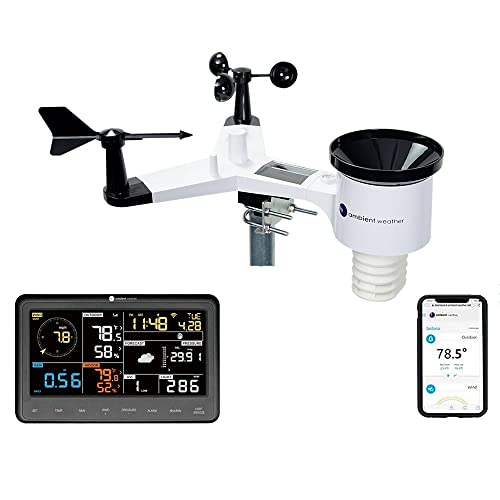
- Wi-Fi monitoring and customizable alerts
- Tracks wind, rain, UV, and solar radiation
- Works with Alexa, Google Home, and IFTTT
Best For: Connected homes and detailed backyard monitoring
Best All-Around Weather Station
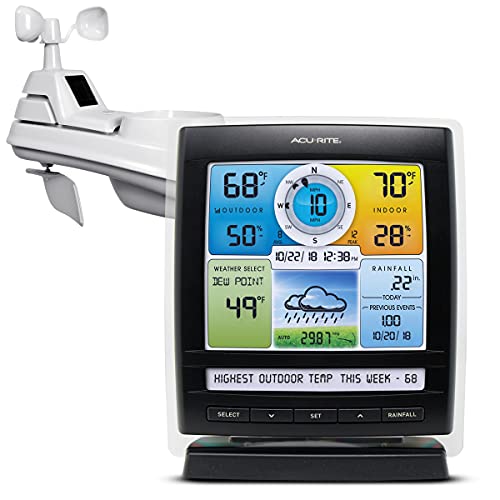
- Reports more than 55 weather data points
- Includes heat index, dew point, and trends
- Large color display with adjustable brightness
Best For: Detailed at-home indoor and outdoor readings
Best Wi-Fi Weather Station Value
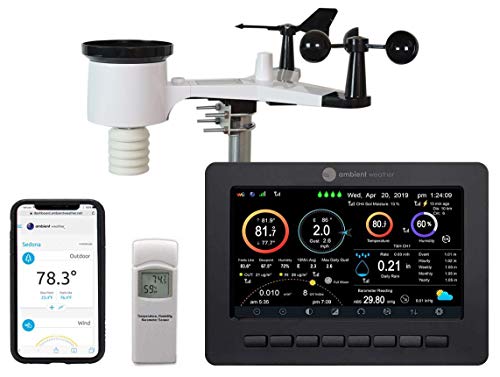
- All-in-one sensor array for broad measurements
- Supports imperial and metric units
- Optional Wi-Fi monitoring and network sharing
Best For: Gardens and backyards needing flexible outdoor data
Best Simple Home Weather Station

- Displays indoor and outdoor temperature and humidity
- Customizable temperature and humidity alerts
- Adds clock, forecast, dew point, and heat index
Best For: Everyday household comfort monitoring
Best Smart-Home Weather Station
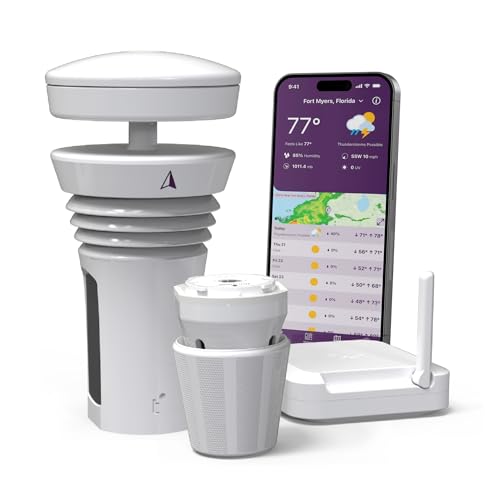
- Tracks temperature, wind, rain, UV, and lightning
- Solar-powered sensor updates every three seconds
- Integrates with Alexa, Rachio, and IFTTT
Best For: Smart-home users and detailed backyard monitoring
Best Full-Color Display Weather Station
La Crosse Advanced Weather Station

- Full-color LCD shows indoor and outdoor conditions
- Includes humidity, alerts, and MIN/MAX records
- Atomic time and adjustable backlight add convenience
Best For: Everyday home monitoring with an easy-to-read console
Best Budget-Friendly Indoor/Outdoor Weather Station
Newentor Wireless Weather Station

- Large color display includes temperature and humidity
- Supports up to three remote sensors
- Combines weather data with atomic clock features
Best For: Everyday home, office, and multi-room monitoring
Best All-Around Coverage

- 6.5-inch adjustable-backlight color display
- Tracks rainfall, wind, pressure, temperature, and humidity
- Wireless setup for gardens, farms, and larger properties
Best For: Comprehensive home, garden, and farm monitoring
Best Sensor Precision
Sainlogic 12-in-1 Wireless Weather Station

- Swiss sensor with ±0.2°C temperature accuracy
- Wireless range up to 443 feet in open conditions
- Tracks 12 weather and comfort data points
Best For: Accurate no-Wi-Fi monitoring across larger properties
Best for Alerts and Forecasting
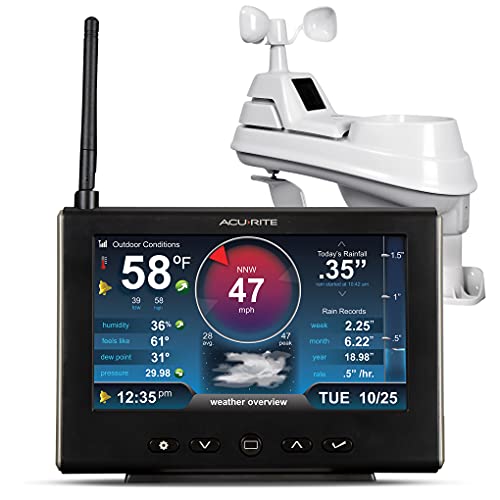
- Personalized 12-hour forecast from barometric conditions
- Custom alerts for temperature, wind, rain, and storms
- Displays 25-plus weather and comfort data points
Best For: Alert-focused home weather monitoring and forecasting
Best Smart Home Weather Station – Ambient Weather WS-2902
The Ambient Weather WS-2902 is a versatile choice for shoppers comparing weather stations with Wi-Fi access and smart-home integrations. Its sensor array tracks wind, temperature, humidity, rainfall, UV intensity, and solar radiation, while the color LCD console provides an at-home overview.
Best For: Homeowners who want hyper-local weather data, remote monitoring, alerts, and compatibility with Alexa, Google Home, and IFTTT.
Pros:
- Measures a broad range of outdoor conditions, including rainfall, wind, UV, and solar radiation.
- Supports Wi-Fi remote monitoring, alerts, and optional network sharing.
- Includes a solar-powered sensor array and easy-to-read color LCD display.
Cons:
- The temperature operating range starts at 14°F.
- Requires three AAA batteries in addition to the solar-powered sensor setup.
- Smart-home and network features require additional configuration.
Choose this model if connectivity and detailed backyard data matter more than a basic clock-and-temperature display. It is particularly useful for users who want to incorporate weather readings into home routines.
Best All-Around Weather Station – AcuRite Iris Color Screen
The AcuRite Iris is a practical pick among weather stations for households that want broad readings without a complicated setup. Its wireless sensor reports temperature, humidity, wind, pressure, and rainfall, while the color display adds historical data, comfort readings, and a 12-hour forecast.
Best For: Families and home users who want comprehensive indoor and outdoor information on a large, adjustable color screen.
Pros:
- Provides more than 55 data points, including heat index, dew point, and pressure trends.
- Wireless sensor measures outdoor temperature, humidity, wind, barometric pressure, and rainfall.
- Includes an adjustable-brightness display with time and date functions.
- Designed for straightforward installation with a mounting bracket included.
Cons:
- Its lower temperature rating is 32°F.
- The system uses several AA batteries, with 10 listed as required.
- Connectivity is radio frequency rather than Wi-Fi remote monitoring.
The Iris balances detailed reporting with accessible controls and a large display. It is a strong fit when you want a feature-rich indoor console but do not need app-based access.
Best Wi-Fi Weather Station Value – Ambient Weather WS-2000
The Ambient Weather WS-2000 is a capable option for shoppers comparing weather stations with a color console and optional Wi-Fi connectivity. Its all-in-one sensor array monitors wind, temperature, humidity, rainfall, UV, and solar radiation, with support for imperial or metric units.
Best For: Garden and backyard users who want broad outdoor measurements, unit flexibility, and optional remote weather-data sharing.
Pros:
- Measures wind speed and direction, temperature, humidity, rain, UV, and solar radiation.
- Supports both imperial and metric units with calibration options.
- Offers Wi-Fi connectivity for remote monitoring and personal weather network sharing.
- Uses a high-definition TFT color display.
Cons:
- The three AAA batteries for the sensor array are not included.
- The console requires a 5V DC adapter.
- Its listed temperature accuracy is ±2°F.
This model makes sense for users who want a broad set of outdoor measurements without giving up the option of Wi-Fi access. It is especially practical for gardens and backyards where rainfall and solar readings are useful.
Best Simple Home Weather Station – La Crosse C85845-INT
The La Crosse C85845-INT is a straightforward choice among weather stations for monitoring everyday indoor and outdoor comfort. It displays temperature, humidity, dew point, heat index, time, and forecast information, with customizable high and low alerts and adjustable brightness.
Best For: Households that want an easy-to-read display for temperature, humidity, comfort levels, time, and basic forecast information.
Pros:
- Shows indoor and wireless outdoor temperature and humidity.
- Provides customizable high and low alerts for temperature and humidity.
- Includes dew point, heat index, comfort charts, and daily high/low records.
- Features an atomic clock, adjustable brightness, and multiple time-zone settings.
Cons:
- The console is primarily AC powered, with batteries serving as optional backup.
- The outdoor sensor requires two AA batteries, which are not included.
- Forecast icons require 7–10 days for barometric calibration.
This La Crosse station is best when readability and household comfort information are the priorities. It offers useful alerts and clock features without the added complexity of Wi-Fi-connected weather systems.
Best Smart-Home Weather Station – Tempest Weather Station
For shoppers seeking advanced weather stations, the Tempest combines a solar-powered outdoor sensor with app-based monitoring and detailed hyper-local readings. It tracks temperature, humidity, pressure, wind, rainfall, UV, solar radiation, dew point, and lightning, with updates every three seconds.
Best For: Homeowners and gardeners who want comprehensive backyard data and smart-home automation.
Pros:
- Measures a broad range of weather conditions, including lightning and rainfall.
- Solar-powered, wireless sensor transmits from more than 1,000 feet.
- No moving parts and near-zero-maintenance design.
- Works with Alexa, Rachio, IFTTT, and other smart-home platforms.
Cons:
- No dedicated on-device display; readings are accessed through connected devices.
- Its advanced feature set may be more than casual users need.
The Tempest is a strong choice when detailed data, low maintenance, and automation matter more than a traditional desktop screen. Its solar power and wide sensor coverage make it particularly practical for ongoing outdoor monitoring.
Best Full-Color Display Weather Station – La Crosse Advanced Weather Station
This La Crosse Technology model is one of the more approachable weather stations for a home office, kitchen, or bedroom. Its full-color LCD shows indoor and outdoor temperature, humidity, forecasts, trends, and minimum/maximum records, while the included sensor transmits from up to 330 feet without obstructions.
Best For: Households that want an easy-to-read indoor display with basic outdoor monitoring and alerts.
Pros:
- Full-color forecast icons and tendency indicators are easy to read.
- Displays indoor/outdoor temperature, humidity, and MIN/MAX records.
- Atomic clock automatically sets the time and calendar.
- Adjustable backlight and customizable temperature alerts.
Cons:
- The backlight is temporary when running on batteries alone.
- Outdoor transmission range depends on having no obstructions.
- It monitors fewer weather variables than more advanced stations.
Choose this station if a visible, colorful console is more important than extensive environmental data. The atomic timekeeping, humidity readings, alerts, and optional AC adapter make it a convenient everyday household display.
Best Budget-Friendly Indoor/Outdoor Weather Station – Newentor Wireless Weather Station
The Newentor wireless station is a practical option among weather stations for tracking basic conditions at a glance. Its large color LCD displays indoor/outdoor temperature and humidity along with forecasts, pressure, moon phase, time, and date, and its three-channel design can support up to three remote sensors.
Best For: Homes, offices, and other spaces needing a visible temperature, humidity, and clock display.
Pros:
- Large color screen shows temperature, humidity, pressure, and forecast information.
- Supports up to three wireless remote sensors.
- Includes atomic time, dual alarms, and snooze functionality.
- AC power enables an always-on display, while batteries provide backup viewing.
Cons:
- Only one remote sensor is included.
- Battery-only operation dims the screen after a 15-second glance.
- Its operating range is listed from 14°F to 122°F.
The Newentor makes sense for shoppers who want a multifunctional display without focusing on specialized measurements such as wind or rainfall. Its expandable sensor support and clock features add flexibility for everyday indoor and outdoor use.
Best All-Around Coverage – 12-in-1 Home Weather Station
For shoppers comparing weather stations for a garden, farm, or home, this 12-in-1 model combines broad monitoring with an easy-to-read 6.5-inch color display. It tracks temperature, humidity, rainfall, wind, pressure, and several comfort readings without requiring complicated installation.
Best For: Homeowners, gardeners, and farmers who want comprehensive local weather data and dependable wireless monitoring across larger outdoor areas.
Pros:
- Displays temperature, humidity, barometric pressure, wind, rainfall, dew point, feels-like temperature, moon phase, and calendar information.
- Rain gauge records hourly, daily, weekly, monthly, and cumulative rainfall, with stated accuracy of ±1 mm under 15 mm and ±7% across the broader range.
- 6.5-inch HD color LCD has an adjustable backlight for bright and dim environments.
- Wireless sensor is designed for straightforward mounting and stable transmission across orchards, farms, and pastures.
Cons:
- The supplied details do not specify a wireless transmission distance.
- The display and outdoor sensor require battery power, according to the listed power details.
This is a versatile choice when you want many measurements in one indoor display, especially for rainfall tracking and broad-property monitoring. Its large screen and DIY setup make it practical for everyday use.
Best Sensor Precision – Sainlogic 12-in-1 Wireless Weather Station
This Sainlogic weather station is a strong option for buyers who want detailed readings without Wi-Fi. Its Swiss sensor, large color display, rainfall history, and long stated wireless range make it suitable for monitoring a home or expansive outdoor area.
Best For: Users prioritizing temperature and humidity accuracy, long-range wireless transmission, and detailed rainfall records without cloud connectivity.
Pros:
- Swiss sensor provides stated temperature accuracy of ±0.2°C and humidity accuracy of ±1.8% RH.
- Monitors 12 data categories, including temperature, humidity, pressure, wind, rainfall, dew point, feels-like temperature, moon phase, and an alarm clock.
- Wireless transmission is rated up to 443 feet in open, unobstructed conditions.
- Three-level adjustable backlight helps keep the 6.5-inch display readable in different lighting.
Cons:
- It does not support Wi-Fi, so the system is limited to its included wireless display connection.
- The stated 443-foot range applies to open, unobstructed conditions and may vary with obstacles.
Choose this model if measurement precision and range matter more than app-based access. It offers a well-rounded set of readings, simple automatic synchronization, and useful rainfall history for home, garden, or farm use.
Best for Alerts and Forecasting – AcuRite Iris Weather Station
The AcuRite Iris is a practical pick among weather stations for shoppers who want personalized forecasting and customizable alerts. Along with indoor and outdoor readings, it provides rainfall history, threshold notifications, and a 12-hour forecast based on local barometric conditions.
Best For: Home users who want weather alerts, hyperlocal forecasting, and a display that also functions as a clock and alarm.
Pros:
- Measures indoor and outdoor temperature and humidity, wind speed and direction, barometric pressure, and rainfall.
- Provides a personalized 12-hour forecast using current barometric conditions.
- Customizable alerts cover temperature, humidity, wind speed, rainfall, and storm conditions.
- Displays more than 25 data points, including feels-like temperature, heat index, frost point, dew point, moon phase, and rainfall history.
Cons:
- Its listed temperature accuracy is ±1°C, lower than the stated accuracy of some competing models here.
- The optional lightning sensor is sold separately.
- The system uses a corded-electric display and requires four AA batteries for the sensor, based on the supplied details.
This model stands out for its alert system and forecast features rather than maximum sensor precision. It is especially useful when you want timely notifications about changing conditions and a polished indoor information display.
How We Picked These Weather Stations
We focused on Weather Stations that provide a practical mix of outdoor measurements, readable indoor displays, dependable wireless sensors, and useful forecast information. Models were evaluated by the range of data they track, including temperature, humidity, wind, rain, barometric pressure, dew point, and heat index.
We also considered how each station fits different households. Wi-Fi models and app-enabled systems are better for remote monitoring and smart-home integration, while display-based units can be simpler and more convenient for everyday use. Setup requirements, alert options, sensor placement, and overall value were also important factors.
Quick Comparison
| Best For | Look For | Typical Advantage |
|---|---|---|
| All-around home monitoring | Multiple sensors and a clear color display | Balanced performance for everyday use |
| Smart-home users | Wi-Fi, mobile apps, or Alexa support | Remote access and automated alerts |
| Gardeners and outdoor enthusiasts | Rainfall, wind, humidity, and dew point | More useful local environmental data |
| Simple indoor/outdoor checks | Wireless sensor and readable screen | Easy installation with fewer complications |
| Budget-conscious shoppers | Core temperature and humidity readings | Lower cost without unnecessary features |
Key Buying Factors for Weather Stations
Measurements and Sensor Coverage
Decide which readings matter most before buying. Temperature and humidity are standard, but wind speed, wind direction, rainfall, pressure, dew point, and UV data can be valuable for gardening, weather observation, and outdoor planning. A rain gauge or anemometer may require more careful mounting than a basic thermometer sensor.
Connectivity and Alerts
Wi-Fi-enabled Weather Stations can send information to an app, support remote viewing, and sometimes connect with voice assistants. Non-Wi-Fi models are often easier to configure and may be preferable if you mainly want a dedicated screen. Check whether alerts can be customized for high wind, freezing temperatures, heat, or heavy rain.
Display, Range, and Installation
A large, high-contrast screen is useful from across a room, while compact displays work well on desks or counters. Confirm the advertised wireless range suits your property, especially if the outdoor sensor will be mounted far from the console. Place sensors away from walls, vents, roofs, sprinklers, and direct obstructions for more representative readings.
Who Should Buy Which Weather Stations?
Choose a connected Ambient Weather or Tempest system if you want app access, smart-home features, or weather data while away from home. AcuRite and La Crosse models are strong choices for shoppers who prefer a dedicated color display with broad household monitoring features. Consider Sainlogic or another 12-in-1 station when maximum measurement coverage matters more than Wi-Fi. For straightforward temperature and humidity checks, a simpler Newentor-style setup may be all you need.
Before ordering, verify power requirements, sensor count, mounting hardware, app compatibility, and whether the included forecast features rely on internet access. The best choice is the station that delivers the readings you will actually use in a format you can check quickly.