The right eyepiece can make the difference between a soft, frustrating planetary view and a crisp look at lunar craters, Jupiter’s cloud bands, or Saturn’s rings. This roundup compares 10 options across several focal lengths, designs, and budgets.
Before choosing, match the eyepiece to your telescope’s focal length, aperture, and mount. Higher magnification is not always better; steady skies and sharp optics matter just as much.
Best 10 Telescope Eyepieces for Planetary Viewing Picks for 2026
Balanced Planetary Pick

- 60° field of view
- Six-element fully multi-coated optics
- Pop-up eyeguard and filter-ready barrel
Best For: Comfortable, versatile planetary observing
Wide-Field Value

- High-power 6mm focal length
- Wide 68° apparent field
- 17mm eye relief for glasses wearers
Best For: Comfortable high-magnification planetary views
High-Power Specialist
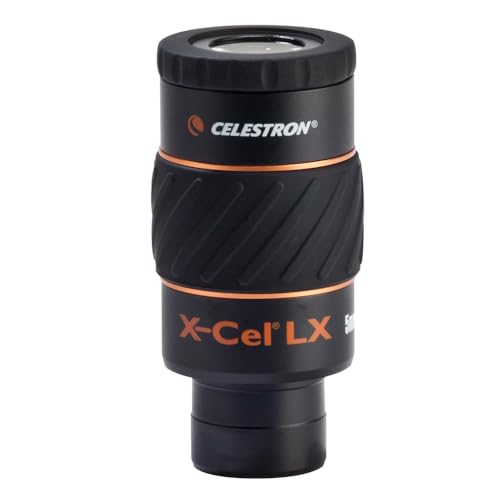
- High-power 5mm focal length
- 60° field of view
- Six-element fully multi-coated optics
Best For: Close planetary and lunar observation
Budget Detail Option
Astromania 4mm Planetary Eyepiece

- High-power 4mm focal length
- 58° apparent field of view
- 16mm eye relief with foldable eyecup
Best For: Detailed lunar and planetary observation on a budget
Balanced Planetary Detail

- 60° field of view
- Six-element fully multi-coated optics
- Adjustable eyeguard and filter-ready barrel
Best For: Dedicated lunar and planetary viewing
Flexible Magnification
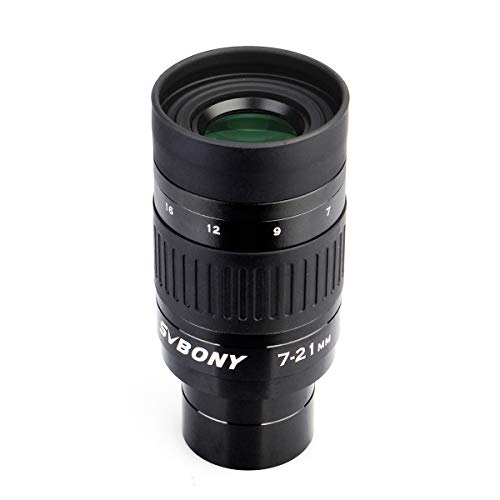
- Adjustable 7–21mm focal length
- 40°–57° field of view
- Comfortable eye relief for eyeglass wearers
Best For: One-eyepiece magnification flexibility
High-Power Value

- Dedicated 4mm high-power focal length
- Four-element Plössl design
- Rubber eyecup and filter-ready barrel
Best For: Budget-focused high-power planetary viewing
Best All-in-One Kit
1.25-Inch Eyepiece Set with Barlow

- Three fixed focal lengths plus a 5x Barlow
- Includes moon and polarizing filters
- Soft eyecups and multi-coated optics
Best For: Beginners wanting a flexible planetary and lunar viewing kit
Best Zoom Option
Celestron 8-24mm Zoom Eyepiece

- Smoothly adjusts from 8mm to 24mm
- Fully multi-coated optical surfaces
- Accepts standard 1.25-inch filters
Best For: Observers who want convenient, adjustable magnification
Best Extreme Power
Celestron X-Cel LX 2.3mm Eyepiece

- 2.3mm focal length for extreme planetary power
- 60-degree field with six-element optics
- Twist-up eyeguard and filter-threaded barrel
Best For: Experienced observers with telescopes suited to very high magnification
Balanced Planetary Pick – Celestron X-Cel LX 9mm
The Celestron X-Cel LX 9mm is a versatile choice for telescope eyepieces for planetary viewing, combining moderate magnification with a 60° field of view. Its six-element, fully multi-coated design is intended to support bright, detailed views while making targets easier to keep centered.
Best For: Observers who want a comfortable, general-purpose planetary eyepiece with a wider viewing area.
Pros:
- 60° field of view helps with target acquisition and tracking.
- Six-element, fully multi-coated optics are designed for improved light transmission.
- Pop-up eyeguard and textured grip support comfortable handling.
- Threaded 1.25-inch barrel accepts filters.
Cons:
- Its 9mm focal length may provide less magnification than shorter focal-length options.
- Limited to telescopes that accept 1.25-inch eyepieces.
With its practical focal length, comfortable eyeguard, and included two-year US warranty, the X-Cel LX 9mm is a well-rounded option for regular lunar and planetary sessions.
Wide-Field Value – SVBONY 6mm 68° Eyepiece
The SVBONY 6mm is a strong value-oriented choice among telescope eyepieces for planetary viewing, offering high magnification and a 68° apparent field of view. Its long eye relief and fully multi-coated optics make it practical for extended observations of the Moon and planets.
Best For: Beginners and glasses wearers who want high magnification with a wide, comfortable view.
Pros:
- 6mm focal length is suited to detailed views of lunar craters and planetary features.
- 68° field of view makes moving targets easier to track.
- 17mm eye relief accommodates observers who wear glasses.
- Fully multi-coated lenses and a blackened interior help reduce internal reflections.
Cons:
- High magnification can be more sensitive to atmospheric conditions and telescope stability.
- Compatibility is limited to 1.25-inch telescope accessories.
The folding eyecup, rubber grip, dust covers, and all-metal construction add useful handling benefits, while the one-year warranty provides basic accessory coverage.
High-Power Specialist – Celestron X-Cel LX 5mm
The Celestron X-Cel LX 5mm is designed for high-power observing and belongs on the shortlist of telescope eyepieces for planetary viewing when maximum detail is the priority. Its 60° field of view and six-element fully multi-coated system help make high-magnification viewing easier to manage.
Best For: Experienced observers seeking a short-focal-length eyepiece for close planetary and lunar views.
Pros:
- 5mm focal length provides higher magnification than the 9mm X-Cel LX.
- 60° field of view helps keep objects centered during observation.
- Fully multi-coated six-element optical design is intended to support contrast and transmission.
- Pop-up eyeguard and no-slip rubber grip improve handling.
Cons:
- High magnification may be less forgiving in poor atmospheric conditions.
- Requires a telescope with a 1.25-inch focuser or diagonal.
The 5mm X-Cel LX is a focused upgrade for planetary detail, with filter compatibility and Celestron’s two-year US warranty adding useful long-term value.
Budget Detail Option – Astromania 4mm Planetary Eyepiece
The Astromania 4mm is a compact high-power option for telescope eyepieces for planetary viewing, with a 58° field of view and 16mm eye relief. Its five-element, fully multi-coated optical design and reflection-suppression treatments are aimed at sharp, high-contrast lunar and planetary views.
Best For: Beginners and experienced observers wanting a dedicated 1.25-inch eyepiece for detailed planetary viewing.
Pros:
- 4mm focal length is designed for high-magnification planetary observation.
- 58° wide-angle view provides a useful balance of detail and framing.
- 16mm eye relief and foldable eyecup support comfortable viewing.
- Blackened lens edges and internal treatments help suppress stray reflections.
Cons:
- High magnification may require steady tracking and favorable observing conditions.
- Only compatible with telescopes using a 1.25-inch focuser.
- It has no image stabilization.
With its adjustable eyecup, filter thread, lightweight aluminum body, and compatibility with refractor, reflector, and catadioptric telescopes, this is a practical dedicated planetary accessory.
Balanced Planetary Detail – Celestron X-Cel LX 7mm
For observers comparing telescope eyepieces for planetary viewing, the Celestron X-Cel LX 7mm combines a planetary-focused focal length with a 60° field of view. Its six-element, fully multi-coated design and adjustable rubber eyeguard support comfortable, high-contrast viewing.
Best For: Lunar and planetary observers who want a dedicated 7mm eyepiece with a wider viewing field and comfortable handling.
Pros:
- 60° field of view from a six-element, fully multi-coated lens system
- Pop-up eyeguard can be raised or lowered by twisting
- Rubber grip provides a secure hold, including while wearing gloves
- Threaded 1.25-inch barrel accepts filters
Cons:
- Fixed 7mm focal length offers no zoom flexibility
- Designed for 1.25-inch telescope focusers
The X-Cel LX 7mm is a focused choice for users who already know they want a medium-high-power eyepiece for lunar and planetary work. Its eyeguard, grip, filter compatibility, and two-year US warranty add practical value.
Flexible Magnification – SVBONY SV135 7–21mm Zoom
The SVBONY SV135 is a versatile option among telescope eyepieces for planetary viewing, offering a 7–21mm adjustable focal length in one 1.25-inch eyepiece. Its six-element, four-group fully multi-coated design supports lunar, planetary, and broader astronomical observation.
Best For: Beginners and observers who want to adjust magnification without carrying several fixed-focal-length eyepieces.
Pros:
- 7–21mm zoom range covers multiple magnification levels
- 40°–57° field of view changes across the zoom range
- 18mm–16.3mm eye relief is comfortable, including for eyeglass wearers
- Standard 1.25-inch barrel fits compatible telescope focusers
Cons:
- Variable field of view narrows toward the shorter focal lengths
- Manual zoom and focus operation require adjustment during use
- Its 230g weight may be more noticeable than a lightweight fixed eyepiece
The SV135 prioritizes convenience and flexibility over a single specialized focal length. It is particularly practical for users experimenting with magnification for planets, the Moon, clusters, and nebulae.
High-Power Value – Celestron Omni 4mm Plössl
For telescope eyepieces for planetary viewing on a budget, the Celestron Omni 4mm provides a dedicated high-power focal length with a four-element Plössl optical design. Rubber eyecups, blackened lens edges, and a filter-threaded 1.25-inch barrel add useful viewing features.
Best For: Budget-conscious observers seeking a fixed 4mm eyepiece for high-power lunar and planetary detail.
Pros:
- Short 4mm focal length is suited to high-power observing
- Four-element Plössl design keeps the optical configuration straightforward
- Rubber eyecup can be folded down for eyeglass use
- Blackened lens edges help prevent internal reflections; barrel accepts filters
Cons:
- Fixed 4mm focal length offers less flexibility than a zoom eyepiece
- High power may be demanding for some telescope and viewing conditions
- Uses a 1.25-inch barrel
The Omni 4mm is a practical value pick when high magnification is the priority. Its simple Plössl design, eyecup, reflection-control features, and two-year US warranty make it a straightforward addition to a compatible 1.25-inch setup.
Best All-in-One Kit – 1.25-Inch Eyepiece Set with Barlow
For shoppers comparing telescope eyepieces for planetary viewing, this kit offers several fixed focal lengths, a 5x Barlow lens, and filters in one package. Its 4mm, 10mm, and 20mm eyepieces provide flexibility, while the multi-coated optical glass is designed for clear, color-accurate views.
Best For: Beginners and observers who want a versatile planetary and lunar viewing kit with accessories included.
Pros:
- Includes 4mm, 10mm, and 20mm eyepieces plus a 5x Barlow lens.
- Comes with two moon filters and two polarizing filters for glare control and contrast.
- Soft eyecups, multi-coated optics, and compatibility with reflector and refractor telescopes.
Cons:
- The included 5x Barlow can produce very high magnification, depending on the telescope.
- A multi-piece kit may be less convenient than a single zoom eyepiece.
This is a practical starter set for anyone who wants to experiment with different magnifications and filter options without buying each accessory separately.
Best Zoom Option – Celestron 8-24mm Zoom Eyepiece
This Celestron zoom is a convenient choice among telescope eyepieces for planetary viewing because it covers focal lengths from 8mm to 24mm in one unit. The twist-zoom design lets you adjust magnification while observing, making it easier to fine-tune the view as conditions change.
Best For: Stargazers who prioritize convenience and want one eyepiece to cover multiple magnification levels.
Pros:
- Variable 8-24mm focal length reduces the need to swap fixed eyepieces.
- Fully multi-coated optics are designed to improve brightness, color, and contrast.
- Fits standard 1.25-inch telescope holders and accepts 1.25-inch filters.
Cons:
- It may not provide the same dedicated very-high-power option as a short fixed focal-length eyepiece.
- Its 55-degree field of view is specified as a single rating across the zoom range.
The broad focal-length range makes this a strong general-purpose option, especially for observers who would rather adjust magnification smoothly than carry several eyepieces.
Best Extreme Power – Celestron X-Cel LX 2.3mm Eyepiece
Designed specifically for high-power observing, this 2.3mm X-Cel LX is a focused choice for telescope eyepieces for planetary viewing. Its six-element, fully multi-coated optical system and 60-degree field of view are paired with a twist-up rubber eyeguard for more comfortable, higher-contrast observation.
Best For: Experienced observers seeking extreme planetary magnification from a telescope that can support it.
Pros:
- Very short 2.3mm focal length is optimized for extreme planetary power.
- Six-element fully multi-coated design and a 60-degree field of view.
- Pop-up eyeguard, textured rubber grip, and filter-threaded 1.25-inch barrel.
Cons:
- The extreme magnification may be unsuitable for some telescopes or seeing conditions.
- Its specialized 2.3mm focal length offers less versatility than a zoom or multi-eyepiece set.
This eyepiece is best treated as a specialized planetary tool rather than an all-purpose option; its value depends on whether your telescope and observing conditions can handle very high power.
How We Picked the Best Telescope Eyepieces for Planetary Viewing
We focused on eyepieces suited to high-resolution lunar and planetary observation, prioritizing useful focal lengths, optical design, apparent field of view, eye comfort, and compatibility with common 1.25-inch focusers. The selection includes fixed focal-length models for targeted magnification, zoom eyepieces for flexible observing, and sets for buyers who want several viewing options at once.
Because performance depends on the complete setup, we also considered how easily each type can be paired with different telescopes and observing conditions. Features such as fully multi-coated optics, wide fields, adjustable eye relief, and included accessories can improve usability, but they do not replace adequate aperture or stable atmospheric conditions.
Quick Comparison
| Eyepiece type | Best for | Main advantage | Potential trade-off |
|---|---|---|---|
| Fixed 9mm–7mm | General planetary viewing | Balanced magnification and versatility | May not reach maximum useful power |
| Fixed 6mm–4mm | Detailed views in steady skies | Higher magnification | More sensitive to seeing and tracking |
| 2.3mm | Specialized high-power use | Extreme magnification potential | Only suitable for select telescopes and conditions |
| Zoom eyepiece | Convenient, changing targets | Adjustable magnification without swapping eyepieces | Field of view can narrow at longer focal lengths |
| Eyepiece set | Beginners building a kit | Multiple focal lengths and accessories | Individual pieces may be less specialized |
Key Buying Factors for Telescope Eyepieces for Planetary Viewing
Focal Length and Useful Magnification
Calculate magnification by dividing your telescope’s focal length by the eyepiece focal length. Shorter eyepieces provide more power, but atmospheric turbulence often limits practical magnification. A 7mm or 9mm eyepiece is generally more forgiving, while 4mm and shorter options are better reserved for telescopes with suitable focal lengths and nights of steady seeing.
Eye Relief and Viewing Comfort
Longer eye relief is valuable for extended observation and essential for many eyeglass wearers. A comfortable eye position can matter more than a slightly wider field, especially when studying subtle planetary detail.
Apparent Field and Tracking
Wide-angle eyepieces keep a planet in view longer, which is helpful with manual mounts. A narrower field may still perform well, particularly on motorized or computerized mounts, but requires more frequent corrections when tracking by hand.
Barlows, Filters, and Compatibility
Confirm the barrel size before buying; most selections here use the common 1.25-inch format. A quality Barlow can increase magnification from a comfortable eyepiece, while filters may enhance contrast or reduce glare, but accessories should complement—not compensate for—poor alignment or unsuitable magnification.
Who Should Buy Which Telescope Eyepieces for Planetary Viewing?
Choose a 7mm or 9mm model if you want a versatile first planetary eyepiece. Pick a 4mm–6mm option if your telescope has enough aperture and you regularly observe under steady skies. Consider a 2.3mm eyepiece only after checking the telescope’s realistic magnification range. A zoom is the most convenient choice for observers who change targets often or want to fine-tune power without swapping accessories. Beginners assembling a complete kit may get better value from an eyepiece set with a Barlow and filters, provided the included focal lengths suit their telescope.