The best wide-angle telescope eyepieces make it easier to frame expansive star fields, nebulae, lunar landscapes, and deep-sky objects without constantly nudging the telescope. The right choice depends on more than the advertised field of view: focal length, barrel size, optical design, and your telescope’s focal ratio all affect the result.
This roundup covers individual eyepieces and sets in several focal lengths, including 1.25-inch and 2-inch options. Use the guide below to compare specifications and choose a practical combination for your observing style and equipment.
Best 10 Wide Angle Telescope Eyepieces Picks for 2026
Panoramic Deep-Sky Pick
SVBONY SV154 26mm 70° SWA Eyepiece
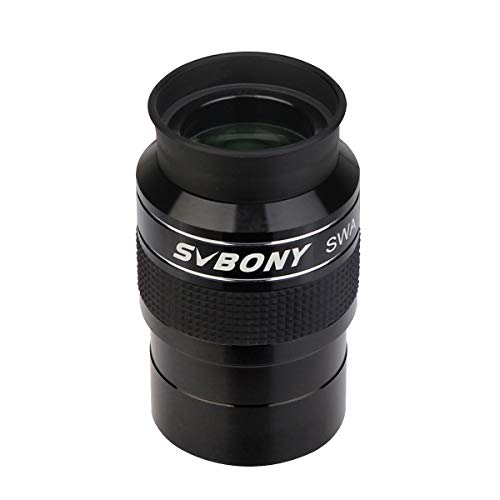
- 70° field of view for expansive sky views
- 26mm focal length suits deep-sky targets
- 2-inch barrel accepts standard filters
Best For: Panoramic deep-sky viewing and celestial object locating
Compact Wide-Field Option
SVBONY 9mm 68° Redline Eyepiece

- 68° apparent field of view
- Fully multi-coated optics
- 1.25-inch barrel with filter thread
Best For: Wide-field, higher-magnification viewing with 1.25-inch telescopes
High-Magnification Planetary Pick
SVBONY 4mm 62° Aspheric Eyepiece

- 4mm focal length for lunar and planetary detail
- 62° field of view
- Lightweight 1.25-inch aspheric design
Best For: High-magnification Moon and planet observations
Everyday Deep-Sky Choice
SVBONY 20mm 68° Redline Eyepiece
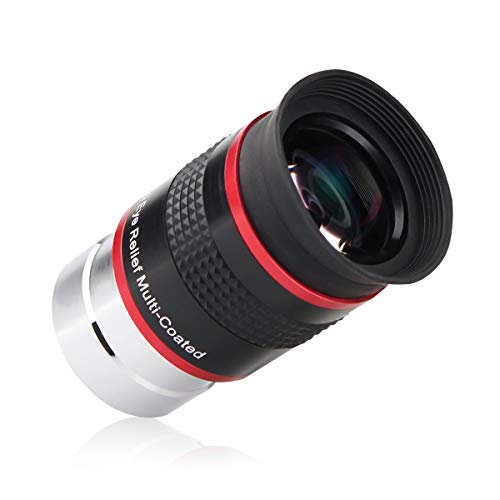
- 68° wide field for star fields and nebulae
- 20mm focal length gives low magnification
- Fold-down eye guard suits eyeglass wearers
Best For: General-purpose deep-sky viewing with 1.25-inch telescopes
Wide-Field Comfort Pick
SVBONY SV154 15mm 70° Eyepiece

- 70° apparent field of view
- 13mm eye relief
- Fully multi-coated five-element optics
Best For: Comfortable wide-field viewing with a single 1.25-inch eyepiece
Versatile Set Value
SVBONY 68° Wide-Angle Eyepiece Set
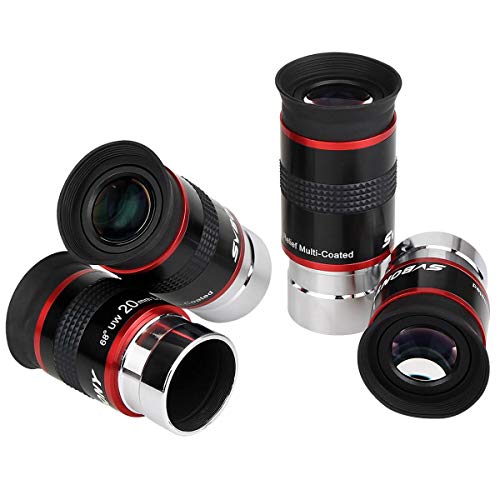
- Includes 6mm, 9mm, 15mm, and 20mm
- 68° apparent field of view
- Fold-down rubber eye guards
Best For: Building a flexible starter eyepiece collection
Deep-Sky Scanning Pick
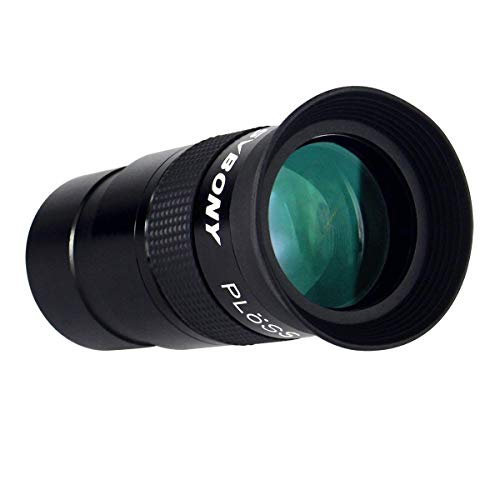
- 40mm low-power focal length
- 40° apparent field of view
- Fold-down rubber eyeguard and filter thread
Best For: Broad visual views of lunar and deep-sky targets
Best Versatility Pick
3-Piece 62° Wide-Angle Eyepiece Set

- Includes 4mm, 10mm, and 23mm focal lengths
- 62° field of view for easier target finding
- 1.25-inch fit with multi-coated aspherical optics
Best For: Flexible lunar, planetary, and deep-sky observing
Best for Planetary Detail
6mm 68° Ultra-Wide-Angle Eyepiece

- 6mm focal length for high-magnification views
- 68° field helps acquire and track targets
- 17mm eye relief suits glasses wearers
Best For: Detailed lunar and planetary observation
Best Comfort Value
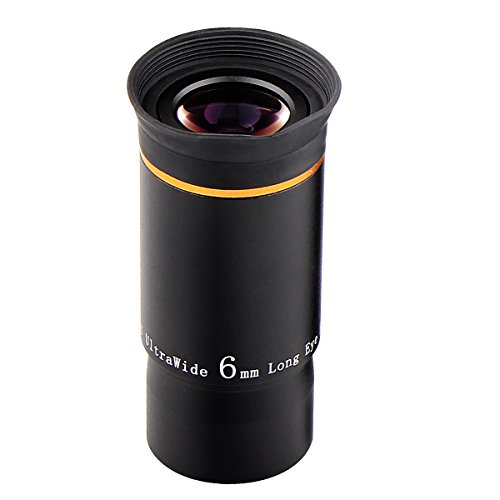
- 66° field of view for easier object locating
- 16mm eye relief supports comfortable viewing
- Fully multi-coated, edge-blackened optics
Best For: Comfortable high-magnification lunar and deep-sky viewing
Panoramic Deep-Sky Pick – SVBONY SV154 26mm 70° SWA Eyepiece
The SVBONY SV154 is a practical choice for anyone comparing wide angle telescope eyepieces for expansive views. Its 26mm focal length and 70-degree field of view suit star fields, nebulae, clusters, and general sky navigation, while the 2-inch format supports standard 2-inch filters.
Best For: Panoramic deep-sky viewing, locating celestial objects, and observers who prefer a comfortable rubber eye cup.
Pros:
- Wide 70-degree field of view for star fields and large celestial targets
- 26mm focal length offers moderate magnification for varied observing
- Fully multi-coated, five-element optical design supports contrast and light transmission
- Foldable eye cup and 2-inch filter thread add practical flexibility
Cons:
- Its 2-inch format is not suited to telescopes with only a 1.25-inch focuser
- The supplied notes caution against reflector telescope use
Choose this model when your priority is a broad, immersive view rather than high magnification. Confirm your telescope’s mount size and specifications before ordering.
Compact Wide-Field Option – SVBONY 9mm 68° Redline Eyepiece
This 9mm Redline is a useful pick among wide angle telescope eyepieces when you want a 1.25-inch accessory with a broad 68-degree view. Its shorter focal length is suited to higher-magnification observing, while fully multi-coated optics and an internally blackened barrel are designed to support contrast.
Best For: Observers with a 1.25-inch telescope who want a wide apparent view in a compact, higher-magnification eyepiece.
Pros:
- 68-degree ultra-wide field of view expands the scope’s viewing area
- Fully multi-coated lens supports contrast and resolution
- Internally blackened aluminum barrel helps reduce light scattering
- Standard 1.25-inch filter thread adds accessory compatibility
Cons:
- 9mm focal length provides a narrower observing use case than longer focal lengths
- Compatible with 1.25-inch systems, not 2-inch focusers without additional equipment
This is a sensible choice for a compact wide-field eyepiece in a standard 1.25-inch setup. Match the 9mm focal length to your telescope and intended magnification before buying.
High-Magnification Planetary Pick – SVBONY 4mm 62° Aspheric Eyepiece
The SVBONY 4mm aspheric eyepiece targets detailed lunar and planetary observations while retaining a 62-degree field of view. For shoppers seeking wide angle telescope eyepieces in a lightweight 1.25-inch format, it combines fully coated optics with a short focal length for high magnification.
Best For: Close views of the Moon and planets, along with observers seeking a lightweight 1.25-inch eyepiece for detailed targets.
Pros:
- 4mm focal length supports high-magnification lunar and planetary viewing
- 62-degree field of view provides a broad view for a short focal length
- Fully coated optics are designed for light transmission and image contrast
- Lightweight aspheric design weighs about 0.09 pounds
Cons:
- High magnification can be less versatile than longer focal lengths
- Requires a telescope with a standard 1.25-inch focuser
Consider this model when detailed planetary observing matters more than general-purpose viewing. Its 4mm focal length should be matched carefully to your telescope’s capabilities and observing conditions.
Everyday Deep-Sky Choice – SVBONY 20mm 68° Redline Eyepiece
The SVBONY 20mm Redline is a versatile entry in the wide angle telescope eyepieces category, offering a 68-degree field of view with low magnification. Its 1.25-inch format is convenient for standard telescope setups, while the fold-down eye guard can help accommodate eyeglass wearers.
Best For: Locating celestial objects and viewing larger nebulae, star clusters, and broad deep-sky scenes with a 1.25-inch telescope.
Pros:
- 68-degree field of view is useful for star fields and larger deep-sky targets
- 20mm focal length provides low magnification for expansive observing
- Fully multi-coated optics are designed for contrast and resolution
- Fold-down soft rubber eye guard supports eyeglass-friendly viewing
Cons:
- Limited to telescopes and accessories using a 1.25-inch mount
- Low magnification is less suited to close planetary detail
This is a strong all-around option for wide views and easy object finding. Select it if your telescope accepts 1.25-inch eyepieces and your priorities are deep-sky targets rather than maximum magnification.
Wide-Field Comfort Pick – SVBONY SV154 15mm 70° Eyepiece
If you want wide angle telescope eyepieces for immersive lunar, planetary, and general sky viewing, the SVBONY SV154 offers a 70-degree apparent field of view in a standard 1.25-inch barrel. Its 15mm focal length and 13mm eye relief make it a practical single-eyepiece upgrade for comfortable observing.
Best For: Observers who want a wide, comfortable view from a single 1.25-inch eyepiece.
Pros:
- 70-degree apparent field of view creates an expansive viewing experience.
- Five-element, four-group design with fully multi-coated optics is intended to provide sharp, high-contrast views.
- 13mm eye relief, metallic twist-up eyecup, and a safety undercut support comfortable handling.
- Blackened lens edges and anti-reflection threading help reduce stray light.
Cons:
- Only one 15mm focal length is included, so additional eyepieces may be needed for different magnifications.
- Its 1.25-inch mount limits compatibility to telescopes and accessories accepting that size.
The SV154 is a well-rounded choice when a broad field and viewing comfort matter more than building a complete eyepiece set. Its multi-element optics and practical eye relief make it especially appealing for extended visual sessions.
Versatile Set Value – SVBONY 68° Wide-Angle Eyepiece Set
For shoppers comparing wide angle telescope eyepieces as a flexible starter collection, this SVBONY set covers 6mm, 9mm, 15mm, and 20mm focal lengths. Each 1.25-inch eyepiece provides a 68-degree apparent field of view, giving you multiple magnification options for different targets.
Best For: Beginners and observers who want several focal lengths in one 1.25-inch set.
Pros:
- Four focal lengths provide more observing flexibility than a single eyepiece.
- 68-degree apparent field of view supports broad-field observations.
- Fully multi-coated lenses and multi-element construction are designed for sharp images, contrast, and color correction.
- Fold-down rubber eye guards can help block stray light and accommodate eyeglass wearers.
Cons:
- The 6mm, 9mm, 15mm, and 20mm range may not cover every preferred magnification.
- All eyepieces use a fixed 1.25-inch mount, so they are not intended for larger focusers without an adapter.
This set is the most flexible option of the three for building an observing kit quickly. The range of focal lengths makes it easier to switch between viewing priorities without purchasing several eyepieces separately.
Deep-Sky Scanning Pick – SVBONY 40mm Plössl Eyepiece
The SVBONY 40mm Plössl is a straightforward choice among wide angle telescope eyepieces for low-power observing. Its 40mm focal length and 40-degree apparent field of view are suited to broad lunar views, medium-sized star clusters, cloudy nebulae, and other deep-sky targets.
Best For: Low-power scans of the Moon, star clusters, nebulae, and broad deep-sky targets.
Pros:
- 40mm focal length provides a broad, low-power viewing perspective.
- Four-element, fully multi-coated optics are designed for achromatic, higher-contrast views.
- Standard 1.25-inch barrel fits telescopes and accessories using that diameter.
- Fold-down rubber eyeguard supports eyeglass wearers and helps block stray light.
Cons:
- Its 40-degree apparent field of view is narrower than the 68- and 70-degree options in this roundup.
- A single 40mm focal length is less versatile than a multi-eyepiece set.
- It is designed for visual observation rather than interchangeable-lens photography.
Choose this Plössl when your priority is a simple, low-power eyepiece for sweeping the sky. The durable metal housing, included case, and filter thread add useful practicality for regular visual observing.
Best Versatility Pick – 3-Piece 62° Wide-Angle Eyepiece Set
For shoppers comparing wide angle telescope eyepieces, this SVBONY set offers three focal lengths—4mm, 10mm, and 23mm—instead of limiting you to one viewing style. Its 62° apparent field of view, fully multi-coated optics, and aspherical lenses are designed to support both bright-object detail and broader deep-sky viewing.
Best For: Beginners and observers who want a flexible eyepiece selection for the Moon, planets, star clusters, and nebulae.
Pros:
- Three focal lengths cover different magnification needs.
- 62° wide-angle view helps with object location and surrounding star fields.
- Aspherical, fully multi-coated optics are designed to improve clarity, light transmission, and contrast.
- Compatible with telescopes using a standard 1.25-inch focuser and supports telescope filters.
Cons:
- Requires checking telescope compatibility, focal length, and magnification limits before purchase.
- The 4mm focal length is intended for high magnification and may be more demanding to use.
This is the most adaptable option of the three, particularly if you are building a starter eyepiece collection. The range is useful, but choosing the right focal length for your telescope remains important.
Best for Planetary Detail – 6mm 68° Ultra-Wide-Angle Eyepiece
This 6mm model is a focused choice among wide angle telescope eyepieces, pairing high magnification with a 68° field of view. Its long 17mm eye relief, fully multi-coated optics, and metal construction make it suited to detailed lunar and planetary observations.
Best For: Observers seeking close views of lunar craters and the rings of Saturn or Jupiter, including glasses wearers.
Pros:
- 68° wide-angle design helps with target acquisition and tracking.
- 6mm focal length is suited to high-magnification planetary viewing.
- 17mm eye relief offers more comfortable viewing for people wearing glasses.
- Fully multi-coated optics and a blackened interior are designed to improve brightness and reduce internal reflection.
Cons:
- Its single 6mm focal length provides less versatility than a multi-eyepiece set.
- High magnification depends on the telescope and observing conditions.
- Compatibility is limited to 1.25-inch telescope accessories and focusers.
Choose this eyepiece when planetary detail and comfortable eye positioning matter more than covering multiple magnification ranges. The broad field can also make manual tracking less demanding.
Best Comfort Value – 6mm Gold Line 66° Eyepiece
This 6mm Gold Line model is a practical option for wide angle telescope eyepieces when you want high magnification with a moderately broad 66° view. Fully multi-coated optics, edge-blackened internals, and 16mm eye relief support comfortable, higher-contrast viewing of planets and larger deep-sky targets.
Best For: Observers who want a comfortable 6mm eyepiece for the Moon, Jupiter, Saturn, nebulae, and star clusters.
Pros:
- 66° field of view helps locate objects and frame larger targets.
- 6mm focal length supports detailed views of lunar and planetary features.
- 16mm eye relief is designed for comfortable viewing, including with glasses.
- Fully multi-coated and edge-blackened optics are intended to improve transmission and reduce stray light.
Cons:
- Only one 6mm focal length is included.
- High magnification may not suit every telescope or atmospheric condition.
- Designed for 1.25-inch telescope accessories, so larger-format focusers will need checking.
This model sits between the other two in apparent field of view and emphasizes viewing comfort. It is a sensible single-eyepiece upgrade for users who already have lower-power options.
How We Picked the Best Wide Angle Telescope Eyepieces
We selected these models based on advertised apparent field of view, focal-length coverage, barrel compatibility, optical design, and usefulness across common observing situations. The list includes 62°, 66°, 68°, and 70° options, along with single eyepieces and multi-piece sets. Because performance also depends on the telescope, mount, and observer expectations, treat specifications as a starting point rather than a guarantee of identical edge sharpness.
We also included several focal lengths so beginners can build a practical range: longer focal lengths for wide, low-power views; medium focal lengths for general deep-sky observing; and shorter focal lengths for the Moon, planets, and compact targets.
Quick Comparison
- Widest listed field: The 70° SWA models offer the broadest advertised apparent view in this selection.
- Most flexible approach: Multi-eyepiece sets provide several magnifications at once, though individual pieces may offer more targeted value.
- Compact, high-power choices: The 4mm and 6mm models suit telescopes with enough focal length and steady atmospheric conditions.
- Low-power viewing: The 20mm, 23mm, and 40mm options are better suited to larger star fields and brighter extended objects.
Key Buying Factors for Wide-Angle Telescope Eyepieces
Apparent Field of View
A wider apparent field can make viewing feel more immersive and gives an object more time to drift across the field in an undriven telescope. However, a larger number does not automatically mean sharper edges. Look for reviews and return policies if edge performance is important.
Focal Length and Magnification
Magnification equals your telescope’s focal length divided by the eyepiece focal length. Shorter eyepieces produce higher magnification but can be harder to use and more affected by atmospheric turbulence. A sensible collection usually includes low, medium, and high powers rather than several similar short focal lengths.
Barrel Size and Compatibility
Confirm whether your focuser or diagonal accepts a 1.25-inch or 2-inch barrel. A 2-inch eyepiece can support a wider true field at longer focal lengths, but it may be heavier and require more clearance. Also check whether your telescope can illuminate the eyepiece’s field without noticeable vignetting.
Eye Relief, Coatings, and Optical Design
Eye relief matters especially for glasses wearers. Fully coated optics are common, while more complex designs may improve comfort or apparent width at added cost and weight. Check the stated eye-relief distance and consider the eyepiece’s size before pairing it with a small or lightweight mount.
Who Should Buy Which Wide Angle Telescope Eyepieces?
Beginners: A set covering roughly 4mm to 23mm can provide variety, but verify that the shortest focal length is usable with your telescope.
Deep-sky observers: Consider a 20mm, 23mm, or 40mm option for open clusters, nebulae, and broad star fields, subject to your telescope’s barrel size and maximum useful field.
Lunar and planetary viewers: A 4mm, 6mm, or 9mm eyepiece may work well when seeing is steady. Choose based on calculated magnification rather than focal length alone.
Observers using undriven mounts: A 68° or 70° design can reduce how often you reposition the telescope. Prioritize comfortable eye relief and manageable weight if you observe for long sessions.