Choosing among oscilloscopes for hobbyists can be tricky because the “best” scope depends on what you build, fix, or learn. A simple pocket model may be enough for audio and low-speed projects, while more advanced bench scopes make debugging microcontrollers, analog circuits, and embedded systems much easier.
This roundup focuses on practical options with a range of budgets, feature sets, and form factors, so you can quickly narrow down the best fit for your workspace and skill level.
Best 10 Oscilloscopes for Hobbyists Picks for 2026
Bench-Ready Four-Channel Scope
Siglent SDS1104X-E 100MHz 4-Channel
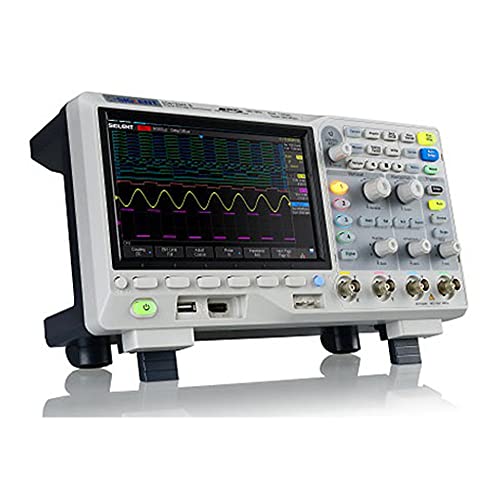
- 4 channels for broader signal viewing
- Built-in decode for Iic, Spi, Uart/Rs232, Can, and Lin
- Includes 4 passive probes and USB cable
Best For: Hobbyists who want a capable bench scope with serial decoding
Portable 3-in-1 Multitool
FNIRSI 2C53T Handheld 2CH Scope

- Combines scope, multimeter, and signal generator
- 50 MHz bandwidth with 250 MSa/s sampling
- Battery-powered handheld design with Type-C charging
Best For: Hobbyists who want a portable all-in-one tester
High-Bandwidth 2-Channel Choice
Siglent SDS1202X-E 200MHz 2-Channel
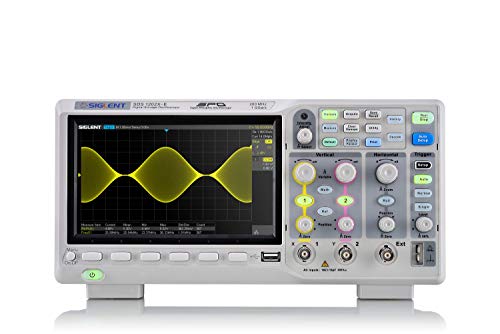
- 200 MHz bandwidth for faster signals
- Up to 1 GSa/s real-time sampling
- Decode support for Iic, Spi, Uart, Rs232, Can, and Lin
Best For: Hobbyists who need more bandwidth and serial decode support
Large-Screen Touch Scope
FNIRSI 1013D Plus 7-Inch Touch Scope

- 7-inch touchscreen with gesture control
- 2 channels, 1 GSa/s sampling, 100 MHz x 2 bandwidth
- Waveform storage plus FFT and Lissajous viewing
Best For: Hobbyists who want a portable touchscreen scope with easy analysis
Bench-Style Performance Pick
RIGOL DS1102Z-E 100MHz Oscilloscope

- 100 MHz, 2-channel scope with up to 1 GSa/s sampling
- 24 Mpts deep memory and high waveform capture rate
- Includes serial decode for RS232/UART, I2C, and SPI
Best For: Hobbyists who want a bench scope for deeper captures and embedded debugging
Touchscreen Feature-Rich Pick
FNIRSI 2C53P 50MHz Oscilloscope

- 50 MHz 2-channel handheld scope with 250 MS/s sampling
- 4.3-inch IPS touchscreen plus FFT and X-Y mode
- Also works as a 19,999-count multimeter and signal generator
Best For: Hobbyists wanting a portable all-in-one scope with stronger analysis features
High-Feature Handheld Pick
DSO2512G 2-Channel Mini Oscilloscope

- 120MHz bandwidth and 500MS/s sampling
- Built-in signal generator with multiple waveforms
- 14 measurements plus cursor tools
Best For: Hobbyists wanting a portable, feature-rich oscilloscope
Simple Pocket Starter
FNIRSI DSO152 Handheld Oscilloscope

- 2.5MS/s sampling with 200kHz bandwidth
- One-key AUTO and full trigger modes
- Ready-to-use, portable handheld design
Best For: Beginners and hobbyists who want a simple pocket scope
DIY Learning Kit Choice
DSO 138 Pocket Oscilloscope Kit

- Assembled pocket scope with 1MSPS sampling
- HOLD, edge trigger, and waveform storage
- Open-source-friendly STM32F103C8 platform
Best For: Makers and learners who enjoy DIY-friendly tools
Bench-Ready Four-Channel Scope – Siglent SDS1104X-E 100MHz 4-Channel
Siglent Technologies SDS1104X-E 100Mhz Digital Oscilloscope 4 Channels Standard Decoder, Grey
Check Price On AmazonIf you’re comparing oscilloscopes for hobbyists who want a more capable bench tool, the Siglent SDS1104X-E stands out for its 4-channel layout and built-in serial decode support. It gives you room to probe more signals at once, and the included passive probes and USB cable make it easy to get started.
Best For: Hobbyists who want a feature-rich 4-channel oscilloscope with decoding for common serial buses.
Pros:
- 4 channels for monitoring more signals at once
- Standard decoder support for Iic, Spi, Uart/Rs232, Can, and Lin
- Includes 4 passive probes, quick start guide, calibration certificate, and USB cable
- Compact bench-style design at 12.2 x 5.12 x 5.91 inches
Cons:
- More scope than a basic starter model if you only need simple single-circuit checks
- MSO digital channels and USB AWG are listed as options, not standard features
For hobby electronics work that benefits from multi-channel visibility and protocol decoding, this is a strong step-up choice. It suits users who want a serious bench oscilloscope without moving into a full test-lab setup.
Portable 3-in-1 Multitool – FNIRSI 2C53T Handheld 2CH Scope
For oscilloscopes for hobbyists who need a compact all-in-one tester, the FNIRSI 2C53T combines a 2-channel oscilloscope, multimeter, and DDS signal generator in one handheld unit. Its battery power, Type-C charging, and save/export features make it practical for quick troubleshooting away from the bench.
Best For: Hobbyists who want a portable handheld oscilloscope with multimeter and signal generator functions.
Pros:
- 3-in-1 design with oscilloscope, 4.5-digit multimeter, and signal generator
- 50 MHz bandwidth and 250 MSa/s sampling rate
- Built-in 3000 mAh battery with up to 6 hours standby time
- Waveform storage and export via Type-C to PC
Cons:
- 2-channel scope limits simultaneous signal viewing compared with 4-channel models
- 1 Kpts record depth is modest for more advanced capture needs
This is a convenient choice if you value portability and flexibility over deep bench-grade capability. It fits hobby repairs, classroom use, and general electronic testing where one handheld tool is easier to carry than three separate devices.
High-Bandwidth 2-Channel Choice – Siglent SDS1202X-E 200MHz 2-Channel
If you want oscilloscopes for hobbyists that can handle faster signals, the Siglent SDS1202X-E offers a 200 MHz bandwidth with 2 channels and up to 1 GSa/s real-time sampling. It also includes serial bus triggering and decode support, which is useful when you’re debugging modern hobby projects.
Best For: Hobbyists who need more bandwidth for faster signals and want serial decode support.
Pros:
- 200 MHz bandwidth for higher-speed work
- Up to 1 GSa/s real-time sampling rate
- Record length up to 14 Mpts
- Supports Iic, Spi, Uart, Rs232, Can, and Lin decoding
Cons:
- Only 2 channels, so it is less flexible than 4-channel alternatives
- No included probe/accessory list is provided in the supplied notes
This model makes sense if bandwidth matters more to you than channel count. For hobbyists working on faster circuits or digital buses, it offers a practical balance of speed, memory depth, and decode features.
Large-Screen Touch Scope – FNIRSI 1013D Plus 7-Inch Touch Scope
Among oscilloscopes for hobbyists, the FNIRSI 1013D Plus leans into portability and ease of use with a 7-inch touchscreen, 2 channels, and a 100 MHz by 2 bandwidth rating. It also adds waveform image management, Lissajous display, and FFT viewing, making it a handy pick for visual signal analysis on the go.
Best For: Hobbyists who want a large touchscreen portable scope with easy waveform viewing and analysis features.
Pros:
- 7-inch 800 x 480 touchscreen with capacitive and gesture control
- 2 channels with 1 GSa/s sampling and 100 MHz x 2 bandwidth
- Built-in 6000 mAh battery for about 4 hours of use
- Waveform image manager with storage for screenshots and waveform data
Cons:
- Only 2 channels, so it is less versatile than a 4-channel bench scope
- Battery runtime is useful but not especially long for all-day sessions
This scope is a solid fit if you want touch-based control and a readable display over traditional bench ergonomics. For hobby work that benefits from quick measurements, captured waveforms, and portable operation, it offers a practical feature set.
Portable 3-in-1 Handheld Pick – FNIRSI 2C23T 10MHz Oscilloscope
If you want oscilloscopes for hobbyists that also reduce the number of tools on your bench, the FNIRSI 2C23T is built around convenience. It combines a 2-channel 10 MHz oscilloscope, a 10,000-count multimeter, and a DDS signal generator in a battery-powered handheld body, making it easy to take from desk to project box to garage.
Best For: Hobbyists who want an all-in-one handheld tool for basic electronics troubleshooting, automotive checks, and quick signal testing.
Pros:
- 2-channel oscilloscope with 10 MHz bandwidth and 50 MSa/s real-time sampling
- Built-in 10,000-count multimeter with voltage, current, resistance, capacitance, diode, and continuity modes
- DDS signal generator outputs seven waveforms up to 2 MHz
- 3000 mAh rechargeable battery and 2.8-inch HD LCD for portable use
Cons:
- 10 MHz bandwidth is better suited to simpler hobby circuits than high-speed work
- Smaller 2.8-inch display is less spacious than a bench scope screen
- Handheld format trades some depth and workspace for portability
For hobbyists who value portability and multi-function utility, this model is a practical starter-to-midrange option. Its built-in protection, save function, and waveform comparison features make it especially useful for everyday diagnostics rather than advanced lab analysis.
Bench-Style Performance Pick – RIGOL DS1102Z-E 100MHz Oscilloscope
Among oscilloscopes for hobbyists, the RIGOL DS1102Z-E stands out if you want more bench-grade performance and visibility. It offers 100 MHz bandwidth, 2 channels, 1 GSa/s sampling, and deep memory, so you can capture longer events and inspect them in more detail on a 7-inch display.
Best For: Hobbyists building a home bench who need deeper captures, clearer glitch hunting, and basic serial-bus troubleshooting.
Pros:
- 100 MHz bandwidth with up to 1 GSa/s real-time sampling
- Deep memory up to 24 Mpts for longer captures
- High waveform capture rate helps reveal intermittent glitches
- Supports RS232/UART, I2C, and SPI trigger/decoding
Cons:
- Bench scope form factor is less portable than handheld units
- More capability than a casual beginner may need for very simple projects
- No built-in multimeter or signal generator listed in the supplied notes
This is the most capable pick here for users who are ready to move beyond entry-level handheld tools. If your projects involve embedded debugging, education, or longer captures where detail matters, the DS1102Z-E gives you a solid feature set without drifting into overly specialized territory.
Touchscreen Feature-Rich Pick – FNIRSI 2C53P 50MHz Oscilloscope
If you’re comparing oscilloscopes for hobbyists and want a balance of bandwidth, portability, and extra analysis tools, the FNIRSI 2C53P is a strong middle-ground choice. It packs a 2-channel 50 MHz oscilloscope, a 19,999-count multimeter, and a DDS signal generator into a handheld unit with a 4.3-inch IPS touch screen.
Best For: Hobbyists who want a portable all-in-one scope with more bandwidth and analysis tools than a basic handheld model.
Pros:
- 50 MHz bandwidth with 250 MS/s sampling for more demanding hobby work
- 4.3-inch IPS touchscreen and one-key AUTO for easier operation
- Includes X-Y mode and FFT spectrum analysis for signal comparison
- Signal generator outputs 12 waveforms up to 10 MHz
Cons:
- About 4 hours of battery life is modest for longer unplugged sessions
- Still a handheld scope, so it won’t match a larger bench display
- Best suited to general hobby and automotive use rather than advanced high-speed analysis
For hobbyists who want more room to grow than an entry-level handheld without jumping straight to a full bench setup, this model is well balanced. The touchscreen, FFT, and X-Y tools make it especially appealing when you want simple operation but still need more than just waveform viewing.
High-Feature Handheld Pick – DSO2512G 2-Channel Mini Oscilloscope
If you want one of the more feature-packed oscilloscopes for hobbyists, the DSO2512G stands out for its 2-channel design, 120MHz bandwidth, and 500MS/s real-time sampling. It’s built for practical troubleshooting, with a handheld form factor, trigger options, waveform saving, and even a built-in signal generator for quick test setups.
Best For: Hobbyists who want a portable oscilloscope with stronger performance, more measurement tools, and an integrated signal source.
Pros:
- 2-channel handheld scope with 120MHz bandwidth and 500MS/s sampling
- Built-in signal generator with multiple waveforms and fine frequency control
- 14 measurement options plus manual cursor measurements
- Built-in 4000mAh battery rated for about 6 hours of use
Cons:
- More advanced feature set may be more than casual beginners need
- Handheld size is compact, but not as minimal as lower-spec pocket scopes
This is the most capable option in the group if you value measurement flexibility and generator support in one unit. For DIY electronics, automotive work, and repair tasks, it offers a strong mix of portability and function.
Simple Pocket Starter – FNIRSI DSO152 Handheld Oscilloscope
The FNIRSI DSO152 is a straightforward handheld choice among oscilloscopes for hobbyists who want something ready to use right away. With a 2.5MS/s sampling rate, 200kHz bandwidth, and one-key AUTO setup, it’s aimed at quick checks on periodic analog or digital signals without a complicated learning curve.
Best For: Beginners, students, and hobbyists who want a compact oscilloscope that is easy to carry and easy to operate.
Pros:
- Ready-to-use handheld design with no assembly required
- One-key AUTO makes waveform viewing faster and simpler
- Supports full trigger modes: Auto, Normal, and Single
- Type-C charging and firmware update support
Cons:
- 200kHz bandwidth is modest compared with higher-spec handheld scopes
- 4-hour battery life is shorter than some alternatives
If you want a compact entry point for basic measurement and learning, this model keeps things simple. It’s best suited to light maintenance, education, and quick signal checks rather than higher-frequency work.
DIY Learning Kit Choice – DSO 138 Pocket Oscilloscope Kit
The DSO 138 is one of the more hands-on oscilloscopes for hobbyists, especially if you want a unit that doubles as a learning project. It comes assembled and usable out of the box, while still offering open-source potential, waveform storage, and the core trigger and display features needed for basic pocket oscilloscope work.
Best For: Makers and learners who want an affordable-style pocket oscilloscope with DIY and development appeal.
Pros:
- Assembled and ready to use, with no soldering required
- Includes HOLD, auto/regular/one-shot modes, and edge trigger options
- Waveform storage and on-screen parameter display
- Open-source-friendly design with an STM32F103C8 MCU
Cons:
- 1MSPS sampling and 1Hz/3.3V test source are basic compared with higher-end handheld scopes
- Best suited to learning and simple signals, not demanding measurement work
This model makes sense if you value tinkering and learning as much as measuring. For hobbyists who want an approachable pocket scope with room for experimentation, it offers a solid entry-level platform.
How We Picked These Oscilloscopes for Hobbyists
We prioritized models that balance real-world usability with value: enough bandwidth for common hobby electronics, clear displays, sensible channel counts, and features that help with troubleshooting rather than just spec-sheet bragging. We also considered portability, probe support, built-in generators or multimeters where useful, and overall suitability for learning and bench work.
Quick Comparison: What Matters Most
For many hobby users, the biggest decision is whether to buy a compact handheld scope, an all-in-one 3-in-1 unit, or a traditional bench oscilloscope. Bench scopes generally offer better displays, more stable controls, and stronger debugging features. Handheld models win on portability and convenience. Combo tools can save space, but they often involve trade-offs in measurement depth or interface polish.
Key Buying Factors for Oscilloscopes for Hobbyists
Bandwidth and Sampling Rate
Bandwidth determines how fast a signal the scope can realistically display, while sampling rate affects how accurately it captures detail. For Arduino, sensor work, audio, and basic repair, lower bandwidth can be fine. For microcontrollers, digital buses, switching power supplies, and faster analog signals, look for a more capable bench model.
Channels
Two channels are enough for many projects, but four channels can be a major advantage when comparing clocks, data lines, or multi-stage circuits. If you troubleshoot embedded systems often, extra channels are usually worth it.
Usability
A scope that is fast to set up and easy to read is often more valuable than one with a long feature list. Good trigger controls, a readable display, and intuitive menus matter a lot for beginners and casual users.
Portability Vs. Performance
Portable oscilloscopes are great for field work, automotive checks, and bench space constraints. If your projects stay at a desk, a bench scope usually provides a better long-term experience.
Who Should Buy Which Oscilloscopes for Hobbyists?
If you want the most capable all-around choice, a bench oscilloscope with at least two channels and solid bandwidth is the safest bet. If you need to diagnose projects on the go, handheld and pocket-style options are more practical. Makers who want a compact toolbox-friendly device may prefer a 3-in-1 model with multimeter and signal generator functions. Beginners on a tighter budget can start with a simpler kit or lower-bandwidth scope, then upgrade as their projects become more demanding.
In short, the best oscilloscope depends less on one universal spec and more on how you plan to use it. Match the tool to your circuits, your workspace, and how often you expect to troubleshoot.