Portable telescopes make it easier to start stargazing without committing to a heavy, complicated setup. Whether you want a grab-and-go scope for trips or a beginner-friendly backyard option, the right choice comes down to portability, optics, and ease of use.
Below, we’ve narrowed the field to 10 strong picks for 2026, with options for kids, adults, smartphone-guided observing, and more serious lunar and planetary viewing.
Best 10 Portable Telescopes Picks for 2026
Travel-Friendly Starter Scope

- 70mm aperture with fully coated glass lenses
- No-tool setup and included backpack
- Two eyepieces plus software and accessories
Best For: Beginners wanting a lightweight travel telescope
High-Mag Portable Refractor

- 90mm aperture with fully multi-coated optics
- 24x–180x magnification with Barlow lens
- Carry case, tripod, and phone adapter included
Best For: Casual observers who want more magnification in a portable kit
Travel Astro Kit with Remote
Gskyer 70mm Portable Telescope

- 70mm aperture with fully coated optics
- Smartphone adapter and wireless remote included
- Adjustable tripod and carry bag for travel
Best For: Families and beginners who want easy transport and phone photos
Ultra-Compact Smart Scope

- Weighs just 1.85 lb for easy packing
- App control with built-in sky atlas
- Auto GOTO, EQ mode, and cloud processing
Best For: Travelers and tech-focused users who want a smart imaging telescope
Quick-Start Refractor Pick

- 80mm aperture with fully multi-coated optics
- Includes eyepieces, Barlow lens, phone adapter, and remote
- No-tool setup with carrying bag and adjustable tripod
Best For: Beginners who want an easy-to-carry starter telescope
App-Guided Deep-Sky Starter
Celestron StarSense Explorer LT 114AZ
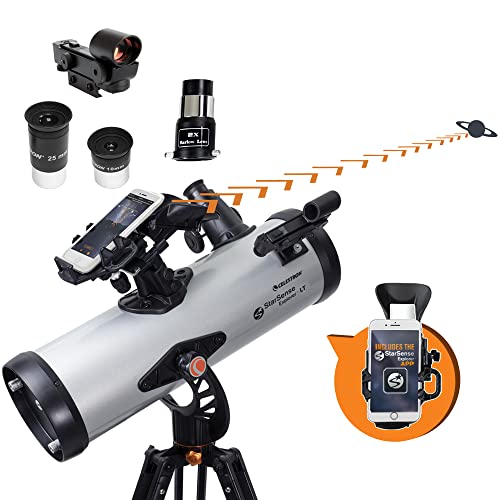
- Uses StarSense app for smartphone-powered sky navigation
- 114mm reflector supports Moon, planets, and brighter deep-sky objects
- Includes preassembled mount, tripod, and two eyepieces
Best For: Beginners who want app guidance and stronger sky-finding support
Travel-Friendly Value Refractor
Celticbird 80mm Portable Telescope

- 80mm aperture with fully coated optics
- Backpack, phone adapter, moon filter, and tripod included
- No-tool setup with 30X and 66X eyepieces
Best For: Travelers and families wanting a compact, beginner-friendly kit
Compact Travel Refractor

- 80mm aperture with fully coated optics
- Includes backpack, tripod, eyepieces, and phone adapter
- Quick tool-free setup for travel or backyard use
Best For: Beginners and families wanting an easy pack-and-go telescope
High-Aperture Portable Refractor

- 90mm aperture and 800mm focal length
- Carries in a bag with a stainless steel tripod
- 32×–240× range with Barlow lens and two eyepieces
Best For: Travel-friendly users who want brighter views and more magnification
Ultra-Portable Starter Scope
Fuoibl 70mm Beginner Telescope
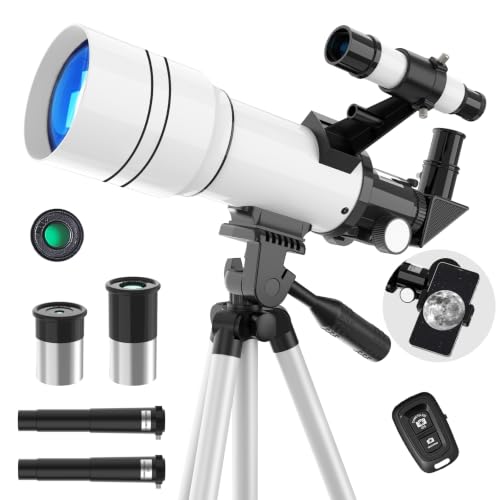
- 70mm aperture with fully multi-coated optics
- Tool-free setup with adjustable tripod
- Phone holder and wireless remote included
Best For: Kids and first-time users wanting an easy, lightweight starter scope
Travel-Friendly Starter Scope – Celestron Travel Scope 70mm
If you want portable telescopes that are easy to pack and simple to use, this 70mm refractor is built for quick trips and first-time stargazing. The fully coated optics, lightweight tube, and included backpack make it practical for Moon viewing, planets, and daytime scenery without a complicated setup.
Best For: Beginners, kids, and adults who want a lightweight grab-and-go telescope for travel and casual observing.
Pros:
- 70mm aperture with fully coated glass lenses for bright, clear views
- No-tool setup with a full-height tripod that packs into the included backpack
- Two eyepieces cover wider and closer views of celestial and terrestrial targets
- Includes finderscope, star diagonal, and Starry Night software
Cons:
- Manual focus and beginner-level design may not suit advanced users
- Lightweight travel setup is less focused on deep-featured astronomy performance
Overall, this is a straightforward choice if portability matters more than power. It gives new users an easy way to start observing without extra tools or bulky parts.
High-Mag Portable Refractor – WOSPORTS 90mm Telescope
Among portable telescopes, this 90mm refractor stands out for users who want more reach without giving up an easy carry case and tripod setup. Its 90mm aperture, 600mm focal length, and included 3x Barlow lens are aimed at sharper lunar detail, plus enough flexibility for birding and landscapes.
Best For: First-time buyers and casual observers who want a brighter, higher-magnification portable telescope with smartphone support.
Pros:
- 90mm aperture and fully multi-coated optics for detailed, high-contrast views
- 24x–180x magnification range with 25mm and 10mm eyepieces plus 3x Barlow lens
- Adjustable tripod and carry case make transport easier
- Phone adapter lets you capture photos and videos
Cons:
- Manual focus and altazimuth mount keep it in beginner-friendly territory
- Best results will depend on careful setup and stable aiming at higher magnifications
This is a solid pick if you want a travel-ready telescope with more optical punch than a basic starter model. The included accessories add versatility without making it feel overly complicated.
Travel Astro Kit with Remote – Gskyer 70mm Portable Telescope
If you want portable telescopes that are easy to carry and fun to share, this 70mm refractor adds smartphone and remote features to a compact travel setup. The fully coated optics, 400mm focal length, and included carry bag make it a practical choice for beginners who want Moon views and simple astrophotography.
Best For: Kids, beginners, and families who want an easy-to-transport telescope with phone photo options.
Pros:
- 70mm aperture and fully coated optics for clear viewing of stars and the Moon
- Includes two eyepieces and a 3x Barlow lens for more viewing options
- Smartphone adapter and wireless remote support easy image capture
- Adjustable tripod and carry bag improve portability and storage
Cons:
- Manual focus keeps it simple rather than advanced
- Travel-size design is aimed more at beginner viewing than demanding astronomy
For buyers who want a lightweight telescope that also works well for screen-based viewing and casual photos, this package is appealing. It covers the basics cleanly and keeps the whole kit easy to move around.
Ultra-Compact Smart Scope – DWARFLAB Dwarf Mini
For portable telescopes that prioritize size and smart features, this 1.85-pound model is built for quick grab-and-go astronomy. App control, built-in sky mapping, auto GOTO, and EQ mode make it very different from a traditional manual scope, especially if you want low-effort imaging from dark-sky sites or city locations.
Best For: Travelers, hikers, and tech-focused beginners who want a pocketable smart telescope for imaging and guided observing.
Pros:
- Extremely lightweight 1.85 lb design fits easily into a backpack
- App control with built-in sky atlas reduces the learning curve
- Auto GOTO, 360° pivot, and EQ mode support guided tracking and longer exposures
- Built-in cloud processing and light pollution filter add imaging convenience
Cons:
- Smaller 30mm objective lens is very different from a traditional aperture-driven telescope
- App-based operation may not appeal to users who want a simple optical eyepiece experience
This is the most specialized option here, aimed at people who want portability plus smart imaging tools. If you value compact size and automation over classic telescope viewing, it offers a compelling mix.
Quick-Start Refractor Pick – Koolpte 80mm 600mm Telescope
If you want one of the more approachable portable telescopes for getting started, this Koolpte refractor balances simple setup with useful beginner-friendly accessories. The 80mm aperture and fully multi-coated optics are designed to gather plenty of light, while the included eyepieces, 3x Barlow lens, finder scope, phone adapter, tripod, remote, and carrying bag make it easy to observe and share views without much hassle.
Best For: Beginners and casual observers who want a no-tool setup, decent light gathering, and travel-friendly accessories.
Pros:
- 80mm aperture with 600mm focal length and fully multi-coated optics for brighter views.
- Includes 25mm and 10mm eyepieces, 3x Barlow lens, and 5×24 finder scope.
- Comes with a phone adapter, wireless remote, adjustable tripod, and carrying bag.
- Designed for quick, no-tool setup and easy focusing.
Cons:
- Manual altazimuth mount means you’ll be doing the tracking yourself.
- Best suited to entry-level use rather than advanced observing.
Overall, this is a practical all-in-one choice if you want portable telescopes that are easy to pack, simple to assemble, and ready for moon-and-planet viewing right out of the box.
App-Guided Deep-Sky Starter – Celestron StarSense Explorer LT 114AZ
This Celestron model stands out among portable telescopes because it uses your smartphone as a guided sky-navigation tool. The StarSense Explorer app analyzes star patterns, shows on-screen arrows, and helps you find tonight’s best targets based on your location and time, while the 114mm Newtonian reflector is built to deliver sharp views of the Moon, planets, and brighter deep-sky objects.
Best For: Beginners who want app-guided locating and better deep-sky potential from a compact reflector.
Pros:
- StarSense Explorer app helps locate targets with phone-based sky recognition.
- Curated target list is based on time and location for easier observing.
- 114mm reflector with coated mirrors for views of planets and deep-sky favorites.
- Includes preassembled mount and tripod, plus 25mm and 10mm eyepieces.
Cons:
- Requires a smartphone to use the guided navigation features.
- Manual altazimuth mount still means you control tracking.
If you want portable telescopes with a smarter locating experience, this is the most user-guided option here and a strong choice for learning the sky without a steep setup curve.
Travel-Friendly Value Refractor – Celticbird 80mm Portable Telescope
The Celticbird is aimed at buyers who want portable telescopes with a good balance of light gathering, convenience, and included accessories. Its 80mm aperture and 600mm focal length are paired with fully coated optics, plus a backpack, adjustable tripod, phone adapter, moon filter, and 5×24 finder scope, so it’s ready for observing and packing up without much extra gear.
Best For: Travelers, beginners, and families who want an easy-to-carry refractor with a backpack and useful extras.
Pros:
- 80mm aperture and fully coated optics are designed to improve brightness and clarity.
- Includes backpack, adjustable aluminum tripod, phone adapter, and moon filter.
- Two eyepieces provide 30X and 66X magnification.
- No-tool assembly and 5×24 finderscope make it beginner-friendly.
Cons:
- Manual focus and altazimuth mount are basic by design.
- Best for entry-level moon and planet viewing rather than advanced astronomy.
This is a solid pick if portability matters as much as performance, especially because the included backpack makes it easier to store and carry than many starter scopes.
Compact Travel Refractor – Celestron Travel Scope 80
If you want portable telescopes that are easy to pack and simple to use, this Celestron Travel Scope 80mm kit is built for quick trips, backyard sessions, and daytime viewing. Its 80mm aperture and fully coated optics are a practical fit for beginners who want bright views without a complicated setup.
Best For: Beginners, families, and travelers who want a lightweight telescope for Moon views, planets, and daytime scenery.
Pros:
- 80mm aperture with fully coated lenses for crisp, clear views
- Tool-free setup and a tripod that packs into the included backpack
- Includes 20mm and 10mm eyepieces for wide and close-up viewing
- Smartphone adapter and Starry Night software add extra convenience
Cons:
- Manual focus and altazimuth mount may feel basic for advanced users
- Best suited to beginner-friendly observing rather than serious deep-sky use
Overall, this is a strong pick if you want a portable telescope that can move from home to the road with minimal fuss. The included backpack and simple setup make it easy to bring along, while the 80mm refractor design keeps the experience approachable for first-time observers.
High-Aperture Portable Refractor – Dianfan 90mm 800mm Telescope
Among portable telescopes, this Dianfan refractor stands out for its larger 90mm aperture and 800mm focal length, which are aimed at brighter, sharper views. It is designed for beginners and astronomy enthusiasts who want a travel-friendly telescope that still offers more reach for the Moon, planets, and terrestrial targets.
Best For: Beginners and hobbyists who want a higher-aperture portable telescope with a carry bag and stable tripod.
Pros:
- 90mm fully coated objective lens gathers more light for brighter views
- 32×–240× magnification range with two eyepieces and a 3× Barlow lens
- Includes a carry bag and stainless steel tripod for portability and stability
- 15-minute setup and a 45° zenith mirror help with upright terrestrial viewing
Cons:
- Manual focus may take some practice to dial in clean views
- At 4.7 kg, it is less compact than smaller travel telescopes
This is a good choice if you want a portable telescope with a little more optical muscle than a basic starter scope. The bag makes transport easier, and the larger aperture should appeal to users who want brighter, more detailed viewing without moving to a bulkier setup.
Ultra-Portable Starter Scope – Fuoibl 70mm Beginner Telescope
If you’re shopping for portable telescopes for kids or first-time observers, this 70mm refractor focuses on ease of setup and simple viewing. The fully multi-coated optics, included phone adapter, and lightweight design make it a practical starter option for lunar observing, scenery, and casual backyard stargazing.
Best For: Kids, beginners, and gift buyers who want a lightweight telescope with simple setup and phone-capture features.
Pros:
- 70mm aperture and fully multi-coated optics for brighter, sharper images
- 15X–150X viewing range with two eyepieces and a 3× Barlow lens
- Tool-free setup with an adjustable tripod for flexible positioning
- Includes phone holder and wireless remote for photos and sharing
Cons:
- Smaller aperture than 80mm and 90mm models in this roundup
- Best suited to the Moon, bright planets, and casual scenery rather than advanced astronomy
This scope is a sensible entry point if portability and simplicity matter more than raw aperture. It gives new users an easy way to get started, and the included phone accessories add a useful touch for anyone who wants to capture what they see.
How We Picked These Portable Telescopes
We focused on portability, aperture, optical quality, mount stability, included accessories, and how beginner-friendly each model is in real-world use. For Portable Telescopes, a lighter tube and a simple mount matter just as much as magnification on the box.
Quick Comparison
Travel-friendly refractors are usually the easiest to carry and set up, while larger apertures can show more detail but may be less convenient to transport. Smart and smartphone-assisted models are useful for users who want easier target finding, while basic visual scopes tend to be better value for casual skywatching.
Key Buying Factors for Portable Telescopes
Aperture
Aperture controls how much light the telescope gathers, which affects brightness and detail. For portable use, 70mm to 90mm is a common sweet spot, while larger apertures can improve views if you do not mind extra size and weight.
Mount and Stability
An unstable mount can ruin otherwise good optics. Look for an alt-azimuth mount that is easy to aim and solid enough to hold position without constant adjustment.
Weight and Packability
If you plan to travel, hike, or store the telescope in a small space, check the total weight, tube length, and whether a backpack or carry case is included.
Ease of Setup
Beginners usually do best with simple assembly, clear instructions, and minimal collimation or calibration. This is especially important for families and first-time observers.
Optics and Included Accessories
Fully coated optics, decent eyepieces, a finder or smartphone adapter, and a usable tripod can make a big difference. Extra accessories are helpful only if the telescope itself is easy to operate.
Who Should Buy Which Portable Telescopes?
Choose a compact 70mm or 80mm refractor if you want the easiest all-around starter option. Pick a 90mm model if you want a little more light-gathering power and do not mind a larger setup. If target finding is your biggest challenge, smartphone-guided or app-assisted Portable Telescopes can reduce frustration. For kids or casual family use, lightweight kits with simple controls are usually the best fit. Serious beginners who want more detail on the Moon and planets should prioritize aperture and mount stability over maximum advertised magnification.