Choosing the right digital stereo microscope can make close-up work faster, cleaner, and far less frustrating. The best models balance magnification, working distance, screen quality, and stable handling for your exact tasks.
In this roundup, we focus on practical picks for electronics repair, inspection, coin viewing, and other precision jobs so you can match the microscope to the workbench, not just the spec sheet.
Best 10 Digital Stereo Microscopes Picks for 2026
Lab-Ready Stereo Zoom With Imaging
AmScope SM-3T-54S-5M with 5MP Camera

- 0.7x-4.5x continuous zoom
- 5MP USB camera for capture/display
- Boom stand with long working distance
Best For: Electronics, dental work, and large-item inspection
Pillar-Stand Stereo Zoom for Bench Work
AmScope SM-1TSW2-L6W-M with Pillar Stand

- 0.7x-4.5x continuous zoom
- 1.3MP USB camera for imaging
- 6W LED with flexible goosenecks
Best For: Bench-top inspection and stable work on larger specimens
Multi-Lens All-Purpose Microscope
Andonstar AD246S-M 3-Lens HDMI Microscope

- Three interchangeable lenses
- 2160P video with HDMI output
- Remote control and LED brightness levels
Best For: Repair, coin viewing, and basic biology tasks
Bench-Ready Pick
AmScope SE306R-PZ-E Forward-Mounted Binocular

- 20X/40X/80X stereo viewing
- USB camera for photos and video
- Top and bottom lights built in
Best For: General inspection with basic digital capture
Zoom-Flex Workstation
Trinocular 3.5X-90X Boom-Stand Stereo Zoom
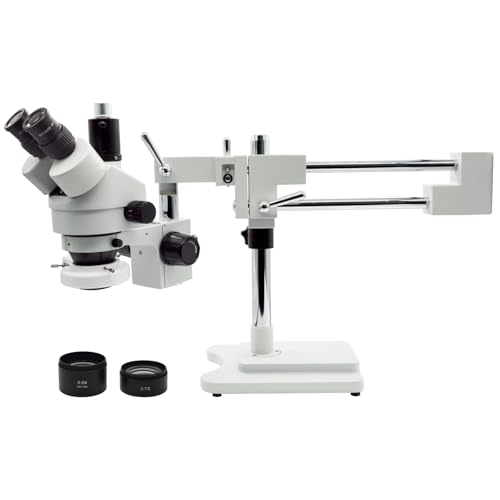
- Trinocular head for camera attachment
- 0.7X-4.5X zoom, up to 90X
- Heavy steel base with boom arm
Best For: Bench work needing flexible zoom and imaging
Value Pick
TOMLOV DM9 Max 10.1" HD Coin Microscope

- 10.1-inch IPS screen for easier viewing
- 5X-1500X zoom for coins and repairs
- PC/TV output plus 16GB card included
Best For: Collectors and hobbyists who want an easy screen-based microscope
Multi-Lens Pick
Andonstar AD249S-M 3-Lens HDMI Microscope

- Three lenses for soldering, coins, and slides
- 2160P video with HDMI output for bigger viewing
- Boom arm stand and measurement software included
Best For: Users who need a versatile bench microscope for multiple tasks
Premium Zoom Pick
TOMLOV TriL110 3-Lens 2500X Microscope

- Three lenses for coin, soldering, and biological viewing
- 10.1-inch IPS screen with 24MP photos and 2K video
- Flexible lighting with LEDs, side lights, and slide light
Best For: Users who want a high-magnification multi-lens bench microscope
Lab-Ready Stereo Zoom With Imaging – AmScope SM-3T-54S-5M with 5MP Camera
If you need digital stereo microscopes for bench work, this AmScope model focuses on inspection tasks that benefit from long working distance and smooth zoom. The trinocular head, 5MP camera, and boom stand make it a practical pick for viewing, capturing, or projecting specimens while keeping room to manipulate parts underneath.
Best For: Electronics work, dental appliances, and other large-item inspection where camera capture and extra working space matter.
Pros:
- 0.7x-4.5x continuous zoom supports flexible inspection without constant lens changes.
- 5MP USB 2.0 camera helps capture or display images on a computer or projector.
- 54-bulb LED ring light offers adjustable intensity and cool light for temperature-sensitive subjects.
- Boom stand provides an 8-inch vertical working distance and X/Y positioning.
Cons:
- Uses a corded setup, so it is not a portable field microscope.
- The fixed 45-degree viewing angle may still feel less ideal for some users than a fully adjustable head.
Overall, this is a strong choice if your priority is a professional stereo microscope with imaging support and enough clearance for hands-on work. It is built more for workshop flexibility than casual viewing.
Autofocus Repair Screen Scope – TOMLOV TM4K-AF Max with 10.1-inch Screen
Among digital stereo microscopes for repair work, this TOMLOV stands out for autofocus and a large integrated screen. The 4K UHD output, TOF and AI focusing, and flexible spin arm are aimed at users who want fast, hands-free viewing for soldering, coin inspection, and other detailed tasks.
Best For: Electronics repair, micro soldering, and users who want autofocus with a built-in screen.
Pros:
- Autofocus with TOF and AI tech helps keep images sharp without constant manual adjustment.
- 10.1-inch IPS display with 4K UHD video and 52MP images offers a clear viewing experience.
- 360-degree spin arm and horizontal adjustment support precise positioning for repair work.
- HDMI/USB output and smart control add flexibility for recording and multi-screen use.
Cons:
- The product notes emphasize digital viewing, so it is not the best fit if you want a traditional optical stereo head.
- Its feature set is complex, which may be more than casual users need.
This is a strong modern repair microscope if you value a screen-first workflow and automatic focusing. It is especially appealing when speed, convenience, and display clarity matter more than a classic eyepiece setup.
Pillar-Stand Stereo Zoom for Bench Work – AmScope SM-1TSW2-L6W-M with Pillar Stand
If you are comparing digital stereo microscopes for bench use, this AmScope model leans into versatility and working comfort. It combines a trinocular head, long working distance, and a pillar stand with a reversible stage plate, making it suitable for inspecting larger specimens while keeping the setup stable.
Best For: Bench-top inspection, electronics work, and users who want more magnification range with a pillar stand.
Pros:
- 0.7x-4.5x zoom objective provides continuous magnification for flexible inspection.
- 1.3MP USB camera can capture or display images on a computer or projector.
- Flexible gooseneck 6W LED lighting gives bright, cool illumination with intensity control.
- Pillar stand includes a reversible black-and-white stage plate and specimen clips.
Cons:
- Camera resolution is lower than some newer digital microscope options.
- At 22.2 pounds, it is relatively heavy for frequent moving.
This model is a practical fit if you want a stable stereo zoom microscope with useful lighting and imaging basics. It is especially sensible for users who value work area support and specimen contrast on a bench.
Multi-Lens All-Purpose Microscope – Andonstar AD246S-M 3-Lens HDMI Microscope
This Andonstar is a flexible option in digital stereo microscopes if you want multiple viewing modes in one setup. With three interchangeable lenses, HDMI output, and a boom arm stand, it is built for soldering, coin viewing, and even biological slide observation without switching systems.
Best For: Users who want one microscope for electronics repair, coins, and basic biology viewing.
Pros:
- Three lenses cover different tasks, including repair, whole-coin viewing, and slides.
- 2160P video recording and HDMI output support larger-screen viewing.
- Up to 2000x use case range and 3x digital zoom add broad versatility.
- Remote control, LED brightness levels, and measurement software improve convenience.
Cons:
- Lens changes require removing and reinstalling screws.
- The wide feature mix may be more than users need for a single-purpose setup.
Overall, this is a strong all-rounder for buyers who want one microscope to handle several types of observation. Its biggest advantage is flexibility, especially if you move between repair, collecting, and educational use.
Bench-Ready Pick – AmScope SE306R-PZ-E Forward-Mounted Binocular
If you want a digital stereo microscope for shop, lab, or education use, the AmScope SE306R-PZ-E keeps the setup straightforward: it combines a forward-mounted binocular head, 20X/40X/80X viewing options, and built-in top and bottom illumination. The included 640×480 USB camera adds photo and video capture support on Windows and Mac, while the metal pillar stand helps keep the system stable during inspection work.
Best For: Users who want a simple stereo microscope with integrated digital imaging and dual lighting for general inspection tasks.
Pros:
- 20X, 40X, and 80X stereo widefield magnification settings
- Forward binocular head with precise optical glass lenses
- Built-in incident and transmitted lights on a sturdy metal framework
- USB 2.0 digital camera supports photos and videos on Windows and Mac
Cons:
- Camera resolution is 640×480, which is modest by modern standards
- Advanced software features are listed for Windows only
This is a practical pick if you value a conventional stereo viewing experience paired with basic digital documentation. It is less about high-end imaging and more about dependable magnification, lighting, and workflow simplicity.
Zoom-Flex Workstation – Trinocular 3.5X-90X Boom-Stand Stereo Zoom
This digital stereo microscope is built for users who need a wide working range and a more flexible imaging setup. The trinocular head supports camera attachment, and the 0.7X-4.5X zoom system with included 0.5X and 2X auxiliary lenses expands the magnification range up to 3.5X-90X. A heavy steel base, boom stand, and LED ring light make it better suited to longer bench sessions and larger specimens.
Best For: Buyers who want a trinocular stereo zoom microscope with a broad magnification range and camera-ready viewing.
Pros:
- Trinocular head includes adapter options for digital cameras and electronic eyepieces
- 3.5X-90X magnification range with 0.7X-4.5X continuous zoom
- Heavy 18 lb steel base and single-arm boom stand for stability
- 56S LED ring light with dimmer for focused illumination
Cons:
- Large boom stand and heavy base may take up more bench space
- More complex setup than a basic binocular stereo microscope
If you need flexibility for varied specimens and camera use, this model offers a strong mix of zoom range and support hardware. The tradeoff is that it is more of a workstation microscope than a compact desktop unit.
All-in-One Viewer – Andonstar AD266S HDMI Digital Microscope
The Andonstar AD266S is a digital microscope designed for users who want multiple viewing modes in one package. It combines features described as stereo, compound, and handheld use, and ships with five lens options for different tasks such as coin viewing, biological slides, and soldering. The 7-inch screen, HDMI output, and metal stand make it a versatile option for home labs, repair work, and classroom-style observation.
Best For: Users who want a multi-purpose digital microscope for slides, soldering, and general visual inspection.
Pros:
- Five-lens system covers coin viewing, slides, and soldering tasks
- UHD 2160P HDMI output for viewing on a larger screen
- Metal stand and X-Y moveable stage help reduce shake and improve control
- Includes measurement software, SD card recording, and remote control
Cons:
- More of an all-in-one digital microscope than a classic stereo microscope
- Lens changes and multi-mode setup may be more involved than simpler models
This model stands out when you need one device for several kinds of detailed viewing. It is especially appealing if you want screen-based observation, video output, and a wider tool kit in a single microscope.
Value Pick – TOMLOV DM9 Max 10.1" HD Coin Microscope
If you’re comparing digital stereo microscopes for coins, soldering, and general inspection, the TOMLOV DM9 Max offers a practical mix of a large screen, strong zoom range, and easy recording. The 10.1-inch IPS display makes it comfortable to inspect details without hunching over, while PC or TV output gives you a bigger view when you need it.
Best For: Coin collectors, hobbyists, and repair users who want a screen-based microscope with straightforward controls and broad everyday usefulness.
Pros:
- 10.1-inch IPS screen with a wide 178° viewing angle
- 5X-1500X zoom for coins, soldering, watches, plants, and more
- PC/TV compatible for larger viewing during longer inspection sessions
- Includes a 16GB card plus one-button photo and video capture
Cons:
- Single-lens design, so it is less specialized than multi-lens models
- Best suited to close-up work rather than general field use
- Screen-based setup may take more bench space than compact scopes
The DM9 Max is a strong all-around choice if you want a digital microscope that is easy to use and versatile enough for coins, electronics, and light hobby work. Its larger display and included storage make it especially approachable for beginners.
Multi-Lens Pick – Andonstar AD249S-M 3-Lens HDMI Microscope
Among digital stereo microscopes, the Andonstar AD249S-M stands out for its three interchangeable lenses and HDMI output, making it a flexible option for electronics, coins, and slide viewing. The upgraded boom arm stand and adjustable lighting are aimed at users who need a stable bench setup for longer sessions.
Best For: Users who want one microscope for soldering, coin inspection, and basic biological observation.
Pros:
- Three lenses cover soldering, coin viewing, and biological slides
- 2160P video and HDMI output support larger-screen viewing
- Pro boom arm stand offers an adjustable, stable workspace
- Includes measurement software, remote control, and accessories
Cons:
- Lens swapping requires removing and reinstalling screws
- Best value comes from its versatility, not a single dedicated use
- Setup is more involved than simpler single-lens microscopes
The AD249S-M is a practical pick if you want a more versatile bench microscope rather than a one-task tool. Its multi-lens design and measurement support make it especially appealing for makers, educators, and detail-focused hobbyists.
Premium Zoom Pick – TOMLOV TriL110 3-Lens 2500X Microscope
If you want digital stereo microscopes with more specialized viewing options, the TOMLOV TriL110 is built around three lenses for coins, soldering, and biological observation. Its 10.1-inch IPS display, 24MP photos, and 2K video output give it a more premium feel, while the layered lighting system helps bring out detail on different subjects.
Best For: Users who want a high-magnification screen microscope with dedicated lenses for coins, electronics, and slides.
Pros:
- Three lenses cover 1000X coin, 1500X soldering, and 2500X biological use
- 10.1-inch IPS screen with 24MP photos and 2K video
- 12 lens LEDs, side lights, and a slide bottom light for flexible illumination
- USB output, recording support, and included MicroSD card for sharing
Cons:
- 2500X lens requires very close working distance to focus properly
- More specialized than simpler all-purpose microscopes
- Larger stand and base may take up more desk space
The TriL110 is the most specialized option here, especially if you care about switching quickly between tasks and want higher top-end magnification. It makes the most sense for users who expect to do a mix of coin work, soldering, and slide viewing from a single bench setup.
How We Picked the Best Digital Stereo Microscopes
We prioritized Digital Stereo Microscopes that offer a useful mix of magnification range, real working space, image clarity, and setup flexibility. For buyers, the most important difference is not just how much something enlarges, but how comfortably you can inspect, solder, or manipulate a part underneath it.
We also looked for features that matter in day-to-day use: trinocular or binocular viewing for more stable handling, HDMI or built-in display options for easier shared viewing, autofocus or flexible arms when speed matters, and adequate illumination for consistent clarity.
Quick Comparison
As a group, these picks cover three common buying paths: bench-friendly stereo zoom microscopes for repair and assembly, digital screen microscopes for inspection and teaching, and hybrid models that try to do both. If you need natural depth perception and room to work, stereo zoom models are usually the better fit. If you want a screen-first experience for coins, solder joints, or general inspection, a digital display model may be more convenient.
Key Buying Factors for Digital Stereo Microscopes
Magnification Vs. Working Distance
Higher magnification can be useful, but it often reduces working distance and makes manipulation harder. For soldering and micro-assembly, a moderate zoom range with enough clearance is usually more valuable than extreme power.
Optics and Viewing Style
Stereo microscopes are preferred when depth perception matters. Trinocular designs can be especially useful if you want to add a camera without sacrificing your main viewing setup. Digital-only models are simpler, but they may feel less natural for hands-on work.
Display, Camera, and Output
For Digital Stereo Microscopes, screen size, resolution, and latency matter. A sharp display helps reduce eye strain, while HDMI output can improve responsiveness for live work or classroom use. If you plan to capture images or video, check the camera resolution and software support.
Lighting and Stability
Good illumination is essential. Look for adjustable LEDs, even light coverage, and a stand or arm that stays steady when you move tools around. A shaky base can undermine an otherwise strong optical system.
Who Should Buy Which Digital Stereo Microscopes?
If you are doing electronics repair, soldering, or precision assembly, choose a stereo zoom model with strong working distance and stable support. If you inspect coins, watch parts, or general specimens, a large screen digital model may be easier and more comfortable. For classrooms, content creation, or team demonstrations, prioritize HDMI output, camera quality, and a display that multiple people can view at once.
In short, the best Digital Stereo Microscopes are the ones that fit your task flow. Focus on usable magnification, comfortable viewing, solid lighting, and a stand that supports the way you actually work.