Choosing the right camera can make a big difference in what you capture through a telescope. The best USB astronomy cameras balance sensor quality, frame rate, and ease of use for your observing style.
Whether you want crisp lunar and planetary detail, simple live viewing, or a more capable setup for deep-sky imaging, this roundup focuses on practical options for 2026 buyers.
Best 10 USB Astronomy Cameras Picks for 2026
Ultra-Sensitive Planetary Pick
SVBONY SV305C Pro USB 3.0 IMX662 Camera

- IMX662 sensor with ultra-low readout noise
- 1920×1080 capture at up to 107 FPS
- USB 3.0, ST4 guiding, and 128MB DDR buffer
Best For: Planetary imagers who want speed, low noise, and guiding support
Plug-and-Play Budget Upgrade
SVBONY SV205 7.05MP IMX415 Camera

- Plug-and-play setup with no driver needed
- 7.05MP IMX415 sensor and 2K capture support
- Works with Windows, Linux, Android, and MacOS
Best For: Beginners seeking simple lunar and planetary imaging
Entry-Level 4K Choice
FIBONAX 8MP 1.25 Inch USB Camera

- 8MP sensor with up to 4K video capture
- UVC plug-and-play plus optional ASCOM support
- Lightweight CNC aluminum body with removable IR cut filter
Best For: Beginners wanting an easy 4K-capable telescope camera
Flexible EAA Planetary Camera

- IMX662 sensor with low noise and better NIR response
- 128MB DDRIII buffer and ROI/BIN functions
- Sharpcap one-key planetary and long-exposure modes
Best For: Entry-level users balancing planetary imaging and EAA
Real-Time Viewing Starter
USB CMOS Real-Time Telescope Eyepiece

- Live viewing to laptop or PC
- Fits 1.25-inch focusers
- Best for Moon and planets
Best For: Beginners focused on simple live viewing
Beginner Planetary Pick
SV105 1.25" IMX307 Color Eyepiece Camera
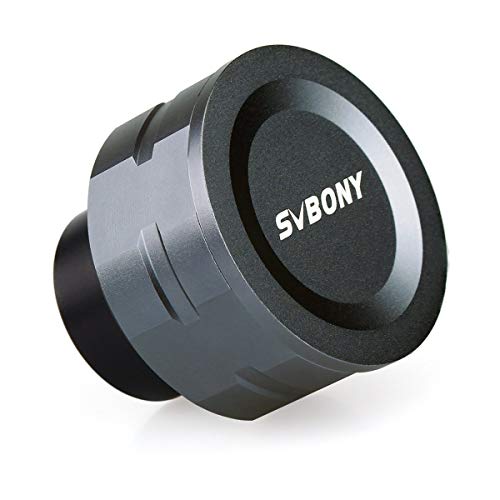
- Plug-and-play basic setup
- IMX307 sensor, up to 30 fps
- Made for Moon and planets
Best For: Beginners starting lunar and planetary imaging
Flexible Imaging Upgrade
Nova200 1080P USB Telescope Camera

- 1080P 30fps with 2MP sensor
- Removable UV/IR cut filter included
- UVC plug and play plus optional ASCOM
Best For: Users wanting a flexible 1.25-inch camera with upgrade options
Premium Deep-Sky APS-C Choice
SVBONY SC571CC Cooled Color Astronomy Camera

- IMX571 APS-C sensor with 26MP resolution
- Dual-stage cooling lowers sensor temp by 35°C
- USB 3.0 with 512 MB DDR3 buffer for stability
Best For: Deep-sky imagers who want a cooled APS-C camera for long exposures
Versatile Planetary and EAA Pick
SVBONY SV705C IMX585 USB Astronomy Camera

- IMX585 sensor with 3856×2180 resolution
- Strong near-IR sensitivity and high signal-to-noise ratio
- USB 3.0 camera for planetary, EAA, and lucky imaging
Best For: Observers who want a flexible camera for planets, EAA, and entry-level deep sky
Budget Guide Camera Option
SVBONY SV905C 1.23MP Guide Camera

- 1.23MP 1/3-inch CMOS sensor for autoguiding
- High peak QE of 80% with low read noise
- USB 2.0 and ST4 support for guiding software
Best For: Users who need a compact autoguiding camera
Ultra-Sensitive Planetary Pick – SVBONY SV305C Pro USB 3.0 IMX662 Camera
If you’re comparing usb astronomy cameras for bright planets and fast-changing detail, the SVBONY SV305C Pro is built for speed and low-noise capture. Its IMX662 sensor, 107 FPS 1080p mode, and USB 3.0 transfer make it a practical fit for Jupiter, Saturn, and other high-frame-rate planetary work.
Best For: Planetary imaging users who want low noise, fast frame rates, and USB 3.0 workflow speed.
Pros:
- IMX662 sensor with ultra-high sensitivity and low readout noise
- Up to 1920×1080 at 107 FPS for fast-moving planets
- USB 3.0 high-speed transfer for quicker image download
- 128MB DDR buffer helps reduce image loss during continuous capture
Cons:
- Works only with a computer; it does not support iPad connection
- Manual focus only, so setup depends on the telescope focuser
Overall, this is a strong choice if your main goal is clean planetary data with smooth capture performance. The ST4 guiding interface and Any Area ROI support add flexibility, while the HDR mode and heat dissipation design round out a camera that feels aimed at serious backyard imaging.
Plug-and-Play Budget Upgrade – SVBONY SV205 7.05MP IMX415 Camera
The SVBONY SV205 is a straightforward option among usb astronomy cameras if you want an easy entry into lunar and planetary imaging. With plug-and-play use, a 7.05MP IMX415 sensor, and support for real-time viewing on a laptop or PC, it suits observers who want simple capture without a complicated setup.
Best For: Beginners who want a simple, plug-and-play lunar and planetary camera.
Pros:
- Plug and play without a driver for quick setup
- 7.05MP IMX415 sensor with a 1/2.8-inch color CMOS chip
- Up to 2K resolution and 30 FPS in MJPG mode
- Compatible with Windows, Linux USB2.0, Android, and MacOS with Astroamx Capture
Cons:
- Mac support requires downloading Astroamx Capture
- Compatibility depends on your telescope’s 1.25-inch eyepiece fit
For a first astronomy camera, this one keeps the process uncomplicated and accessible. The included USB 3.0 cable, 1.25-inch adapter barrel, and support for bright targets make it a sensible pick for casual planetary and lunar sessions.
Entry-Level 4K Choice – FIBONAX 8MP 1.25 Inch USB Camera
If you want usb astronomy cameras with a simple path into 4K capture, this FIBONAX model is aimed at beginners recording the Moon, planets, and other bright targets. It combines UVC plug-and-play operation, optional ASCOM driver support, and a standard 1.25-inch barrel so it can slot into many common telescope setups.
Best For: New telescope imagers who want a lightweight 4K-capable camera for Moon and planet work.
Pros:
- 8MP sensor supports up to 4K video and 1080p high-frame-rate capture
- UVC plug-and-play with optional ASCOM driver support on Windows
- Removable IR cut filter helps improve natural color
- Compact 110g CNC aluminum body helps with balance and heat dissipation
Cons:
- Manual telescope focusing is required; it does not autofocus
- Best results depend on telescope focus and seeing conditions
This is a practical entry-level pick if you want broad compatibility and simple operation more than advanced imaging controls. The lightweight housing and standard 1.25-inch fit make it easy to test in backyard astronomy or STEM settings without adding much bulk.
Flexible EAA Planetary Camera – SVBONY SV305C 2.1MP IMX662
The SVBONY SV305C is a practical addition to usb astronomy cameras if you want an entry-level color camera for planetary, lunar, and EAA use. Its IMX662 sensor, built-in 128MB DDR buffer, and Sharpcap one-key mode presets give it a balanced feature set for users who want more control without moving to a more complex system.
Best For: Users who want a versatile entry-level camera for planetary imaging and EAA.
Pros:
- IMX662 back-illuminated sensor with low readout noise and improved NIR response
- Built-in 128MB DDRIII buffer helps prevent frame loss
- ROI and BIN functions support faster capture and sensitivity tweaks
- Works with 1.25-inch astronomy interfaces and includes a CS-C adapter ring
Cons:
- Manual focus only, so telescope setup still matters
- Protective glass is removable, but the UV/IR cut filter is built in
This camera stands out as a flexible starter option for observers who want both planetary speed and sky-space long exposure mode support in one package. If you expect to move between Moon shots, planets, and EAA sessions, it offers a useful middle ground.
Real-Time Viewing Starter – USB CMOS Real-Time Telescope Eyepiece
If you want usb astronomy cameras for simple live viewing and basic lunar or planetary imaging, this 1.25-inch USB eyepiece camera is built for an easy start. It sends live images from the telescope to a laptop or PC and is aimed more at bright targets than deep-sky work.
Best For: Beginners who want a straightforward USB eyepiece for Moon and planet viewing on a computer.
Pros:
- Real-time viewing sends live telescope images to a laptop or PC.
- Works with 1.25-inch focusers or a matching step-down adapter.
- Designed for lunar and planetary photography and sharing views with others.
- Built with USB real-time viewing support and astronomy-focused imaging performance.
Cons:
- Not optimized for deep-space imaging.
- Resolution details are limited in the supplied product notes.
- Requires a compatible computer setup for viewing.
Overall, this is a practical entry-level pick if your main goal is to turn a telescope into a live-screen viewing setup. It makes the most sense for Moon, bright planet, and outreach use rather than advanced astrophotography.
Beginner Planetary Pick – SV105 1.25" IMX307 Color Eyepiece Camera
Among usb astronomy cameras, the SV105 is a beginner-friendly option for lunar and planetary imaging with plug-and-play operation. It is designed for real-time dynamic observation, and the supplied notes emphasize bright targets, simple setup, and broad system compatibility with the right capture software.
Best For: New astrophotographers who want a simple USB camera for Moon, planets, and bright terrestrial targets.
Pros:
- Plug and play with no driver required for basic use.
- Uses an IMX307 CMOS sensor and supports up to 30 fps at 1920×1080.
- Compatible with Windows, Linux, macOS laptops, and 1.25-inch telescope setups.
- Includes dark-light compensation technology to improve clarity in low light.
Cons:
- Primarily suited to lunar and planetary work, not deep-sky imaging.
- Some systems need optional capture software or downloads.
- Not compatible with Apple phones or tablets.
This is a solid first telescope camera if you want an uncomplicated path into planetary imaging. The combination of plug-and-play setup, 1.25-inch fit, and bright-target focus makes it especially approachable for beginners.
Flexible Imaging Upgrade – Nova200 1080P USB Telescope Camera
If you are comparing usb astronomy cameras for a more flexible beginner setup, the Nova200 stands out for its 1080P live view, removable UV/IR cut filter, and optional ASCOM driver path. It is aimed at lunar and planetary imaging, but it also supports comfortable screen viewing for classrooms, family use, and basic EAA.
Best For: Users who want a lightweight 1.25-inch telescope camera with an upgrade path and filter flexibility.
Pros:
- Delivers 1080P 30fps imaging with a 2MP CMOS sensor.
- UVC plug and play works across Windows, macOS, and Linux systems.
- Includes a removable UV/IR cut filter for more natural lunar and planetary color.
- Lightweight CNC aluminum body helps keep the setup compact.
Cons:
- Still aimed mainly at Moon, planets, and bright terrestrial targets.
- ASCOM support is optional and Windows-focused.
- May be more camera than needed if you only want the simplest viewing setup.
The Nova200 is the most versatile of this group if you value filter flexibility and a cleaner upgrade path. It keeps the experience beginner-friendly while adding a few useful extras for users who want to grow into more astronomy software options.
Premium Deep-Sky APS-C Choice – SVBONY SC571CC Cooled Color Astronomy Camera
If you’re comparing usb astronomy cameras for serious deep-sky work, the SVBONY SC571CC stands out with its IMX571 APS-C sensor, 26MP resolution, and dual-stage cooling. It is built for long exposures, clean dark frames, and wide compatibility with common telescope types, making it a practical option when faint nebulae, Ha regions, and low-noise imaging matter most.
Best For: Astrophotographers who want a cooled APS-C USB camera for deep-sky imaging and long sessions.
Pros:
- IMX571 APS-C BSI sensor with 26MP resolution and 3.76 µm pixels for high-detail imaging
- Dual-stage TEC cooling lowers sensor temperature by 35°C below ambient
- Front-window heater helps reduce dew and moisture during imaging
- USB 3.0 plus 512 MB DDR3 buffer supports stable transfer during long sessions
Cons:
- More camera than many beginners need if they mainly shoot planets or guiding
- Requires a compatible imaging setup for best results with medium-to-long focal lengths
The SC571CC is best viewed as a deep-sky tool first: cooled, high-resolution, and designed to keep data clean over long nights. If your priority is faint target capture and stable USB astronomy cameras performance, this model is aimed squarely at that use case.
Versatile Planetary and EAA Pick – SVBONY SV705C IMX585 USB Astronomy Camera
For buyers shopping usb astronomy cameras that can handle more than just planets, the SVBONY SV705C is a flexible IMX585 option for planetary imaging, EAA, lucky imaging, and entry-level deep-sky shooting. Its high full well capacity, strong near-infrared sensitivity, and USB 3.0 connection make it a practical camera when you want detail, speed, and broad usefulness in one compact package.
Best For: Users who want a versatile camera for planetary imaging, EAA, and lucky imaging.
Pros:
- IMX585 sensor with 3856×2180 resolution and 1/1.2-inch format
- High full well charge and high signal-to-noise ratio for improved imaging efficiency
- Near-infrared sensitivity is 1.7 times the previous generation
- USB 3.0 output and CS interface with included C-CS adapter ring
Cons:
- Not primarily a cooled deep-sky camera like higher-end dedicated models
- Best suited to users comfortable choosing the right software and setup for their use case
The SV705C makes sense if you want one camera that can cover multiple jobs without moving into a large cooled APS-C system. It is especially appealing for observers who value high sensitivity and flexible use across planetary and EAA work.
Budget Guide Camera Option – SVBONY SV905C 1.23MP Guide Camera
If you’re browsing usb astronomy cameras for autoguiding, the SVBONY SV905C is built around a sensitive 1.23MP color CMOS sensor with small pixels and low read noise. It is designed to lock onto faint guide stars, works with popular guiding software, and includes both USB 2.0 and ST4 support for a straightforward guiding setup.
Best For: Astrophotographers who need a compact guide camera for autoguiding.
Pros:
- 1.23MP 1/3-inch CMOS sensor with 1280×960 resolution
- High peak QE of 80% and low read noise for faint guide stars
- USB 2.0 plus ST4 interface support for guiding workflows
- Compatible with PHD2, MDL, NINA, and SKY-X software
Cons:
- USB 2.0 is slower than USB 3.0 imaging cameras
- Not compatible with ASI AIR
The SV905C is a compact, practical guide camera rather than a general-purpose imaging camera. If your main goal is stable tracking and reliable guide-star pickup, it fits the job well.
How We Picked These USB Astronomy Cameras
We focused on models that suit common telescope workflows: planetary imaging, real-time viewing, guiding, and entry-level deep-sky capture. Selection favored USB 3.0 support where useful, popular sensor families, 1.25-inch compatibility, and cameras with clear use cases rather than vague all-purpose claims.
Quick Comparison: What Matters Most
For high-detail Moon and planet work, look for higher frame rates, modern CMOS sensors, and strong software support. For deep-sky imaging, larger sensors and cooling matter more. If you mainly want a simple eyepiece replacement, a basic USB camera with easy live preview may be the better fit. In other words, not all USB Astronomy Cameras are optimized for the same job.
Key Buying Factors for USB Astronomy Cameras
Sensor Size and Type
Smaller sensors can be excellent for planets because they naturally increase image scale, while larger sensors capture more of the sky and help with framing nebulae and galaxies. Check whether the camera uses a modern sensor such as the IMX series, since that often means better low-light performance and cleaner detail.
Resolution Versus Real-World Performance
Higher megapixels do not automatically mean better astronomy results. Frame rate, pixel size, and read noise often matter more than headline resolution. For fast-moving targets like planets, a responsive camera can outperform a higher-resolution one that is slower to capture.
Cooling, Connectivity, and Compatibility
Cooled models are worth considering if you plan to image faint deep-sky objects or take long exposures. USB 3.0 is helpful for fast capture and smoother data transfer. Also confirm that the camera works with your imaging software and operating system before buying.
Mounting and Telescope Fit
Most buyers will want a 1.25-inch form factor for direct telescope use. If you also plan to guide a mount, a compact guide camera can be a more efficient choice than a larger imaging camera.
Who Should Buy Which USB Astronomy Cameras?
Beginner observers who want easy live viewing should choose a simple, plug-and-play model. Planetary imagers should prioritize speed, sensitivity, and a modern CMOS sensor. Deep-sky photographers should lean toward larger or cooled cameras, while mount users needing precision tracking should choose a dedicated guide camera. If you are trying to choose among USB Astronomy Cameras, match the camera to your main target instead of buying by resolution alone.