If you want cleaner long-exposure images and less thermal noise, cooled astronomy cameras are a major upgrade over uncooled options. They are especially valuable for deep-sky targets where signal is faint and every detail matters.
This guide highlights 10 strong picks for 2026, with a buyer-focused look at cooling performance, sensor format, and system compatibility so you can choose the right camera for your telescope and imaging goals.
Best 10 Cooled Astronomy Cameras Picks for 2026
Flagship APS-C Deep-Sky Detail
SVBONY SC571CC Cooled Color Camera

- 26MP IMX571 APS-C sensor
- -35°C TEC cooling target
- Zero amp glow, 16-bit output
Best For: Serious deep-sky imaging with a large cooled color sensor
All-in-One Monochrome Rig
ZWO ASI585MM AIR Cooled Camera

- 3-in-1 imaging, guiding, control
- STARVIS 2 with zero amp glow
- 30-35°C below ambient cooling
Best For: Integrated monochrome imaging with built-in storage and control
Compact Square-Sensor Value
SVBONY SV605CC Cooled Color Camera
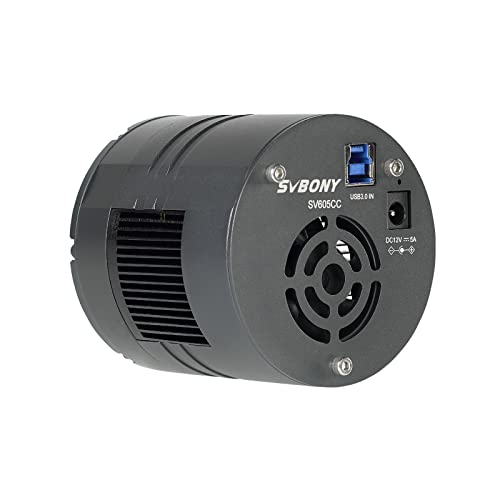
- IMX533 1-inch square sensor
- 80% quantum efficiency claim
- Cooling to 30°C below ambient
Best For: Color deep-sky imaging with a compact square sensor
High-Resolution Mono Workhorse
ZWO ASI2600MM PRO Cooled Camera

- 26.1MP IMX571 monochrome sensor
- 91% QE and low read noise
- 30-35°C below ambient cooling
Best For: Dedicated mono deep-sky imaging with a large, efficient sensor
Deep-Sky Starter Pick
SVBONY SV405CC IMX294 Cooled Color Camera

- Back-illuminated IMX294 4/3" sensor
- Two-stage TEC cooling up to 30°C below ambient
- USB 3.0 with 256 MB DDRIII buffer
Best For: Deep-sky imagers wanting a larger-sensor cooled color camera
High-Resolution Classic
ZWO ASI183MC Pro Cooled Color Camera

- 20.1 MP back-illuminated sensor with 2.4 µm pixels
- TEC cooling lowers sensor temp by 40°C to 45°C
- USB 3.0 with 256 MB DDR3 buffer and accessory hub
Best For: Imagers prioritizing high resolution and compact cooled performance
APS-C Imaging Bundle
SVBONY SC571CC Cooled Camera Kit
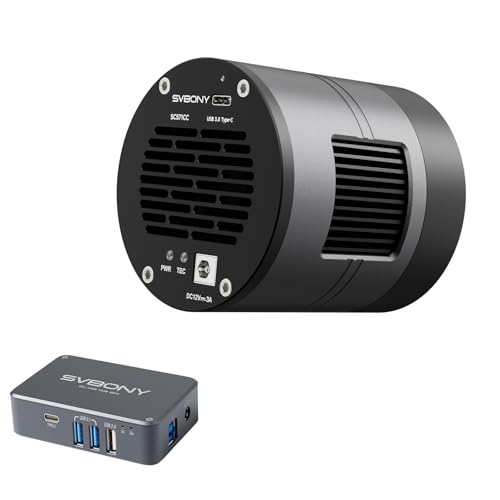
- 26 MP IMX571 APS-C BSI sensor
- Two-stage TEC cooling to 35°C below ambient
- Includes SV241 power hub adapter
Best For: Deep-sky users wanting an APS-C camera with an integrated hub
High-Detail Entry Pick
16MP Monochrome TE Cooled Astronomy Camera

- 16MP monochrome sensor for detailed imaging
- TE cooling reduces noise in long exposures
- Compatible with various telescopes
Best For: Users wanting a high-resolution monochrome camera for detailed astrophotography
Deep-Sky Bundle Pick
SVBONY SC571CC Cooling Camera Bundle

- 26MP APS-C IMX571 sensor with dual-stage TEC cooling
- Includes SV241 Pro power management and control hub
- Works with APO, Newtonian, RC, and catadioptric scopes
Best For: Astrophotographers wanting an APS-C cooled color camera bundle with power control
Value Color Pick
SVBONY SV405CC Cooled Color Camera

- IMX294 4/3 sensor designed for deep-sky targets
- TEC cooling helps reduce imaging noise
- Includes UV/IR cut filter for cleaner contrast
Best For: Deep-space shooters who want a cooled color camera with a filter included
Flagship APS-C Deep-Sky Detail – SVBONY SC571CC Cooled Color Camera
If you want cooled astronomy cameras built around a large APS-C sensor, the SVBONY SC571CC is aimed at serious deep-sky work. Its IMX571 BSI sensor, 16-bit output, zero amp glow design, and -35°C cooling target make it a strong fit for long exposures on faint nebulae and galaxies.
Best For: Astrophotographers who want a cooled APS-C color camera for detailed deep-sky imaging.
Pros:
- 26MP IMX571 APS-C sensor with 3.76 µm pixels for high-resolution deep-sky capture
- Dual-stage TEC cooling rated to 35°C below ambient for lower dark current and noise
- Zero amp glow sensor and 16-bit ADC for cleaner dark frames and smoother tonal transitions
- Front-window heater helps fight dew and moisture during long sessions
Cons:
- Designed for dedicated imaging setups rather than casual grab-and-go use
- Best value comes when you can fully use the APS-C image circle and long-exposure workflow
The SC571CC stands out as a feature-rich cooled color camera for deep-sky imagers who want strong sensor performance and stable all-night operation. Its combination of high QE, buffer memory, and USB 3.0 makes it well suited to demanding imaging runs.
All-in-One Monochrome Rig – ZWO ASI585MM AIR Cooled Camera
Among cooled astronomy cameras, the ZWO ASI585MM AIR is unusual because it combines imaging, guiding, and control features in one package. With built-in ASIAIR functions, STARVIS 2 sensor tech, and cooling rated to 30-35°C below ambient, it is designed to simplify a full astrophotography setup.
Best For: Users who want a monochrome cooled camera with built-in control, storage, and guiding tools.
Pros:
- 3-in-1 design combining imaging, guiding, and control system functions
- STARVIS 2 sensor with high sensitivity, improved dynamic range, and zero amp glow
- 256GB eMMC storage plus support for additional external storage
- Cooling can lower the sensor 30-35°C below ambient for noise reduction
Cons:
- More complex than a standard standalone camera if you only want a simple imager
- Monochrome workflow is better suited to users comfortable with filters and processing
This model is best viewed as a streamlined imaging hub rather than just a camera body. If you want fewer boxes in the field and a more integrated capture workflow, it offers a compelling mix of convenience and cooled performance.
Compact Square-Sensor Value – SVBONY SV605CC Cooled Color Camera
The SVBONY SV605CC is a practical pick for cooled astronomy cameras if you want a compact color option built around the IMX533. Its 1-inch square sensor, 80% quantum efficiency claim, glow suppression, and TEC cooling to 30°C below ambient make it a solid deep-sky and lucky-imaging choice.
Best For: Astrophotographers who want a cooled color camera with a square frame and strong deep-sky efficiency.
Pros:
- IMX533 1-inch square sensor with 3008 x 3008 resolution
- Reported 80% quantum efficiency for efficient light capture
- Glow suppression helps improve signal-to-noise performance
- Double-layer semiconductor cooling lowers temperature up to 30°C below ambient
Cons:
- Square sensor framing may not suit every target or workflow
- Lower resolution than larger APS-C cooled cameras
For imagers who value a compact footprint and a square sensor, the SV605CC offers a sensible balance of cooling, efficiency, and image quality. It is especially appealing when you want a color deep-sky camera that stays straightforward to use.
High-Resolution Mono Workhorse – ZWO ASI2600MM PRO Cooled Camera
If you are comparing cooled astronomy cameras for serious monochrome imaging, the ZWO ASI2600MM PRO offers a proven high-resolution approach. Its 26.1MP Sony IMX571 sensor, 16-bit ADC, 512MB buffer, and 30-35°C cooling target make it well matched to long-exposure deep-sky work.
Best For: Dedicated astrophotographers who want a cooled monochrome camera with a large sensor and strong dynamic range.
Pros:
- 26.1MP IMX571 monochrome sensor with 3.76 µm pixels
- 91% quantum efficiency and low read noise for faint targets
- 16-bit ADC with 13.9 stops of dynamic range
- 512MB DDR3 buffer and USB 3.0 for stable data transfer
Cons:
- Monochrome imaging requires a filter-based workflow
- Best results come from a full astronomy imaging setup, not casual use
The ASI2600MM PRO is a straightforward choice for imagers who care more about sensor performance than extra convenience features. With strong cooling, high QE, and a large active area, it is built for demanding deep-sky sessions.
Deep-Sky Starter Pick – SVBONY SV405CC IMX294 Cooled Color Camera
If you’re shopping for cooled astronomy cameras with a strong balance of sensitivity and usability, the SVBONY SV405CC is built around a back-illuminated IMX294 4/3″ sensor and two-stage TEC cooling. It is aimed at deep-sky work where lower noise, good dynamic range, and smooth color data matter more than sheer speed.
Best For: Deep-sky imagers who want a cooled color camera with a larger 4/3" sensor and solid all-around performance.
Pros:
- Back-illuminated IMX294 sensor with 4.63 µm pixels and 14-bit ADC for detailed deep-sky capture
- Two-stage TEC cooling can lower sensor temperature by up to 30°C below ambient
- Smart HCG mode helps reduce read noise when gain is set to 120 or higher
- USB 3.0 plus 256 MB DDRIII buffer supports stable, high-speed transfers
Cons:
- Cooling performance is listed as up to 30°C below ambient, which is less than some higher-end cooled cameras
- Best suited to computer-based astrophotography workflows rather than simple plug-and-play use
Overall, the SV405CC is a practical cooled color option for deep-sky astrophotography when you want a larger sensor and features that support clean, efficient image capture. Its compatibility with several operating systems also makes it easier to fit into different setups.
High-Resolution Classic – ZWO ASI183MC Pro Cooled Color Camera
ZWO ASI183MC Pro 20.18 MP CMOS Color Astronomy Camera with USB 3.0 # ASI183MC-P
Check Price On AmazonThe ZWO ASI183MC Pro is one of the more resolution-focused cooled astronomy cameras here, using a 20.1 MP back-illuminated sensor with very small 2.4-micron pixels. For deep-sky objects, the Moon, and solar imaging with the proper filter, it gives you a compact cooled color platform with strong detail capture and fast USB 3.0 transfer.
Best For: Astrophotographers who want high resolution in a compact cooled color camera for deep-sky and lunar work.
Pros:
- 20.1 MP sensor with 2.4-micron pixels for fine detail
- Integrated TEC cooling reduces sensor temperature by 40°C to 45°C below ambient
- USB 3.0 transfer up to 19 fps at maximum resolution with 256 MB DDR3 buffer
- Includes a USB 2.0 hub for powering accessories like an autoguider or focuser
Cons:
- Requires a separate 12V@3A power supply for the cooler
- Solar imaging needs a solar filter, which is not included
This is a strong choice if your priority is detail and low-noise imaging in a compact body. The combination of high resolution, aggressive cooling, and accessory hub support makes it a capable option for a more advanced telescope setup.
APS-C Imaging Bundle – SVBONY SC571CC Cooled Camera Kit
For buyers comparing cooled astronomy cameras and looking for a more complete rig, this SVBONY kit pairs the SC571CC cooled color camera with the SV241 power hub adapter. The camera uses an IMX571 APS-C BSI sensor and two-stage TEC cooling, while the hub adds a more organized way to manage power and data during outdoor deep-sky sessions.
Best For: Deep-sky imagers who want an APS-C cooled camera plus a matching power and data hub in one kit.
Pros:
- IMX571 APS-C BSI sensor with 26 MP resolution and 3.76 µm pixels
- Two-stage TEC cooling lowers sensor temperature by 35°C below ambient
- All-metal heat-dissipation design supports stability during long exposures
- Kit includes the SV241 hub for added power and data interfaces
Cons:
- Best results depend on correct interface and voltage use, as noted in the setup instructions
- Some output ports may require a data cable connection to become active
This kit stands out if you want an APS-C cooled astronomy camera with fewer separate accessories to source. It is built for medium-to-long focal length deep-sky work and should appeal to users who value an integrated, organized field setup.
High-Detail Entry Pick – 16MP Monochrome TE Cooled Astronomy Camera
If you want cooled astronomy cameras for detailed deep-sky work, this 16MP monochrome model is built around resolution and noise control. The TE cooling system is aimed at cleaner long-exposure images, while the monochrome sensor is suited to capturing fine structure in planets, stars, and galaxies.
Best For: Enthusiasts who want a high-resolution monochrome camera with TE cooling for detailed astrophotography.
Pros:
- 16MP monochrome sensor for high-detail imaging
- TE cooling helps reduce noise during long exposures
- Works with various telescopes for flexible setup options
- User-friendly software supports capture and processing
Cons:
- Monochrome imaging may not suit buyers wanting direct color capture
- Focuses on astrophotography use rather than general-purpose imaging
Overall, this is a practical choice if your priority is clean, high-resolution results from a cooled astronomy camera without needing a complex setup. Its strengths are straightforward: detailed monochrome capture, cooling for reduced noise, and broad telescope compatibility.
Deep-Sky Bundle Pick – SVBONY SC571CC Cooling Camera Bundle
This cooled astronomy camera bundle combines the SC571CC cooled color camera with the SV241 Pro power management box, making it a strong option if you want a cleaner, more centralized imaging setup. The APS-C IMX571 sensor, dual-stage TEC cooling, and remote control hub are aimed at deep-sky sessions where stability and low noise matter.
Best For: Astrophotographers who want a cooled APS-C color camera bundled with power and control management.
Pros:
- IMX571 APS-C BSI sensor with 26MP resolution
- Dual-stage TEC cooling lowers sensor temperature by 35°C below ambient
- Compatible with APO, Newtonian, RC, and catadioptric scopes
- SV241 Pro hub adds remote plug-and-play device control and power management
Cons:
- Bundle includes more than just the camera, so it may be more than some buyers need
- SV241 Pro does not support hot-swapping
For users building a more organized astrophotography rig, this bundle stands out because it pairs a cooled color camera with a control and power solution. The cooling, sensor size, and telescope compatibility make it well suited to medium-to-long focal length deep-sky imaging.
Value Color Pick – SVBONY SV405CC Cooled Color Camera
Among cooled astronomy cameras, the SV405CC is positioned as a deep-sky color option for nebulae, galaxies, star clusters, and similar targets. Its IMX294 4/3 sensor, TEC cooling, and included UV/IR cut filter are all aimed at getting cleaner color images with better contrast and less unwanted light interference.
Best For: Deep-space imagers who want a cooled color camera with an included UV/IR cut filter.
Pros:
- IMX294 4/3 CMOS sensor for deep-sky imaging
- TEC cooled color camera design for astrophotography
- Includes UV/IR cut filter to block unwanted ultraviolet and infrared rays
- USB 3.0 interface supports high-speed data transfer
Cons:
- Primarily aimed at deep-space targets rather than all-around photography
- Manual exposure control may not appeal to beginners wanting automation
If you want a cooled color camera focused on nebulae and galaxies, this package offers a solid mix of cooling, sensor size, and filtering. The included UV/IR cut filter is especially useful for improving contrast and color quality in a telescope imaging setup.
How We Picked These Cooled Astronomy Cameras
Our selections focus on the features that matter most for real-world imaging: sensor size, pixel design, cooling capability, mono or color format, and ecosystem support. We also looked at how well each camera fits common deep-sky use cases, from wide-field nebula imaging to higher-resolution galaxy work.
Quick Comparison
Broadly speaking, APS-C models are better for large targets and wider framing, while smaller sensors can be a smart choice for shorter focal length setups or budget-conscious buyers. Monochrome cameras usually offer more flexibility and better detail with filters, while color cameras are simpler to run and more beginner-friendly.
Key Buying Factors for Cooled Astronomy Cameras
Sensor Size and Resolution
Choose sensor size based on your telescope and target list. Larger sensors capture more sky and reduce cropping, but they may demand more from your optics. Higher resolution helps with fine detail, though it also increases file sizes and guiding precision requirements.
Cooling Performance
Cooling helps stabilize sensor temperature and reduce noise during long exposures. Look for practical temperature control, not just a marketing label. A well-designed cooled camera should support repeatable imaging across sessions and seasons.
Mono Vs. Color
Color models are easier to use and faster for getting started. Mono models are preferred by many advanced imagers because they support filter-based workflows and often deliver better control over contrast and detail.
System Compatibility
Check software support, USB connection quality, power needs, and whether your mount or imaging rig can handle the setup. Some Cooled Astronomy Cameras work best when paired with dedicated control hardware, while others are simpler plug-and-play options.
Backfocus, Filters, and Accessories
Make sure your accessories match the camera’s physical requirements. Filter compatibility, adapters, and power management can affect both image quality and ease of use. Bundles can offer good value if they include gear you would otherwise need to buy separately.
Who Should Buy Which Cooled Astronomy Cameras?
Beginners who want a straightforward path into deep-sky imaging should usually start with a cooled color camera. Imagers focused on maximum detail, narrowband work, or a more advanced workflow should consider a cooled monochrome model. If you want a wider framing for nebulae and galaxies, lean toward larger sensors; if you prioritize simplicity or lower system cost, a smaller sensor may be the better fit.
In short, the best choice depends on your telescope, your target types, and how much post-processing flexibility you want. The right Cooled Astronomy Cameras make deep-sky imaging more consistent, more efficient, and far less frustrating.