Choosing the right particle counter can make indoor air quality easier to measure, compare, and improve. Whether you need a simple portable meter or a higher-precision multi-channel model, the best choice depends on how detailed your readings need to be.
In this roundup, we focus on accurate, buyer-friendly options for homes, offices, workshops, and cleanroom-style environments.
Best 10 Particle Counters for Indoor Air Picks for 2026
Desktop Indoor Air Monitor
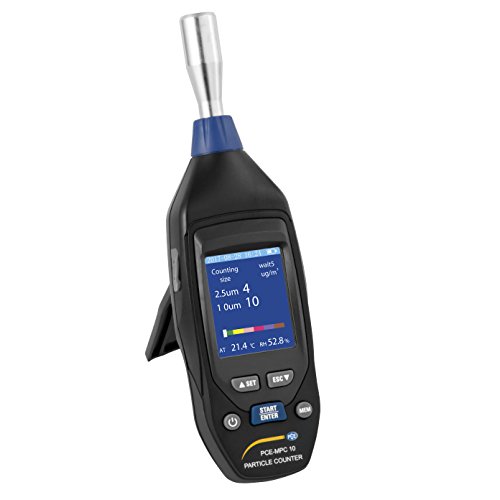
- PM2.5 and PM10 monitoring
- Temperature and humidity included
- 5000-data logger with USB
Best For: Stationary indoor air checks with simple particulate and climate readings
Handheld Multi-Size Counter
Temtop Airing-2000 Handheld Counter

- Counts 0.3 µm, 0.5 µm, and 1.0 µm particles
- Also tracks PM2.5, PM10, and TSP
- 32GB storage with 4+ hour battery life
Best For: Portable multi-size air checks in professional indoor spaces
Professional 6-Channel Counter
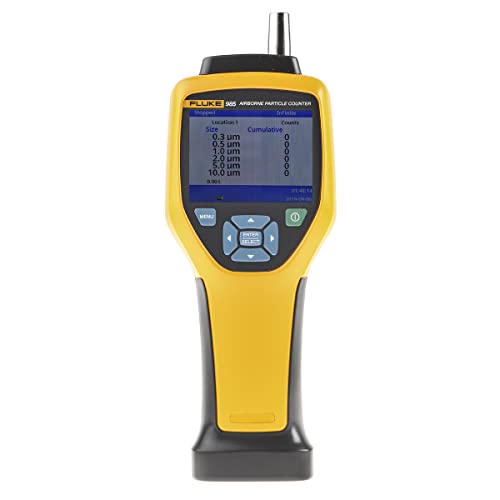
- Six-channel airborne particle monitoring
- Useful for cleanrooms and remediation
- Helps locate particle sources
Best For: Professional indoor air testing in cleanrooms and remediation work
Portable Particle Logger
- Counts 0.3 µm, 0.5 µm, and 1.0 µm particles
- Logs data in 1 to 60 minute intervals
- 32GB memory with USB export
Best For: Portable indoor inspections with logging and easy data export
Portable Indoor Air Snapshot
Triplett EPC370 Mini Particle Counter and Air Quality Meter

- PM2.5/PM10 plus temperature and humidity
- Stores 5,000 readings with timestamps
- Color bargraph and audible PM2.5 alarm
Best For: Portable indoor spot checks and basic air quality logging
Cleanroom-Grade Precision
Temtop PMD331 Professional Particle Counter

- Seven particle sizes from 0.3µm to 10µm
- ISO 21501-4 compliant and calibrated
- Over 2,000,000 records with USB and RS-485
Best For: Professional cleanroom, lab, and HVAC monitoring
All-in-One Indoor Monitor
12-in-1 Air Quality Monitor Particle Counter

- Tracks particles plus CO2, HCHO, CO, and TVOC
- Logs 10,000 groups and exports CSV files
- Rechargeable with adjustable alarms and Type-C
Best For: Broad indoor air monitoring with particle and gas readings
Portable 3-Channel Dust Meter
Laser Particle Counter PM2.5/PM10
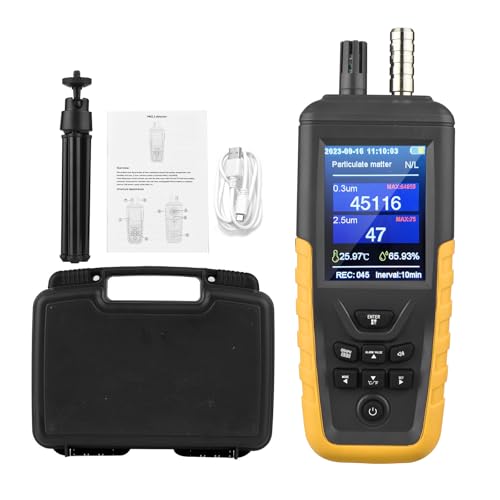
- Tracks PM0.3, PM2.5, and PM10
- Measures temperature and humidity
- Stores 999 records with a color display
Best For: basic indoor air dust monitoring and quick spot checks
7-in-1 Indoor Air Monitor
Temtop LKC-1000S+ Air Quality Monitor

- Measures PM2.5, PM10, HCHO, VOCs, temp, humidity, and AQI
- Offers 12-hour trend histograms and Excel export
- Runs on battery or plugged in for continuous monitoring
Best For: broader indoor air testing and long-term trend tracking
Professional 6-Channel Particle Counter
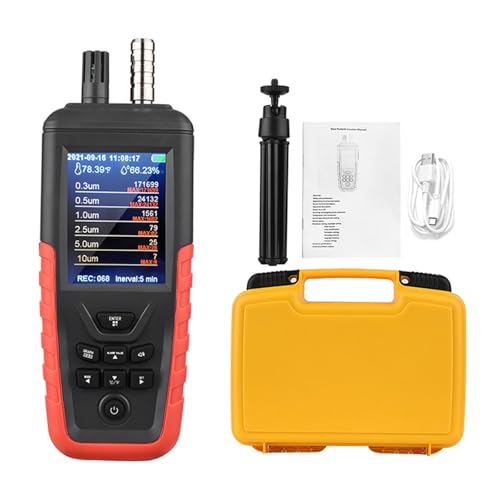
- Counts six particle sizes from 0.3 to 10 microns
- Supports ISO 14644-1 cleanroom testing
- Stores 999 records and exports PDF data
Best For: professional cleanroom and contamination testing
Desktop Indoor Air Monitor – PCE-MPC 10
If you want a straightforward option among particle counters for indoor air, the PCE-MPC 10 focuses on the basics: PM2.5 and PM10 readings plus temperature and humidity. Its tabletop format and 2-inch color display make it easy to place in a room, office, or lab where quick visibility matters.
Best For: Desk-based indoor air checks where PM2.5, PM10, temperature, and humidity all need to be visible at a glance.
Pros:
- Measures PM2.5 and PM10 for common indoor particulate monitoring.
- Includes temperature and humidity measurement for broader air-quality context.
- 2-inch full-color LCD offers a user-friendly graphical display.
- 5000-data logger and USB support make it practical for recordkeeping.
Cons:
- Only lists PM2.5 and PM10 channels, so it is less detailed than multi-size counters.
- Tabletop design is better for stationary use than walkthrough inspections.
- Not described with pump suction or handheld operation.
The PCE-MPC 10 is a sensible pick when you need a simple indoor air quality readout without extra complexity. It suits users who want a compact monitor with logging, not a heavy-duty field instrument.
Handheld Multi-Size Counter – Temtop Airing-2000 Handheld Counter
For buyers comparing particle counters for indoor air, this Temtop handheld model adds useful detail by measuring 0.3 µm, 0.5 µm, and 1.0 µm particle sizes along with PM2.5, PM10, and TSP. It also includes temperature and humidity sensing, so you can connect particle readings with comfort or environmental conditions during inspections.
Best For: Portable air-quality checks in labs, facilities, workshops, and similar spaces where multi-size particle data is helpful.
Pros:
- Measures 0.3 µm, 0.5 µm, and 1.0 µm particles plus PM2.5, PM10, and TSP.
- Built-in temperature and humidity sensors provide broader context.
- Large display and simple button controls support easy operation.
- 3500mAh battery and 32GB storage make it suitable for extended use and logging.
Cons:
- Handheld design may be less convenient for fixed indoor monitoring points.
- Most useful when you need detailed particle sizes, which may be more than casual users need.
- Its strongest fit is professional monitoring rather than basic home screening.
This model is a strong choice if you want more granular particulate measurements than a basic PM meter offers. The onboard storage and battery capacity also make it practical for longer monitoring sessions.
Professional 6-Channel Counter – Fluke 985 6-Channel Counter
The Fluke 985 is built for users who need a more professional option among particle counters for indoor air, especially in industrial cleanroom and remediation workflows. Its 6-channel design supports broader airborne particle measurement, making it useful when you need to pre-screen air quality or track particle sources with more confidence.
Best For: Industrial cleanrooms, remediation work, and indoor air quality screening that needs six-channel particle measurement.
Pros:
- 6-channel design provides broader particle monitoring than simpler PM-only units.
- Useful for monitoring filter efficiency and locating particle sources.
- Well suited to indoor air quality pre-screening and cleanroom work.
- Includes a one-year warranty.
Cons:
- Heavier and larger than handheld consumer-style monitors.
- More specialized than many users need for basic home air checks.
- Higher-end positioning makes it better for professional applications than casual use.
If your priority is professional-grade indoor air testing, the Fluke 985 stands out for its six-channel approach and industrial use cases. It is best suited to users who need data for cleanroom work, remediation, or technical air-quality evaluation.
Portable Particle Logger – Temtop Airing 2000 Logger
This Temtop handheld unit is a practical pick if you want particle counters for indoor air that can do more than simple spot checks. It measures 0.3 µm, 0.5 µm, and 1.0 µm particles, plus PM2.5, PM10, and TSP, while also adding temperature and humidity monitoring for a fuller indoor picture.
Best For: Portable indoor inspections and longer monitoring sessions where particle counts and environmental data both matter.
Pros:
- Measures multiple particle sizes plus PM2.5, PM10, and TSP.
- Includes temperature and humidity sensors for added air-quality context.
- 32GB internal memory supports interval logging from 1 to 60 minutes.
- USB flash drive export makes data transfer simple without software.
Cons:
- Handheld format is less ideal for permanent room monitoring.
- More advanced than needed for users who only want basic PM readings.
- Best value comes from its logging features, which casual users may not use often.
For walkthroughs, overnight tests, or field-style indoor inspections, this Temtop model offers a useful balance of portability and data logging. It is especially appealing if you want easy exporting and enough storage for repeated measurements.
Portable Indoor Air Snapshot – Triplett EPC370 Mini Particle Counter and Air Quality Meter
If you want a simple way to track particle counters for indoor air, the Triplett EPC370 focuses on the essentials: PM2.5 and PM10 readings, plus temperature and humidity. Its color display and real-time PM2.5 bargraph make it easy to interpret conditions at a glance, and the compact, battery-powered design is easy to move from room to room.
Best For: Home users, technicians, and facility staff who want a portable indoor air check with basic particle and comfort readings.
Pros:
- Shows PM2.5, PM10, temperature, and relative humidity on a 2-inch TFT color display.
- Real-time PM2.5 level bargraph uses color zones for quick status checks.
- Stores up to 5,000 data sets with date and time for later review.
- Selectable sampling rates of 30 seconds, 1, 2, or 5 minutes.
Cons:
- Focuses on PM2.5 and PM10 rather than multi-gas monitoring.
- Alarm and logging features are useful, but not as advanced as professional cleanroom units.
This is a practical pick if you mainly need a compact indoor particle counter for spot checks and trend logging. It balances portability with enough data storage and display detail to support everyday air quality monitoring.
Cleanroom-Grade Precision – Temtop PMD331 Professional Particle Counter
For buyers comparing particle counters for indoor air in demanding environments, the Temtop PMD331 is built around precision and compliance. It measures seven particle sizes at once, uses laser and Mie-scattering technology, and is calibrated to meet ISO 21501-4 standards, making it a strong fit where repeatable particle data matters.
Best For: Cleanrooms, laboratories, HVAC work, and other professional settings that need certified particle measurement.
Pros:
- Measures seven channels simultaneously from 0.3µm through 10µm.
- ISO 21501-4 compliant with rigorous calibration for repeatable readings.
- Large onboard storage for over 2,000,000 records supports long-term logging.
- Includes USB export and RS-485 Modbus for data communication.
Cons:
- Heavier and more industrial than typical handheld home monitors.
- Primarily focused on particles, not broader indoor gas monitoring.
This model is best when accuracy, documentation, and workflow integration matter more than portability. It is a serious tool for professional monitoring tasks where indoor air particle data must hold up to audits and technical review.
All-in-One Indoor Monitor – 12-in-1 Air Quality Monitor Particle Counter
If you want particle counters for indoor air plus a wider view of room conditions, this 12-in-1 monitor goes beyond dust counts. It tracks PM1.0, PM2.5, PM10, six particle sizes from 0.3 to 10µm, and key gases like CO2, HCHO, CO, and TVOC, which makes it useful when you need a broader indoor reading in one device.
Best For: Homes, offices, labs, and inspection work that need both particle counting and multi-gas monitoring.
Pros:
- Measures particles, CO2, HCHO, CO, TVOC, temperature, and humidity.
- Supports active sampling with an integrated gas pump.
- Logs up to 10,000 groups and exports CSV data to a computer.
- Includes adjustable alarms and rechargeable Type-C powered operation.
Cons:
- Requires a 10-minute warm-up for stable readings.
- More complex than a basic particle-only meter.
This is the most feature-rich option in the group if you need a broader indoor air picture, not just dust counts. It works well as an all-in-one monitor for users who want particle data, gas readings, and logging in a single handheld device.
Portable 3-Channel Dust Meter – Laser Particle Counter PM2.5/PM10
If you want particle counters for indoor air that focus on the basics, this 3-channel laser particle meter gives you a straightforward read on PM0.3, PM2.5, and PM10. It also tracks temperature and humidity, stores up to 999 records, and shows results on a 3.2-inch color display, making it a practical choice for quick air-quality checks and ongoing room monitoring.
Best For: Users who want a portable particle counter for indoor air with simple, real-time dust monitoring and basic data logging.
Pros:
- Detects PM0.3, PM2.5, and PM10 particle levels
- Includes temperature and humidity measurements
- Stores up to 999 data records
- Rechargeable battery is rated for up to 9 hours of use
Cons:
- Only 3 particle channels, so it is less detailed than 6-channel models
- Designed more for dust monitoring than broader indoor air testing
- Best suited to spot checks and basic trend tracking
Overall, this is a solid entry-level option if you mainly need particle counters for indoor air without extra complexity. The tripod mounting holes and back support also make it easier to run fixed measurements when you need hands-free monitoring.
7-in-1 Indoor Air Monitor – Temtop LKC-1000S+ Air Quality Monitor
For buyers comparing particle counters for indoor air, this Temtop monitor stands out by combining PM2.5 and PM10 sensing with formaldehyde, TVOC, temperature, humidity, and AQI. It is built for trend detection as much as spot readings, with a 12-hour histogram, USB data export to Excel, and a large IPS color display for fast at-a-glance checks.
Best For: Homeowners, renovators, and office users who want a broader indoor air monitor with particle counting plus gas and comfort readings.
Pros:
- Tracks 7 parameters including PM2.5, PM10, HCHO, and TVOC
- Includes 12-hour trend histogram for spotting pollution peaks
- Exports 3 months of data to Excel via USB
- Can run on battery for 6-8 hours or plug in for continuous use
Cons:
- Does not detect gas or CO leaks
- Needs a 10-minute warm-up after moving between temperature extremes
- Not the simplest choice if you only need particle counts
This is a strong pick if you want particle counters for indoor air plus more context around what is affecting air quality. Its data export and trend view make it especially useful when you need to document changes over time rather than just check a single reading.
Professional 6-Channel Particle Counter – PM2.5/PM10 6-Channel Monitor
This 6-channel option is aimed at users who need more detailed particle counters for indoor air, with measurements for 0.3, 0.5, 1.0, 2.5, 5.0, and 10 micron particles. It also supports PM2.5 and PM10 mass concentration readings, temperature and humidity monitoring, on-screen trend curves, and USB export to PDF for long-term tracking or documentation.
Best For: Cleanroom, industrial, or contamination-testing users who need detailed particle counts and logging features.
Pros:
- 6-channel particle counting for more granular air measurements
- Supports ISO 14644-1 Class 5-9 cleanroom testing
- Stores up to 999 records and exports data to PC as PDF
- Includes custom alarms, pollution indicator, tripod, and storage case
Cons:
- More specialized than a basic home air monitor
- Designed primarily for particle and contamination monitoring
- Larger, heavier form factor than pocket-style testers
If you need particle counters for indoor air in a professional setting, this model offers the deepest particle breakdown in the group. The included tripod, alarm settings, and export tools make it well suited for repeatable fixed-location monitoring.
How We Picked These Particle Counters for Indoor Air
We prioritized measurement range, channel count, portability, display clarity, sensor credibility, and whether the device is better suited to general indoor air checks or more specialized monitoring. We also considered practical factors like battery life, data logging, alarm functions, and whether the unit includes helpful companion readings such as temperature, humidity, PM2.5, PM10, formaldehyde, or TVOC.
Quick Comparison: Which Type Fits Your Needs?
Not all Particle Counters for Indoor Air serve the same purpose. Basic PM monitors are best for homeowners who want a fast read on dust levels. Multi-channel counters are more useful for users comparing particle sizes, tracking filtration performance, or supporting stricter QA workflows. Handheld units are ideal when you need mobility, while bench-style or higher-spec models tend to suit labs, HVAC testing, and cleanroom checks.
Key Buying Factors for Particle Counters for Indoor Air
Particle Size Channels
More channels usually mean more detailed data. If you only care about general indoor dust trends, PM2.5 and PM10 may be enough. If you need to evaluate finer particles or compare filtration performance, look for models that measure multiple sizes such as 0.3, 0.5, 1.0, 2.5, 5.0, and 10 microns.
Accuracy and Calibration
For serious monitoring, check whether the device follows recognized standards or claims certification for particle sizing. Cleanroom users and professionals should place extra weight on calibration consistency and repeatability rather than just a long feature list.
Sampling Method
Some models use passive sensing, while others include a pump suction system that actively pulls air through the sensor. Pump-assisted units can be more suitable when you need faster, more consistent sampling in controlled environments.
Extra IAQ Metrics
Many Particle Counters for Indoor Air also measure temperature, humidity, TVOC, or formaldehyde. These added readings are useful if you want a broader picture of indoor air quality, but they should not replace dedicated instruments when precision matters.
Portability and Logging
If you plan to move between rooms, job sites, or equipment rooms, choose a lightweight handheld model with clear display feedback and data storage. For trend tracking, logging and export support are especially valuable.
Who Should Buy Which Particle Counters for Indoor Air?
Homeowners and renters should look for simple, portable monitors that clearly show PM2.5 and PM10. HVAC contractors, facility managers, and inspectors may prefer more channels, better logging, and stronger sampling consistency. Cleanroom, lab, and quality-control buyers should focus on the highest-accuracy multi-channel options and any model that references relevant certification or compliance standards.
If you want a balance of usability and information, the best Particle Counters for Indoor Air are the ones that match your environment first and your feature list second.