12V Oil Extractor Pump review: this is a straightforward answer for buyers who want portable fluid transfer without a complicated setup.
If you need a compact way to move oil or fuel from a tank or drain pan, this 12V oil extractor pump is aimed squarely at that job.
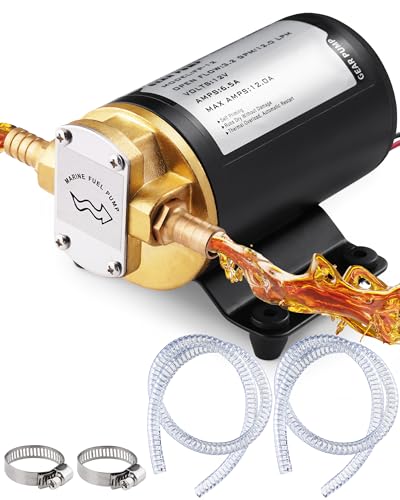
12V Oil Extractor Pump Review Summary
The 12V Oil Extractor Pump is best for owners who want a simple, powered transfer pump for routine maintenance across cars, motorcycles, lawn equipment, and marine engines.
It is not trying to be a universal extractor for every oil-change method; the listing is explicit that it is designed to pump from tanks or drain pans, not to pull oil through a dipstick tube.
That matters, because it sets the right expectation and makes the product easier to evaluate honestly.
Its main appeal is practical convenience.
The pump is self-priming, runs from 12V DC, and is rated for thick fluids such as gear oil and even 80W-90.
The all-copper construction and thermal protection are the kinds of details that matter more than flashy branding here.
If you value a compact tool that can move fluids cleanly and is built for occasional maintenance work, this is a plausible fit.
If you need a vacuum-style extractor for sump removal through the dipstick tube, you should skip it.
Review Scorecard
| Category | Score | Why it rates this way |
|---|---|---|
| Fluid transfer versatility | 8/10 | The listing supports motor oil, gear oil, transmission fluid, waste oil, lubricants, diesel, and kerosene. |
| Convenience | 9/10 | 12V operation and self-priming design make it easier to use in a garage, driveway, or boat setup. |
| Build confidence | 8/10 | All-copper motor, impeller, and pump head suggest a more serious construction choice than basic plastic units. |
| Heat management | 8/10 | Built-in thermal protection is useful for safer operation during longer sessions. |
| Use-case clarity | 9/10 | The listing is clear about what it is and is not for, which reduces buyer confusion. |
| Overall buyer fit | 8/10 | Strong for maintenance and transfer tasks, weaker if you need a true dipstick extraction solution. |
Key Features and Specifications of 12V Oil Extractor Pump
This product is a 12V self-priming gear pump built for moving fluids rather than vacuum extraction.
The listing states a standard power draw of 78W, a 120W max load, a flow rate of 3.2 GPM, and a maximum pressure of 0.3 MPa / 43.5 PSI.
It also lists a work cycle of up to 120 minutes, which is a useful indicator for buyers planning longer service jobs.
The headline capability is broad fluid support.
According to the product data, it can transfer motor oil, gear oil, transmission fluid, waste oil, lubricants, diesel fuel, and kerosene.
That makes it a flexible maintenance tool for a mixed garage, especially if you work on both small engines and marine equipment.
Key points from the listing:
- 12V DC operation
- Self-priming gear pump design
- 3.2 GPM listed flow rate
- 78W standard power, 120W max load
- 0.3 MPa / 43.5 PSI maximum pressure
- Up to 120-minute work cycle
- All-copper motor, impeller, and pump head
- Thermal protection against overheating
The strongest product choice here is the copper construction.
The listing suggests that the pump is intended to handle thicker oils without trouble, including 80W-90.
For buyers who have struggled with weak budget pumps, that detail is meaningful because thick fluids are where cheap transfer tools often become frustrating.
Just as important is the use-case boundary.
This is a pump for moving fluids from a tank or drain pan.
It is not presented as a dipstick-style extractor, so the value is in transfer and clean drainage rather than the more common household idea of “oil extractor.” That distinction should guide whether you buy it.
Pros and Cons of 12V Oil Extractor Pump
Pros
- Practical 12V power source for vehicle and marine maintenance
- Self-priming design simplifies setup
- Handles a wide range of fluids, including thicker gear oil
- All-copper construction adds confidence
- Thermal protection is a sensible safety feature
- Clear intended use reduces buyer confusion
Cons
- Not designed for dipstick-tube extraction
- Best value depends on whether you need transfer, not vacuum removal
- No accessory bundle details were provided in the product data
- The listing does not support claims about noise level, hose length, or real-world speed beyond the stated specs
The biggest strength is that the feature set matches the product’s purpose.
The biggest weakness is also that purpose: if your main goal is extracting oil from an engine through the dipstick tube, this is the wrong category.
That is not a flaw in the pump itself, but it is the central buyer decision point.
Who Should Buy 12V Oil Extractor Pump?
This product makes sense for people who already know they need a powered transfer pump.
Car owners who handle their own maintenance, mower owners who deal with small-engine service, and boat owners who want a cleaner way to move oil or fuel are the clearest fits.
It also suits anyone who prefers a 12V tool they can run near the vehicle or equipment instead of relying on manual pumping.
It is also a good match for buyers who regularly work with thicker fluids.
The listing specifically calls out gear oil and 80W-90 handling, which suggests this pump is meant for more demanding transfer jobs than a basic light-duty siphon pump.
You should probably skip it if you want a true extractor that pulls oil through the dipstick tube, or if you want an all-in-one service kit with a lot of accessories already included.
The listing is direct about what the pump does, so mismatched expectations are the main risk.
Fluid Transfer Performance of 12V Oil Extractor Pump
Self-Priming Setup
The self-priming design is one of the most buyer-friendly details in the listing.
In practical terms, that should reduce the fiddling associated with manual priming and help the pump start moving fluid more predictably.
For routine maintenance work, less setup friction usually matters more than peak specs.
Handling Thicker Oils
The product data says the pump handles thick oils such as 80W-90.
That is a strong sign that this is not just a basic low-end fluid mover.
Buyers who work with gear oil or marine maintenance should see that as one of the main reasons to consider it over a generic transfer pump.
Heat and Runtime Limits
Thermal protection and a 120-minute work cycle give the pump a more serious profile than ultra-cheap alternatives.
Those numbers do not make it a commercial shop machine, but they do suggest a design that expects sustained use within a defined operating window.
For many DIY and light-maintenance users, that is enough.
Clean Service Access
The clean-way-to-change-oil claim is about convenience rather than magic.
The point is to avoid crawling into tight engine bays, fighting drain bolts, or making a mess in an equipment compartment.
That is exactly the kind of value a transfer pump should provide, and it is the clearest reason a buyer would choose this over manual draining.
Alternatives to 12V Oil Extractor Pump
If you want a similar 12V fluid transfer or extraction tool, compare this with other common Amazon-friendly options such as Mityvac fluid evacuators, Pela oil extractors, and VEVOR oil transfer pumps.
Those are not identical products, but they cover the same general buyer decision: move oil cleanly, with the right method for your engine or equipment.
If you specifically need dipstick-style extraction, look at vacuum evacuator-style brands instead of gear pumps.
If you need broader transfer capability for tanks, drains, or marine maintenance, a powered transfer pump like this one is the more relevant category.
Is 12V Oil Extractor Pump Worth It?
The 12V Oil Extractor Pump is worth considering if you want a compact, powered fluid transfer tool for oil, fuel, and similar maintenance jobs, especially where thicker fluids are part of the routine.
Its strengths are straightforward: 12V operation, self-priming behavior, all-copper construction, thermal protection, and a clear use-case for tank or drain-pan transfer.
It is not the right buy if you expect a dipstick tube extractor.
That limitation is important enough to decide the purchase on its own.
For the right buyer, though, this looks like a sensible, purpose-built pump rather than a vague general-purpose gadget.
Buy it if you want a clean, portable way to move fluids and you understand that it is a transfer pump first.
Skip it if your main need is vacuum extraction from the engine sump.