10 Pack Ceiling Fan Blade Filters review is a niche but sensible option for people who want a low-effort way to support fresher-feeling air in small spaces.
If you already use ceiling fans heavily, the appeal is straightforward: add a replaceable filter layer directly to the blades instead of relying only on a standalone purifier.
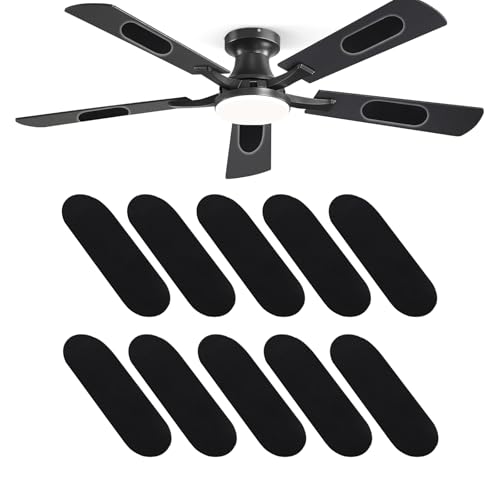
Ceiling Fan Blade Filters Review Summary
These fan blade filters make the most sense for buyers who want a simple, localized air-treatment add-on rather than a full-room appliance.
The listing positions them as activated-carbon pads that attach to ceiling fan blades, and that idea is strongest when the goal is to help with dust, dander, smoke, cooking fumes, or pet-area odors in rooms where a fan already moves air.
Best fit: small rooms, pet spaces, bedrooms, offices, and other areas where you already run a ceiling fan.
Less compelling if you want measurable whole-home purification, because these are a targeted accessory, not a replacement for a dedicated air cleaner.
Review Scorecard
| Category | Score | Buyer-focused rationale |
|---|---|---|
| Air-treatment concept | 8/10 | Activated carbon plus moving airflow is a practical, low-complexity approach for small spaces. |
| Ease of setup | 8/10 | The pads are self-adhesive and meant to stick directly to fan blades. |
| Flexibility | 9/10 | The listing says they can be trimmed for vents, litter boxes, and small fans. |
| Value for setup breadth | 8/10 | Ten pads in a pack makes it easy to outfit multiple blades or multiple spots. |
| Maintenance simplicity | 7/10 | Replacement is straightforward, but the filters are intended to be swapped every 1 to 3 months. |
| Whole-room impact | 5/10 | Useful as a local aid, but still limited by the fan-based format and small coverage area. |
| Buyer clarity | 7/10 | The use case is clear, though the product is best for specific rooms rather than universal air cleaning. |
Key Features and Specifications of Ceiling Fan Blade Filters
This is a pack of 10 ceiling fan blade filters made from natural coconut shell activated carbon.
The listing emphasizes a porous, granular carbon surface designed to adsorb airborne substances and particulate matter, which is the core of the product’s air-treatment promise.
The filters are self-adhesive and designed to stick on top of fan blades.
The manufacturer also says they can be trimmed to size, which broadens the practical use cases beyond ceiling fans.
Useful listing facts:
| Feature | What the listing says |
|---|---|
| Pack size | 10 filters |
| Material | Natural coconut shell activated carbon |
| Attachment | Self-adhesive |
| Fit | Can be trimmed to size |
| Replacement cycle | 1 to 3 months after installation |
| Intended uses | Ceiling fans, cat litter boxes, small vents, window fans, kitchens, offices, classrooms, pet areas |
The main value proposition is not complexity.
It is convenience.
You place the pads where air is already moving, then replace them periodically.
That makes the product especially relevant for people who want a low-maintenance add-on and are comfortable with a modest, localized solution.
Pros and Cons of Ceiling Fan Blade Filters
Pros
- Very simple deployment. The self-adhesive format is easy to understand and easy to use.
- Flexible placement. The trim-to-fit design means the same pack can support different fan sizes or small ventilation spots.
- Useful for nuisance odors and airborne debris. The listing explicitly points to dust, dander, smoke, cooking fumes, and pet-area smells.
- Multiple pads per pack. Ten filters gives room for a full fan setup or multiple small uses.
- Low-tech by design. Some buyers prefer an add-on like this over a louder, more power-hungry purifier.
Cons
- Not a substitute for a true air purifier. The product’s own positioning suggests a targeted, small-area role.
- Replacement adds ongoing upkeep. The listing recommends swapping them every 1 to 3 months.
- Effectiveness depends on airflow and placement. Since they work through a moving fan, performance will vary by room and use pattern.
- Best for specific problems, not everything at once. Dust, dander, and odors are the right expectations; broad purification is not.
Who Should Buy Ceiling Fan Blade Filters?
Buy this if you already use a ceiling fan regularly and want a modest air-quality boost in a small room.
It also makes sense if you are trying to reduce everyday annoyance from pet areas, light odors, dust, or smoke without buying a separate appliance.
Good buyers include:
- People in bedrooms, offices, classrooms, or small living spaces
- Pet owners who want a simple way to support odor and dander control
- Buyers who like replaceable, low-maintenance accessories
- Anyone who wants to test a localized carbon-based air aid before investing in a larger purifier
Skip it if:
- You need room-wide filtration with stronger, measurable coverage
- Your space does not use ceiling fans or small vented airflow
- You want a one-time purchase with no recurring replacement cycle
- You expect a device-level purifier experience from an adhesive accessory
How It Works in Real Rooms
Ceiling Fan Placement
The listing’s main idea is to turn existing fan movement into part of the filtration process.
That makes the product appealing in rooms where the fan is already running often, because the airflow is what gives the carbon pad a chance to interact with dust, dander, and odors.
Trim-To-Fit Flexibility
The ability to trim the filters matters more than it first appears.
It is what lets one pack stretch beyond ceiling fans into small vents, window fans, or pet-area uses.
That makes the product more adaptable than a fixed-size accessory.
Carbon Replacement Cycle
The recommended 1 to 3 month replacement window is a practical reminder that this is a consumable.
Buyers should think of it as an ongoing upkeep item, not a permanent attachment.
That is acceptable if the goal is convenience, but it is important when comparing it with reusable or powered options.
Alternatives to Ceiling Fan Blade Filters
If you want a more established fan-filter-style option, look at FreshOasis fan blade filters.
If you want a more traditional room purifier path, LEVOIT air purifiers are a stronger comparison point.
For a higher-end alternative in compact spaces, Coway air purifiers are also worth checking.
If your main concern is localized odor control in small spaces rather than a full purifier, activated carbon odor filters may be a closer match to the same job-to-be-done.
Is Ceiling Fan Blade Filters Worth It?
Yes, if you understand what it is. Ceiling Fan Blade Filters are worth considering as a simple, localized, replaceable add-on for people who already rely on ceiling fans and want a modest assist with dust, dander, smoke, or odor control.
The value is in the format: easy to place, easy to trim, and easy to replace.
The limitation is also in the format: this is not a whole-room purifier and should not be treated like one.
If you want a low-friction way to experiment with fan-based carbon filtration in a small space, this is a reasonable buy.
If you need stronger air cleaning, look at a dedicated purifier instead.